
 Mirian Gom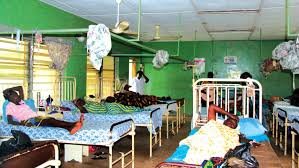
The United Arab Emirates’ decision to exit OPEC is not just an energy story—it is a direct threat to already fragile health systems across Africa.
From May 2026, one of the cartel’s most influential producers will step outside a decades-old framework designed to stabilise global oil supply and prices. The result is a more fragmented market and heightened volatility. For countries like Nigeria—already battling surging fuel costs and a deepening energy crisis in healthcare—the implications are immediate and severe.
Energy instability in Africa is not theoretical; it is already crippling care delivery.
As of April 2026, between 65 and 80 per cent of hospitals in Nigeria rely on diesel and petrol generators, forced into self-generation for four to six hours daily due to an unreliable national grid. This dependence comes at an unsustainable cost. Diesel prices have climbed to approximately ₦1,648 per litre, while petrol hovers around ₦1,400 per litre, according to data from the National Bureau of Statistics and major fuel marketers.
The consequences are cascading through the health system.
Private hospitals—which serve more than 70 per cent of residents in Lagos, Nigeria’s commercial hub—are under acute strain, with some reporting a twelvefold increase in power costs. To stay afloat, facilities are raising patient fees by up to 20 per cent, pushing healthcare further out of reach for already vulnerable populations. In some cases, critical medical equipment—from ventilators to neonatal care units—is being rationed or underutilised due to energy constraints.
This is what oil market volatility looks like on the ground: not just higher prices, but compromised care, delayed treatment, and preventable risk.
The UAE’s exit from OPEC underscores a broader shift in global energy governance—one in which national production priorities are increasingly overtaking collective market stabilisation. If this trend accelerates, OPEC’s ability to cushion price shocks will weaken, exposing import-dependent economies to sharper and more frequent disruptions.
For Africa, the danger is clear. Health systems that depend on fossil fuel stability are inherently vulnerable in a world where that stability can no longer be guaranteed.
Yet the deeper problem is structural. For decades, countries across the continent have failed to integrate energy planning into health policy. Hospitals are built without reliable power strategies; supply chains are designed without accounting for fuel volatility; and health financing systems lack buffers against external shocks.
Nigeria’s current crisis is a stark illustration of this failure.
Despite repeated warnings, investment in decentralised and sustainable energy for healthcare remains limited. While some facilities are beginning to adopt solar solutions as a stopgap, these efforts are fragmented and insufficient against the scale of the problem.
This must change—and urgently.
Nigeria’s federal and state governments must treat energy security as a core component of health system resilience. That means scaling up solar-powered infrastructure for primary healthcare centres, incentivising clean energy adoption in private facilities, and protecting health budgets from fuel-driven economic shocks. Ministries of Health, Power, and Finance must move beyond siloed planning and develop integrated strategies that recognise energy as a determinant of care.
Regional bodies, including ECOWAS and the African Union, should also prioritise coordinated investment in resilient health infrastructure, ensuring that countries are not left to absorb global shocks in isolation.
The UAE’s decision may be rooted in economic strategy, but its ripple effects will be felt in hospital wards far beyond the Gulf.
In Nigeria and across Africa, the real cost of oil market instability is already visible—in rising patient bills, overstretched facilities, and weakening systems. If the continent fails to act, the next oil shock will not be measured in price charts, but in missed vaccinations, untreated illnesses, and lives lost.
In a world of unstable energy alliances, Africa’s greatest risk is not rising fuel prices—it is continued dependence.
About the Author


 Korede Abdullah

 Oluwatobi Adu