‘We Farm Under the Shadow of Death’: Inside Northern Nigeria’s Deepening Hunger Crisis
 Hussaini Ibrahim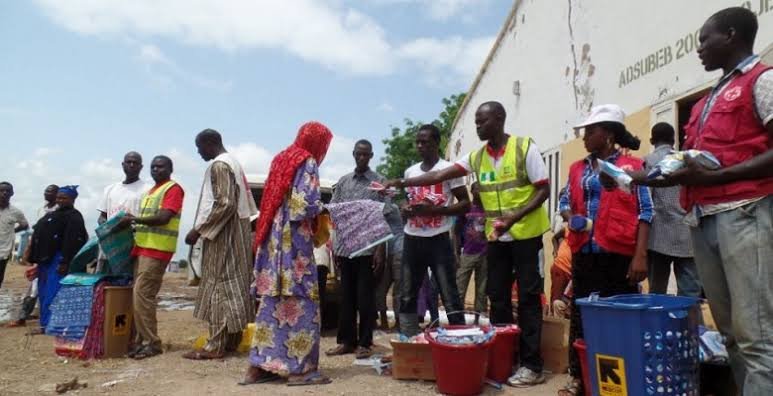
Displaced families at an IDP camp in Borno State, where declining food assistance is worsening hunger among women and children. (Photo: Internet)
KANO, Nigeria – For millions of families across northern Nigeria, hunger is no longer driven by drought or poor harvests alone—it is being fuelled by bullets, displacement and fear. Across communities once regarded as the nation’s food basket, farmers now risk abduction or death simply by stepping onto their land, while displaced mothers watch food rations shrink and children go to bed hungry. With more than 17 million people across nine northern states facing crisis, emergency or catastrophic hunger, according to the United Nations World Food Programme (WFP), the country is confronting one of its gravest food emergencies in nearly a decade. In this report, Hussaini Ibrahim travels to conflict-hit communities in Kaduna and Borno states to examine how insecurity is crippling food production, driving up prices and pushing millions closer to starvation.
A Food Basket Under Siege
Northern Nigeria has long been the country’s agricultural backbone, producing much of its maize, millet, sorghum, rice and vegetables.
Today, however, vast stretches of fertile farmland lie abandoned as farmers flee escalating attacks by bandits, Boko Haram insurgents and ISWAP fighters.
A recent assessment by the United Nations World Food Programme (WFP) warns that more than 17 million people across nine northern states are experiencing acute food insecurity—a crisis driven by conflict, mass displacement, falling agricultural production and dwindling humanitarian assistance.
Behind the statistics are families whose livelihoods have collapsed under years of violence.
When Farming Becomes a Death Sentence
In Birnin Gwari Local Government Area of Kaduna State, farming has become an increasingly dangerous occupation.
On 4 July 2026, armed bandits attacked farmers outside Kakangi village, killing at least nine people and abducting several others during the planting season.
Community leader Kabiru Ishaq, who visited the bereaved families, said the attack reflected a broader assault on rural livelihoods.
“These attackers are no longer just rustling cattle. They are targeting our means of survival. Farmers go to the fields not knowing if they will return alive.”
He said the killings have spread fear across neighbouring communities, discouraging many from cultivating their land.
“Families lost breadwinners, and the fear has spread to neighbouring villages. Restoring confidence requires sustained military presence on farmlands and community-based intelligence networks.”
Security expert Abdullahi Kasai said criminal groups have adapted their tactics.
“Bandits have established temporary camps near farmlands and strike during peak farming hours.”
According to him, many farmers are now forced to pay illegal levies for access to their own land.
“In many cases, farmers pay levies not just for access but for ‘protection’ that is never guaranteed. This extortion economy drains resources that should go into seeds, fertilisers and labour.”
‘Our Soil Is Fertile, But Our Hands Are Tied’
For 52-year-old Mallam Yusuf Garba, insecurity has transformed farming from a source of pride into a struggle for survival.
“In 2023, I cultivated more than 15 hectares of maize, millet and sorghum. This year, I managed only four hectares because of fear.”
He said his family now pays as much as ₦200,000 to armed groups simply to access farmland.
“Last season, I lost two cousins in a similar attack. That changed everything for my family.”
The consequences extend beyond income. “My children are already showing signs of malnutrition. I fear for the next generation if this situation persists.”
Displacement Brings a Different Kind of Hunger
Hundreds of kilometres away in Konduga, Borno State, displacement has replaced farming with dependence on dwindling humanitarian aid.
Fatima Usman (name changed), a 38-year-old mother of six living in an internally displaced persons (IDP) camp, said life has become increasingly desperate.
“We used to cultivate guinea corn and vegetables in Gwoza. Now we have no farmland and food rations have reduced. My children cry from hunger at night. Some days we survive on garri without soup.”
She said hunger is robbing displaced children of both health and education.
“I want my children to go to school and have a better future, but hunger keeps them weak and unable to learn.”
Food Prices Continue to Climb
The crisis extends far beyond farming communities.
Visits by Africa Health Report to Maiduguri Monday Market found staple food prices continuing to rise.
A 100-kilogramme bag of maize, which sold for about ₦35,000 in 2023, now costs more than ₦45,000.
Rice has increased from about ₦45,000 to around ₦80,000 per bag, while millet and sorghum have recorded similar increases.
Food trader Aisha Mohammed said shrinking purchasing power is changing how families buy food.
“Customers now buy food in cups instead of bags because they can no longer afford larger quantities.”
She said many shoppers now leave the market empty-handed.
“Malnutrition is no longer hidden—it scares you in the face every market day.”
Experts Warn the Crisis Is Deepening
Food Security Specialist Dr Ahmed Zanna of the Food and Agriculture Organisation (FAO) said insecurity has reversed years of agricultural progress across northern Nigeria.
“FAO assessments indicate that cultivated land in conflict-affected areas has declined by between 40 and 60 per cent since 2023.”
He warned that emergency interventions alone cannot restore food security.
“Long-term resilience requires addressing the root causes, particularly conflict, alongside stronger agricultural support and market access.”
Economist and Senior Lecturer Dr Abdulnaseer Turawa Yola said insecurity, climate shocks and declining humanitarian funding are creating a dangerous cycle.
“The combination of violence, funding shortfalls and climate-related challenges has pushed acute food insecurity to levels not seen in years.”
He warned that women and children continue to bear the heaviest burden.
Aid Agencies Face Mounting Pressure
The Federal Ministry of Agriculture and Rural Development says it is expanding the distribution of farm inputs and improving security around agricultural production clusters.
Meanwhile, the National Emergency Management Agency (NEMA) and the Borno State Emergency Management Agency (BOSEMA) say they continue working with humanitarian partners despite difficult operating conditions.
Yet the United Nations World Food Programme warns that an 89-million-dollar funding shortfall over the next six months could force further reductions in food assistance.
WFP Deputy Country Director Serigne Loum said humanitarian needs continue to outpace available resources.
“Families are being forced from their homes and it’s getting harder for WFP to access people who urgently need food assistance.”
He warned that without sustained donor support; millions could lose access to life-saving food aid.
Communities Say Security Is the Only Lasting Solution
For affected communities, emergency food aid alone cannot end the crisis.
Village head Hajara Bello believes restoring security is the foundation of recovery.
“We need more than food assistance. We need security so that our people can return to their farms and rebuild their livelihoods.”
She warned that prolonged displacement is eroding community resilience and leaving young people without hope or opportunity.
Ending Hunger Begins with Ending Fear
Northern Nigeria’s food crisis is no longer simply a humanitarian emergency—it has become a test of the country’s ability to protect the people who feed it.
As conflict empties farmlands, pushes food prices beyond the reach of ordinary families and deepens malnutrition among children, emergency food aid can offer only temporary relief.
The lasting solution lies in restoring security, rebuilding rural livelihoods and ensuring farmers can once again cultivate their land without fear of violence or extortion.
Until then, millions of Nigerians will remain trapped in a cycle where conflict breeds hunger, hunger fuels poverty and every failed harvest push another family closer to catastrophe.
About the Author


 Korede Abdullah
 Hope Ajayi
 Mirian Gom