Beyond the Pay Rise: Will Higher Police Salaries Really Make Nigeria Safer?
 Oluwafunbi Bello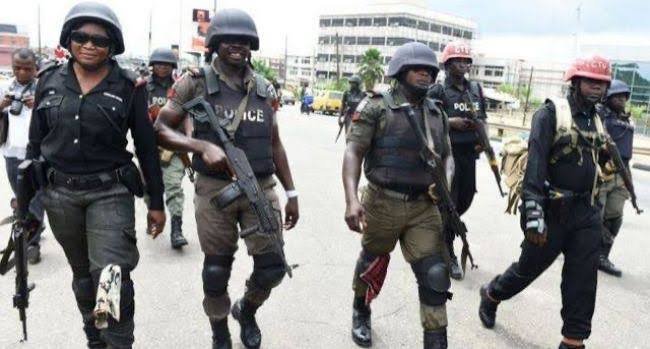
ABUJA, Nigeria – For a Nigerian police officer standing at a checkpoint, responding to a kidnapping report or patrolling a dangerous community, a higher salary may ease the pressure at home—but it cannot make a patrol vehicle start, replace missing protective equipment or guarantee medical care after an injury. That is the dilemma behind the Federal Government’s decision to increase police salaries: better pay may improve morale, but can it fix a police force still struggling with manpower shortages, poor working conditions, inadequate equipment and public distrust? As Nigeria battles kidnapping, banditry, terrorism and communal violence, officers interviewed by Oluwafubi Bello say the pay rise is welcome but insist that meaningful police reform must go much further.
A Pay Rise, But Not Yet a Policing Revolution
For years, poor welfare has been central to conversations about the Nigeria Police Force.
Officers have complained about salaries that struggle to keep pace with the cost of living, inadequate accommodation, limited healthcare support and difficult working conditions.
The pressure is particularly acute at a time when Nigeria’s security landscape is becoming increasingly complex.
Police officers are expected to respond to violent crime, kidnapping, communal conflict, terrorism and other emergencies, often while working long hours in difficult environments.
The salary increase therefore arrives with considerable expectations.
For officers and their families, more money could mean greater financial stability.
For the public, however, the more important question is different:
Will a better-paid police officer provide better policing?
The answer, according to officers interviewed for this report, is not straightforward.
‘Has It Solved Their Problems? No’
Retired police officer Godsent Daniel welcomes the salary increase but says it should not be mistaken for comprehensive police reform.
“It is a good thing and I think it will motivate officers, but has it solved their problems? No.”
For Daniel, the problem is partly economic.
A salary increase can quickly lose its value when food, transport, rent, school fees and healthcare costs continue to rise.
“You cannot keep increasing salaries in an economy where inflation is very high. By the time an officer takes that money to the market, it may still not be enough to feed the family for the month.”
He says financial anxiety can follow officers to work.
An officer worrying about feeding a family, paying school fees or settling medical bills may find it harder to concentrate fully on a demanding and sometimes dangerous job.
But Daniel says welfare reform must go beyond the monthly payslip.
He wants comprehensive health insurance, better accommodation, scholarships for officers’ children and improved living conditions in police barracks.
For him, equipment is equally important.
“A policeman’s confidence comes from the equipment available to him. If officers lack the necessary operational tools or fear they will not be cared for after sustaining injuries, they naturally become more cautious during operations.”
His argument exposes the first limitation of the salary debate.
A better-paid officer is still constrained if the institution around him or her remains poorly equipped.
The Officer Who Spends ₦3,000 a Day Getting to Work
For Muhammed Kabiru, a police officer at the Kubwa Police Division in Abuja who has served for more than eight years, the proposed increase offers hope.
But there is a problem.
It has not yet reached his pocket.
“We’ve only heard about it; it has not been implemented. But if it is, it will really help our financial situation.”
Kabiru says accommodation is one of the pressures facing officers.
Some officers live far from their duty stations because they cannot afford accommodation close to work.
He commutes from outside the immediate area, a daily expense that can consume a significant portion of his income.
“Imagine spending about ₦3,000 on transportation every day. When you multiply that by the number of working days in a month, a large part of your salary is already gone.”
The mathematics of policing therefore begins before an officer arrives at the station.
Transport costs reduce disposable income.
Rent adds another burden.
Food prices reduce purchasing power.
And healthcare expenses can quickly create another financial crisis.
Kabiru says promotions have improved his earnings over the years, but rising living costs continue to erode those gains.
His experience raises an important policy question: how much of a salary increase remains meaningful if the basic cost of getting to work keeps rising?
‘With a Full Stomach, Officers Will Definitely Work Better’
Habibat Danyaro, another officer at the Kubwa Police Division, has spent 26 years in the force.
She said she had not yet heard about the salary increase when interviewed but welcomed the possibility.
“If it is true, it will really help. There will be more money for children’s school fees and food. With a full stomach, officers will definitely work better.”
Her own story demonstrates why police welfare cannot be reduced to salary alone.
Danyaro spent 19 years serving in Yobe State alongside her husband, a Nigerian Army officer.
In 2014, he sustained life-changing injuries during a Boko Haram attack and has been unable to return to active service.
“Since then, I have been the major breadwinner of the family while also taking care of my husband.”
Her experience raises another dimension of police and security-sector welfare: what happens to officers and their families when service-related injuries permanently alter their lives?
A salary increase may provide relief, but long-term healthcare, insurance, disability support and family assistance can determine whether that relief is temporary or sustainable.
More Than a Salary: The Equipment Problem
In Kwara State, John Obadiru, a police officer at Malete Police Division with 10 years of service, also welcomed the proposed increase.
But he says money alone cannot transform policing.
“Every officer wants better pay because the cost of living keeps rising. The increase will certainly provide some relief, but policing is not only about salary.”
Then he listed what he believes officers need to do their jobs effectively.
“We also need functional patrol vehicles, modern communication gadgets, protective equipment and opportunities for regular training. When officers are properly equipped and their families are adequately cared for, they become more confident and committed to serving the public.”
His point goes to the heart of Nigeria’s policing challenge.
A police officer may have a better salary but still be unable to respond effectively if a patrol vehicle is unavailable, communication equipment is unreliable or protective gear is inadequate.
Better pay can improve individual welfare.
Better equipment and training improve institutional capacity.
The two are related, but they are not interchangeable.
Can Better Pay Reduce Corruption?
There is another reason the salary increase matters.
Poor remuneration has often been cited in public discussions about police corruption, extortion and unethical practices.
The logic is straightforward: an officer struggling financially may be more vulnerable to financial inducements.
But higher pay does not automatically eliminate corruption.
Better salaries need to be accompanied by effective internal discipline, transparent investigations, consequences for misconduct and systems that allow citizens to report abuse safely.
In other words, welfare can remove one incentive for corruption, but accountability must deal with the behaviour itself.
That distinction is critical.
A police force cannot rebuild public trust through salaries alone.
Citizens need to see officers who are professional, responsive, respectful and accountable.
The Manpower Question
There is also a structural problem that a salary increase cannot solve on its own: manpower.
Nigeria’s police force operates under considerable pressure from a population spread across a vast territory and facing multiple security threats.
When there are too few officers for the communities they are expected to police, the result can be longer shifts, fatigue and reduced capacity to respond to emergencies.
The issue is therefore not simply:
How much does an officer earn?
It is also:
How many officers are available, where are they deployed and what resources do they have?
A comprehensive reform agenda must consider recruitment, deployment, training and retention alongside remuneration.
The Public Is Watching
The ultimate measure of the salary increase will not be the amount announced by government.
It will be whether citizens experience a difference.
Do police arrive faster when people call?
Are investigations more professional?
Are officers better equipped?
Are complaints handled properly?
Are extortion and abuse reduced?
Do officers feel safer doing their jobs?
And, perhaps most importantly, do Nigerians begin to trust the police more?
These are the outcomes that will determine whether the pay rise becomes a genuine reform or simply another increase absorbed by the rising cost of living.
Beyond the Pay Slip
The concerns raised by the officers interviewed for this report point towards a broader reform agenda.
Better remuneration should be accompanied by:
functional patrol vehicles and modern communication equipment;
protective and operational equipment;
affordable and decent police accommodation;
comprehensive healthcare and insurance;
adequate compensation and long-term support for injured officers;
continuous professional training;
improved manpower and strategic deployment;
psychological and welfare support;
transparent promotion and career progression;
stronger disciplinary mechanisms and accountability.
These reforms are also consistent with the broader objectives of the Sustainable Development Goals, particularly SDG 16, which promotes peaceful, just and accountable institutions, and SDG 8, which promotes decent work.
But the SDGs should not become a substitute for practical reform.
For a police officer, decent work means being able to feed a family, get safely to work, access healthcare, receive proper equipment and know that the institution will support them when the risks of the job become real.
For the public, it means something equally basic: being able to call the police and expect an effective response.
The Real Test Starts After the Pay Rise
The Federal Government’s decision to improve police salaries is significant.
For officers struggling with rising living costs, every additional naira matters.
But the interviews conducted for this report suggest that remuneration is only one piece of a much larger puzzle.
A better salary cannot repair a broken patrol vehicle.
It cannot replace missing communication equipment.
It cannot provide adequate housing.
It cannot by itself treat an officer injured in the line of duty.
And it cannot automatically restore public confidence.
Nigeria therefore faces a choice.
It can treat the salary increase as the destination—or use it as the beginning of a wider police reform programme.
The real measure of success will ultimately be found not on government payroll sheets, but on Nigerian streets: in the confidence of officers doing dangerous work and in the experiences of citizens who depend on them for protection.
If higher salaries are matched with better equipment, healthcare, housing, training, manpower and accountability, the pay rise could become more than a welfare intervention. It could become part of the foundation for a more professional and trusted police force.
About the Author

 Oluwatobi Adu
 Mirian Gom
 Korede Abdullah