Hope Ajayi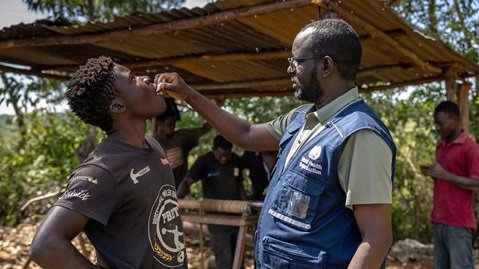
ABUJA, Nigeria – Nigeria was among seven countries responsible for about 90 per cent of all reported cholera cases and deaths worldwide in 2025, as global cholera deaths rose to their highest level reported to the World Health Organisation (WHO) since 1999.
The WHO disclosed this in its latest Weekly Epidemiological Record published on Tuesday, September 29, 2026, reporting 451,499 cholera cases and 7,870 deaths from 47 countries in 2025.
Although reported cases fell by 19.5 per cent from 2024, deaths increased by about 31 per cent, highlighting what the WHO described as a continuing global cholera threat.
The seven countries accounting for about nine in 10 reported cases and deaths were Nigeria, Angola, Bangladesh, the Democratic Republic of the Congo, South Sudan, Sudan and Yemen.
The WHO African Region carried the largest share of the burden, recording 245,501 cases and 5,338 deaths in 2025 — 54 per cent of reported global cases and 68 per cent of deaths.
WHO Executive Director of the Health Emergencies Programme, Dr Chikwe Ihekweazu, said the rise in deaths underscored the need for stronger investment in safe water, sanitation and hygiene, alongside surveillance, vaccination, community engagement and access to quality healthcare.
The agency said more than one in five reported cholera deaths occurred outside health facilities, suggesting that some patients were not reaching medical care in time. However, among patients treated in health facilities, the global case fatality rate was 0.9 per cent in 2025, although it exceeded one per cent in 12 countries.
WHO warned that reported figures do not represent the full global burden of cholera because cases and deaths can go unreported, particularly where surveillance systems are weak.
The agency also reported continued outbreaks of other epidemic-prone diseases. In Africa’s meningitis belt, 24 of 26 countries reported 21,526 suspected cases and 971 deaths in 2025, while suspected human plague cases were reported in 10 countries between 2019 and 2025.
WHO said stronger surveillance, rapid detection, effective response systems and sustained investment in water and sanitation remain essential to controlling cholera and other epidemic-prone diseases.
About the Author


 Korede Abdullah
 Mirian Gom