When Custody Becomes A Death Sentence: Inside Nigeria’s Detention Health Crisis
 Korede Abdullah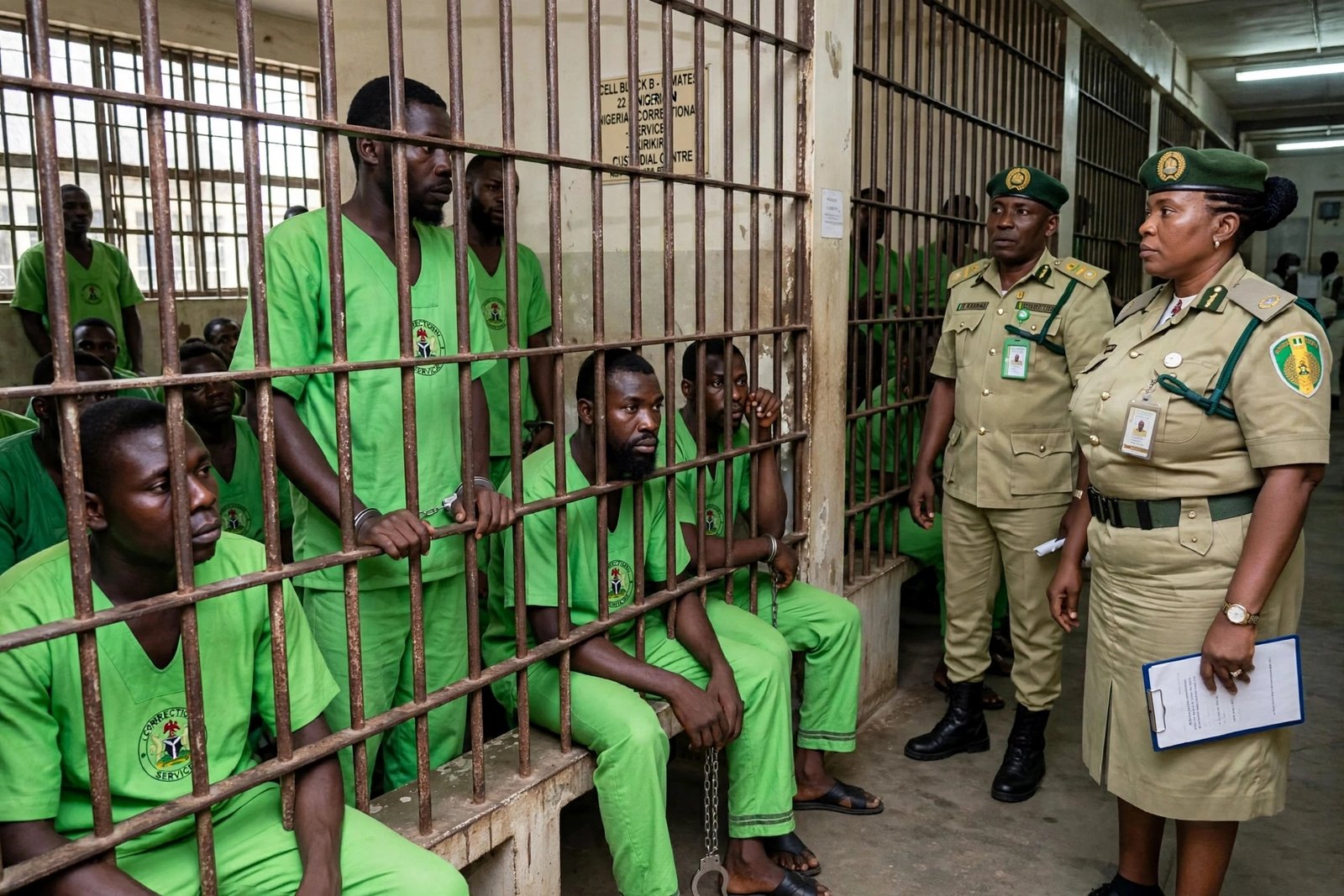
LAGOS, Nigeria – What happens when a person enters state custody—and emerges with their health broken, or never emerges at all? The deaths of 37 suspected illegal miners in NSCDC custody in Minna have brought fresh scrutiny to the conditions behind Nigeria’s locked doors; in this report, Korede Abdullah examines what happens when the state takes away a person’s freedom, and whether it is doing enough to protect the life and dignity that remain.
Behind Nigeria’s Locked Doors
For people in detention, falling seriously ill can be frightening for a simple reason: they cannot walk out and seek help on their own. They depend on authorities for medical attention, food, water, sanitation and the basic conditions needed to remain healthy.
When those systems fail, an ordinary illness can become an emergency. Overcrowding, poor ventilation, inadequate sanitation, poor nutrition and delayed medical care can create conditions in which infectious diseases spread more easily, and existing health problems become harder to manage.
Recent deaths in custody, particularly the deaths of 37 suspected illegal miners in Minna, Niger State, have therefore raised a question that extends beyond the immediate cause of death.
What responsibility does the state assume when it takes control of a person’s freedom—and, with it, their access to healthcare?
A Family’s Pain After Detention
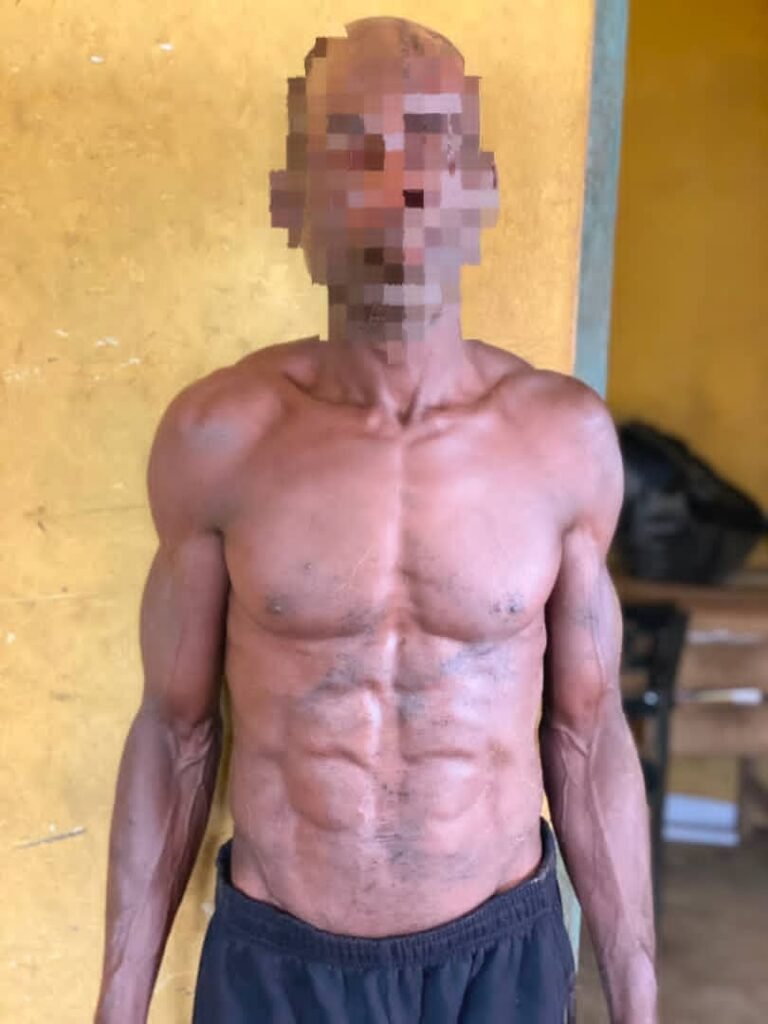
For Mrs. Abimbola Johnson, that question is not theoretical. Her brother was detained over an item he had bought from another person. He was eventually discharged and acquitted, but Johnson said the experience left him physically and emotionally weakened. “It was a terrible experience for the family. We could not understand why he was being kept there for something he bought from somebody else,” Johnson said.
What troubled the family most was the condition in which he returned. “When he came out, his health was no longer the same. He had become very weak and had gone through so much physically and emotionally,” she said.
His release ended the detention. But for the family, Johnson’s account suggests that the consequences did not necessarily end when the cell door opened.
Her experience raises a broader question: when someone is held in custody, who is responsible for protecting that person’s health?
When Detention Becomes a Health Risk
Medical doctor Dr Goke Ogunmodede said the responsibility begins with the authorities in charge of detention facilities.
Ogunmodede, Medical Director of Ogunmodede Memorial Hospital and Maternity Home in Ikotun, Lagos State, said detainees are particularly vulnerable because they depend almost entirely on the system holding them. “People in detention can face serious health risks because they are often confined within limited spaces and depend entirely on the authorities for healthcare, food, water and sanitation,” he said.
Ogunmodede called for medical screening when people enter custody, proper medical records and continuity of treatment for conditions such as diabetes, hypertension, epilepsy, asthma, tuberculosis and HIV.
Seriously ill detainees, he said, should be referred to hospitals without delay.
The Minna Deaths Need Medical Answers
The deaths of 37 suspected illegal miners in NSCDC custody in Minna have brought these concerns into sharp focus.
But Ogunmodede cautioned against assuming the cause of death before medical evidence is available. “The first responsibility is to establish the actual cause of death rather than speculate,” he said.
According to him, investigators should establish what symptoms the detainees developed, when those symptoms began, whether they had existing medical conditions and whether several detainees experienced similar symptoms.
Post-mortem examinations, laboratory tests and other forensic investigations may be required to determine what happened. The investigation, he said, should not begin and end with one suspected disease.
Many Possible Causes Must Be Examined
An infectious disease outbreak is only one possible explanation when several people become seriously ill or die in the same facility.
Food- or water-borne diseases, respiratory infections, toxic exposure and other medical emergencies must also be considered. “Several conditions can produce clusters of illness or deaths,” he said. “That is why laboratory investigations and proper clinical and forensic assessments are important.”
Medical records and the period between the beginning of illness and death could provide further evidence about whether warning signs were recognised and whether treatment was provided in time.
Detention Does Not Erase Human Rights
For human-rights lawyer and activist Abiodun Ajibade, there is a fundamental principle at stake: detention removes liberty where lawful, but it does not remove human dignity.
Ajibade cited Sections 34, 35 and 36 of the 1999 Constitution, which protect human dignity, personal liberty and fair hearing. “What the state takes away, where detention is lawful, is the person’s liberty; it does not take away his dignity or entitlement to humane treatment,” Ajibade said. That distinction matters.
A person may be arrested, detained or convicted, but the restrictions imposed by the state do not give authorities unlimited power over that person’s health or wellbeing.
The Law Still Protects People in Custody
Ajibade said Section 35 of the Constitution provides safeguards against unlawful detention and requires arrested persons to be brought before a court within the period prescribed by law.
He also referred to the Administration of Criminal Justice Act 2015 and the Nigerian Correctional Service Act 2019, which provide further safeguards concerning detention and healthcare. “If the state wants to continue depriving somebody of liberty, there must be a lawful basis for doing so,” he said.
Healthcare Is Not a Favour
Ajibade said medical care in detention should be regarded as a legal and public-health responsibility—not a favour granted to inmates.
Referring to the Nigerian Correctional Service Act, he said healthcare responsibilities include protecting physical and mental health and preventing and treating diseases.
Custodial authorities must also pay attention to hygiene, sanitation, lighting and ventilation, he said. “We are not talking about charity. There are statutory responsibilities attached to the custody of inmates,” Ajibade said.
A poorly managed detention facility can become an environment where infectious diseases spread, chronic illnesses go untreated and medical emergencies escalate.
The Warning Signs Cannot Be Ignored
Ogunmodede said certain symptoms should trigger urgent medical attention.
These include difficulty breathing, loss of consciousness, seizures, severe chest pain, serious bleeding, persistent vomiting or diarrhoea, dehydration, sudden confusion and rapidly worsening health.
The challenge is ensuring that such warning signs are recognised quickly inside detention facilities.
A delayed response can mean the difference between treatment and deterioration.
That makes proper medical screening, health records and referral systems more than administrative requirements.
Preventing deaths in detention requires more than determining what disease or medical condition caused a person’s death.
Ajibade called for independent and transparent investigations whenever deaths occur in custody.
Such investigations, he said, should examine detention registers, medical records, environmental conditions, CCTV footage where available, and statements from officers and detainees. “The investigation should not stop at identifying the immediate medical cause. It should determine whether the deaths were preventable,” he said.
The Human Cost Behind the Numbers
For Johnson, the statistics mean little without remembering the people behind them.
Her brother eventually regained his freedom. But the physical and emotional effects of his detention remain part of the family’s experience.
Her message is simple. “Even when someone is accused of an offence, that person is still a human being and should be treated with dignity,” she said.
The 37 deaths in Minna have placed that principle under renewed scrutiny.
The question is no longer simply whether people in custody have committed an offence or whether authorities have the legal power to detain them.
Because when the state closes the door behind a detainee, it assumes control over much of that person’s ability to seek help.
They become matters of life and death. And when someone dies behind a locked door, accountability must not stop at the question of what killed them. It must also ask whether the state did everything within its power to keep them alive.
About the Author


 Mirian Gom