


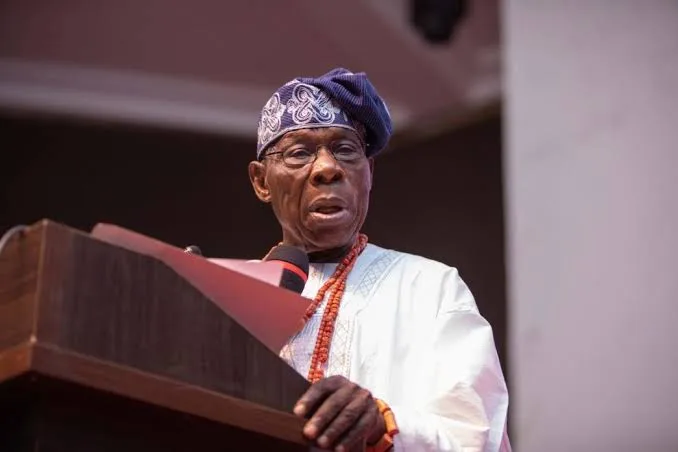
LAGOS, Nigeria – Former President Olusegun Obasanjo has criticised restrictions on visa-on-arrival arrangements for Africans travelling within the continent, saying barriers to movement undermine regional integration, trade and economic cooperation.
Obasanjo spoke at the Creative Africa Nexus (CANEX) 2026 event in Lagos, which runs from November 7 to 8, where he urged African governments to make it easier for citizens to travel and pursue opportunities across the continent. He argued that it was contradictory for African leaders to promote continental unity while maintaining policies that restrict movement between countries.
The event is sponsored by the African Export-Import Bank (Afreximbank) in collaboration with the African Union. Obasanjo’s remarks formed part of discussions around ‘Lest We Forget: Slavery, Slave Trade, Colonisation, Emancipation and Reparation’, a book produced through his initiative.
He also called for the preservation of the history of the transatlantic slave trade, arguing that European powers played a major role in organising and sustaining the trade for economic gain. While acknowledging the involvement of some African rulers and merchants, he said this should not be used to diminish Europe’s responsibility for the enslavement and transportation of millions of Africans.
Former Prime Minister of St Vincent and the Grenadines, Ralph Gonsalves, called for stronger relations between Africa and the Caribbean, citing their shared history and cultural connections. He described Caribbean civilisation as a combination of indigenous songs, European melody, African rhythm and Asian chords, expressed through Caribbean lyrics.
Gonsalves also supported calls for reparations, describing them as an issue of international justice rather than conventional development assistance. He said the Caribbean Community (CARICOM) had developed a 10-point reparations plan covering formal apologies, healthcare, education, housing, poverty reduction, technology, memorials, the return of stolen cultural artefacts, debt relief and financial compensation.
Join the conversation