



LAGOS, Nigeria – Artificial intelligence could help Nigeria detect electoral fraud, verify results and combat digital disinformation ahead of the 2027 general elections. But with cyberattacks, deepfakes, data privacy concerns and questions over the legal authority of automated systems threatening its deployment, Korede Abdullah examines whether INEC has the safeguards, institutional capacity and public trust needed to ensure that AI strengthens rather than undermines Nigeria’s electoral process.
INEC’S AI PLANS: PROMISE AND EMERGING RISKS
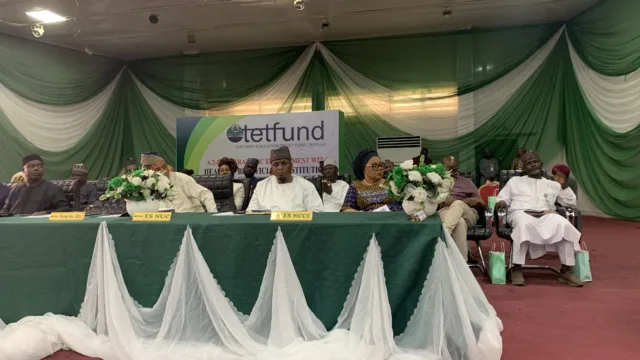
At the 2026 All Nigeria Editors Conference in Enugu, the Chairman of the Independent National Electoral Commission (INEC), Professor Joash Amupitan, disclosed that the commission had begun deploying artificial intelligence tools to identify discrepancies in election results before final validation.
He also warned that AI-generated disinformation, including cloned voices, fabricated result sheets, manipulated videos and forged documents, could mislead voters and undermine confidence in elections.
While the technology could improve the detection of inconsistencies, its deployment raises concerns about the security of INEC’s digital infrastructure, algorithmic manipulation and independent scrutiny.
The central question is whether Nigerians will be able to understand, verify and challenge decisions influenced by systems they may not have access to examine.
AI MUST SUPPORT, NOT DETERMINE ELECTION RESULTS
Cybersecurity expert, Mr. Kabir Adewale, has cautioned that artificial intelligence cannot independently guarantee credible elections. He said the technology should serve as an additional verification tool rather than the final authority on election results.
Speaking with Africa Health Report, Adewale explained that AI could identify unusual result patterns, duplicate entries, inconsistencies in uploaded figures, suspicious database access and possible attempts to manipulate electoral information.
However, he warned that discrepancies do not automatically indicate fraud. Manual entry errors, collation mistakes and transmission problems could also produce inconsistencies. “AI should therefore function as an additional layer of verification rather than an independent authority determining the validity of election results,” he said.
He urged electoral officials to investigate flagged results, compare original polling-unit result sheets with electronically transmitted records and explain identified discrepancies. For Adewale, technology can identify potential problems, but legally authorised electoral institutions must retain responsibility for examining evidence and making binding decisions.
CYBERATTACKS AND DEEPFAKES: THE THREATS TO 2027
As INEC expands its use of digital technology, Adewale identified ransomware, unauthorised database access, distributed denial-of-service attacks, social engineering and AI-generated disinformation as major threats.
He explained that cybercriminals could disrupt electoral infrastructure, steal or alter sensitive information, overwhelm INEC’s websites or impersonate officials to obtain confidential access credentials. Political actors could also exploit generative AI to create deepfake videos, cloned voices, fabricated result sheets and forged documents.
A manipulated video showing an INEC official announcing a false result, for instance, could spread rapidly across WhatsApp, Facebook and TikTok before the commission responds. “The greatest danger is not necessarily that everybody will believe the fabricated material. It is that repeated exposure to false information may cause people to doubt genuine information as well,” he said.
Adewale called for a rapid digital verification and public communication system to help Nigerians authenticate official announcements, election results and other electoral information.
INDEPENDENT SECURITY TESTING AND HUMAN OVERSIGHT
To protect INEC’s AI systems from cyberattacks and political manipulation, Adewale recommended independent cybersecurity assessments, penetration testing, vulnerability checks and simulated attack exercises.
He also advocated strong authentication procedures, encryption, secure data backups and comprehensive audit records showing who accessed or modified electoral information.
He warned that attackers could compromise the data used to train or operate AI systems without necessarily breaching the entire infrastructure. “The AI models themselves must be protected against manipulation. An attacker may not need to hack an entire system if they can compromise the data used to train or operate the algorithm,” he said.
He stressed that automated verification must never replace human judgement, particularly when systems process incomplete, inaccurate or deliberately manipulated information. “The final responsibility for validating election results must remain with legally authorised electoral institutions, not an algorithm,” he added.
ELECTRONIC TRANSMISSION MUST BE TRANSPARENT
Adewale also called for stronger safeguards around the electronic transmission and collation of election results. His recommendations include end-to-end data integrity protection, digital authentication during result capture, encryption during transmission and independently verifiable copies of polling-unit results.
He said original physical result sheets should be compared with electronic records, while discrepancies must be documented and investigated. He also advocated digital audit trails that allow authorised stakeholders to establish whether electoral information has been altered.
On disinformation, he recommended coordinated action involving INEC, cybersecurity professionals, media organisations, telecommunications companies, social media platforms and security agencies.
AI-powered monitoring could help identify networks distributing identical false information, unusual spikes in online activity, suspicious login patterns and abnormal data transfers.
However, he cautioned that identifying coordinated online activity does not automatically establish responsibility. Digital forensic investigations, he said, must precede accusations against individuals, political parties or organisations.
JOURNALISTS MUST VERIFY BEFORE PUBLISHING
Adewale described journalists as an important line of defence against electoral disinformation, warning that pressure to publish breaking election information could turn media organisations into distributors of falsehoods.
He advised reporters to authenticate videos, photographs, audio recordings and documents before publication, confirm announcements through recognised official channels and avoid relying exclusively on screenshots or forwarded messages.
He also called for specialised training and digital verification tools to help journalists identify deepfakes, manipulated images, cloned voices and misleading online content. “The media must understand that responsible election reporting is not simply about announcing who is winning. It is also about protecting the public’s access to accurate information,” he said.
He urged media organisations to correct inaccurate reports promptly and transparently. Beyond the media, Adewale recommended that INEC establish a dedicated cybersecurity response centre and test its incident-response and business-continuity plans before election day.
Where systems are compromised, he said, the commission should isolate affected infrastructure where necessary, preserve digital evidence, establish the extent of the breach and inform the public about affected information and remedial measures.
He further advocated controlled access for independent cybersecurity experts, civil society organisations, political parties and accredited election observers to assess AI verification processes without exposing sensitive technical information.
AI CANNOT ADDRESS VOTE BUYING AND ELECTORAL VIOLENCE
Despite the potential benefits of AI, Adewale warned that technology cannot resolve Nigeria’s wider electoral challenges.
Vote buying, voter intimidation, electoral violence, misconduct by officials and weak enforcement of electoral laws remain problems that automated systems cannot independently address.
“A sophisticated electronic system will not prevent vote buying, intimidation of voters, violence at polling stations or deliberate misconduct by electoral officials,” he said.
He urged INEC to publish clear guidelines explaining the functions of its AI applications, the decisions they cannot make and procedures for correcting errors.
He also called on political parties to discourage supporters from using AI to impersonate opponents, manufacture false evidence or circulate misleading information.
Nigerians, he added, must verify sensational election-related messages before sharing them. “Technology can improve the accuracy, speed and security of electoral operations, but it cannot independently guarantee the credibility of an election,” he said.
“Artificial intelligence can help protect the ballot, but only credible institutions, transparent processes and accountable leadership can protect democracy.”
THE LEGAL QUESTION: HOW FAR CAN INEC GO?
Beyond cybersecurity, INEC’s proposed use of AI raises questions about the legal limits of its technological powers, voters’ rights and responsibility when automated systems make mistakes.
Constitutional and electoral law expert, Mr Abiodun Ajibade, called for stronger legal safeguards, warning that technological innovation must not undermine voters’ rights or weaken public confidence.
Speaking with Africa Health Report, Ajibade said Nigeria did not yet have comprehensive legislation specifically regulating AI in elections.
However, he identified five existing legal instruments governing different aspects of its deployment: the 1999 Constitution, as amended; the Electoral Act 2026; the Nigeria Data Protection Act 2023; the Cybercrimes (Prohibition, Prevention, etc.) Act 2015, as amended in 2024; and the Evidence Act 2011, as amended by the Evidence (Amendment) Act 2023.
He explained that Section 153 and Paragraph 15 of Part I of the Third Schedule to the Constitution establish the foundation for INEC’s responsibilities, including adopting technological innovations in conducting elections.
He also cited Section 158(1), which guarantees the commission’s independence in exercising its statutory responsibilities.
However, he stressed that INEC’s independence does not give it unrestricted powers to disregard constitutional rights. “INEC has legal room to adopt technological innovations in carrying out its constitutional responsibilities, but that discretion must be exercised within the boundaries of existing legislation, constitutional rights and principles of electoral fairness,” he said. He specifically identified Section 36, which protects the right to fair hearing; Section 37, which guarantees privacy; and Section 39, which protects freedom of expression.
ELECTORAL ACT 2026: WHAT THE LAW SAYS ABOUT TECHNOLOGY
Ajibade explained that the Electoral Act 2026, which repealed and replaced the Electoral Act 2022, provides the current statutory framework for technology-assisted election management.
He identified Section 47(2), which provides for the use of the Bimodal Voter Accreditation System (BVAS) or another technological device prescribed by INEC to authenticate voters.
Section 60(3), he said, mandates electronic transmission of polling-unit results to the INEC Results Viewing Portal (IReV) after the prescribed Form EC8A has been signed and stamped.
However, the law recognises that electronic transmission may encounter network challenges. Where transmission becomes impossible, the signed and stamped Form EC8A remains the primary source for collation and declaration of results.
He also cited Section 62(2), which establishes the National Electronic Register of Election Results, and Section 62(3), which allows individuals and political parties to obtain certified copies of election results in printed or electronic formats.
According to Ajibade, these provisions create opportunities for AI-assisted verification, particularly in identifying numerical inconsistencies and suspicious result patterns.
However, he warned against allowing algorithms to assume the statutory responsibilities of electoral officials. “There is an important legal distinction between using AI to identify suspicious results and allowing an algorithm to determine the winner of an election,” he said.
He added that Section 62(4)–(8) provides procedures for verifying disputed results through original result documents, accreditation records and information transmitted from polling units, with provision for re-collation where discrepancies are established. An AI-generated alert, he maintained, cannot independently justify rejecting or altering election results.
WHO IS ACCOUNTABLE WHEN AI GETS IT WRONG?
Ajibade warned that inaccurate AI assessments could expose INEC to legal challenges, particularly where legitimate election figures belonging to a candidate are wrongly classified as fraudulent. He explained that responsibility would depend on the circumstances, including system design, supervision, contractual obligations and the conduct of individuals involved.
Citing Sections 24, 29 and 37 of the Nigeria Data Protection Act 2023, he emphasised the importance of lawful data processing, accuracy, security and safeguards against certain decisions based solely on automated processing.
He said individuals affected by significant automated decisions should, where the law applies, have access to human intervention, an opportunity to express their views and the right to challenge the decision. “INEC cannot simply transfer its constitutional responsibilities to a technology company because it has engaged that company to provide AI services,” he said.
He recommended clear accountability agreements with technology providers and human oversight of AI-assisted electoral decisions.
The commission, he added, must be able to explain how an automated system reached a conclusion, who reviewed it and what procedures are available to correct errors.
CAN AI MANIPULATION BECOME GROUNDS FOR AN ELECTION PETITION?
Ajibade said political parties and candidates could approach the appropriate election tribunals where they had evidence that technological errors or deliberate manipulation affected an election.
He cited Section 138(1) of the Electoral Act 2026, which provides grounds for challenging an election, including corrupt practices, non-compliance with the Act and situations where the declared winner was not elected by a majority of lawful votes cast.
However, Section 139(1) provides that an election should not be invalidated for non-compliance where it was substantially conducted in accordance with the Act and the irregularity did not substantially affect the result.
“Simply alleging that AI was used or that the system produced an inaccurate result will not automatically invalidate an election,” he said. “The petitioner must demonstrate the actual irregularity, connect it to the electoral process and establish the legal consequences.”
He also identified Section 140, which provides for the nullification of an election and appropriate consequential orders where a tribunal or court establishes that a candidate was not validly elected.
Ajibade explained that Section 137 identifies candidates and political parties that participated in an election as persons entitled to present election petitions, while Section 134 establishes the procedure for challenging an election.
On constitutional timelines, he cited Section 285(5)–(7) of the 1999 Constitution, as amended, which requires election petitions to be filed within 21 days after the declaration of results.
Election tribunals must deliver their judgments within 180 days, while appeals must be determined within 60 days. He urged aggrieved candidates and political parties to seek legal advice promptly rather than wait until filing deadlines approach.
DEEPFAKES AND FABRICATED RECORDS: WHAT COUNTS AS EVIDENCE?
The legal expert also examined how Nigerian courts should handle AI-generated videos, cloned voices, fabricated result sheets and other electronic materials presented as evidence of electoral malpractice.
He identified Section 84 of the Evidence Act 2011, as amended by the Evidence (Amendment) Act 2023, as establishing conditions for admitting computer-generated documents and electronic records.
He also cited Sections 84A–84D, which address electronic information, computer records, electronic authentication and proof of digital signatures.
According to him, courts must examine the origin, authenticity, metadata, chain of custody and possible alteration of disputed digital materials.
He recommended forensic examination and expert testimony where necessary to establish whether an audio recording, video or electronic document had been manipulated. “A deepfake should not become authentic merely because it has circulated widely online,” he said.
However, he cautioned against automatically rejecting genuine digital evidence because it was produced electronically. Its admissibility depends on compliance with the Evidence Act and the ability to establish its authenticity and reliability.
CYBERCRIMES LAW AND THE LIMITS OF DIGITAL MANIPULATION
Ajibade identified the Cybercrimes (Prohibition, Prevention, etc.) Act 2015, as amended in 2024, as another important instrument for protecting electoral technology.
He cited Section 3, which provides for the designation and protection of critical national information infrastructure; Section 16, which criminalises unauthorised modification of computer data; and Section 17(3), which criminalises electronic forgery of another person’s signature or a company’s mandate with intent to defraud or misrepresent.
He explained that these provisions could apply where individuals unlawfully access electoral databases, alter result information, forge electronic signatures or interfere with protected electoral systems.
He also identified Sections 123, 124 and 127 of the Electoral Act 2026, which address impersonation and voting when not qualified, misconduct or dereliction of duty, and wrongful voting and specified false statements.
However, he cautioned that producing AI-generated content does not automatically constitute a criminal offence. “The use of AI is not automatically a cybercrime. The prosecution must establish the prohibited conduct and the relevant criminal intent where required by the particular provision,” he said.
He urged law enforcement agencies to distinguish legitimate political criticism, satire and constitutionally protected expression from deliberate criminal deception, forgery and unlawful interference with electoral systems.
PROTECTING VOTERS’ BIOMETRIC AND PERSONAL DATA
The lawyer also raised concerns about protecting voters’ personal and biometric information as INEC increases its reliance on digital technologies.
He cited Sections 24 and 25 of the Nigeria Data Protection Act 2023, which establish principles and lawful bases for processing personal information.
He also identified Section 28, which provides for data protection impact assessments where processing activities could create significant risks to individuals’ rights and freedoms; Section 37, on automated decision-making; Section 39, on data security; and Section 40, on personal data breaches.
Ajibade said INEC must protect voters’ names, addresses, photographs, biometric identifiers and other sensitive electoral information against unauthorised access, disclosure and misuse.
He also called for proper vetting of technology contractors and compliance with data protection obligations by organisations processing voters’ information. “Electoral innovation should never come at the expense of citizens’ constitutional right to privacy,” he said.
TRANSPARENCY: CAN NIGERIANS EXAMINE HOW AI WORKS?
For Ajibade, public confidence in AI-assisted electoral verification will depend on whether Nigerians can independently examine how election results are processed and validated.
He cited Sections 62(2) and 62(3) of the Electoral Act 2026, which establish the National Electronic Register of Election Results and provide access to certified copies of results.
He also identified Sections 68, 69, 70, 71 and 74, which address publication of results, custody of election documents, recording of polls, signing of result forms and access to electoral documents.
Furthermore, he cited Section 151, which empowers INEC to issue regulations, guidelines and manuals for administering the legislation, as a basis for developing clear operational rules for AI deployment.
He noted that the Freedom of Information Act 2011 could also apply to requests for public records, subject to statutory exemptions. “A commission cannot reasonably expect citizens to trust a technological process that it refuses to explain in any meaningful way,” he said.
Although INEC could legitimately withhold sensitive technical information where disclosure might expose its infrastructure to cyberattacks, Ajibade recommended balancing security with public accountability.
He advocated controlled access for independent experts, political parties, civil society organisations and accredited election observers.
WHY NIGERIA NEEDS A DEDICATED AI LAW
Ajibade advocated comprehensive Nigerian artificial intelligence legislation to address emerging risks associated with deepfakes, algorithmic manipulation, automated decision-making and synthetic media in democratic processes.
Although existing laws provide a foundation, he argued that they were not specifically designed to address every challenge posed by generative AI.
He recommended that dedicated legislation establish standards for transparency, accountability, human supervision, data protection and independent auditing.
It should also define the responsibilities of technology developers, service providers, political actors and public institutions.
He called for specific provisions against malicious impersonation of candidates and electoral officials, fabricated result documents and the deliberate use of synthetic media to disrupt elections.
However, he advised INEC not to wait for new legislation before introducing safeguards for 2027.
He urged the commission to publish comprehensive AI guidelines, conduct independent technical and legal assessments, establish oversight involving cybersecurity specialists and constitutional lawyers, and maintain records of AI-generated alerts, human reviews, corrections and final decisions.
Public education for political parties, journalists and voters on identifying manipulated content and verifying official information is also necessary, he added.
YIAGA AFRICA: AI MUST NOT REPLACE INDEPENDENT OBSERVATION
While cybersecurity and legal safeguards are important, election observers say independent verification must remain central to determining whether election results reflect voters’ choices.
A member of Yiaga Africa, Mr Akintunde Emmanuel, warned that AI should not replace independent election observation ahead of the 2027 general elections.
Emmanuel, who monitored governorship elections in Ekiti and Osun states, said AI could help detect electoral irregularities but could not guarantee credible elections.
Yiaga Africa is a civic organisation promoting democracy, good governance and credible elections. It is widely recognised for its Parallel Vote Tabulation methodology, which uses data from a representative sample of polling units to independently assess the statistical accuracy of official results.
“Technology should strengthen the democratic process, not become the final authority on whether an election is credible. AI may help detect discrepancies, but independent observation and verification remain essential to protecting the votes of Nigerians,” he said.
He warned that AI-generated videos, cloned voices and fabricated result sheets could mislead voters and undermine public confidence.
“INEC must ensure that any AI tool deployed is independently tested, transparent and subject to human review. Nigerians must be able to understand how decisions are made and challenge errors where necessary,” he added.
He stressed that election observers must retain access to polling-unit information, independently verify results and scrutinise the processes through which official figures are validated.
ANALYST WARNS AGAINST OVER-RELIANCE ON AI
Public affairs analyst, Ms Funke Cole, acknowledged that AI could improve transparency and accountability in Nigeria’s electoral process but warned against excessive reliance on the technology.
Speaking with Africa Health Report, Cole said AI could help detect irregularities, identify manipulated information and improve the management and verification of election data.
However, she identified cyberattacks, technical failures, inaccurate information, algorithmic bias and deliberate manipulation as potential threats.
She explained that AI systems trained with unreliable data could generate misleading information, cause confusion and undermine confidence in election results.
“Artificial intelligence can improve the electoral process, but it must not become the final authority on the credibility of election results. Human oversight and accountability remain essential,” she said.
Cole called for adequate cybersecurity, transparency and independent assessment of any AI system adopted by INEC.
She also advocated clear procedures for correcting errors, investigating suspected manipulation and ensuring that electoral decisions remain subject to human scrutiny.
“INEC must be open about how these technologies work and ensure that political parties, election observers and Nigerians can trust the process,” she said.
She stressed that technology should support election officials rather than replace their judgement, adding that every result must remain independently verifiable.
VOTERS DIVIDED OVER INEC’S AI PLANS
At Aboru, Iyana-Ipaja, Lagos, two voters, Mr Adebayo Oladipo and Mrs Yetunde Akinola, expressed differing views on INEC’s proposed deployment of AI in the 2027 general elections.
Oladipo welcomed the proposal, arguing that AI could make electoral manipulation more difficult, detect irregularities and improve confidence in election results.
“AI could make it more difficult to manipulate election results. If properly deployed, it will strengthen transparency and restore public confidence,” he said.
Akinola, however, expressed concerns about technical failures, cyberattacks and possible manipulation of the technology.
She insisted that AI should not replace human verification.
“Technology can fail or be manipulated. INEC must not depend entirely on AI. There must be proper human supervision to ensure that the votes of Nigerians are accurately counted and protected,” she said.
Their contrasting views reflect the wider debate over whether technological innovation will strengthen electoral credibility or introduce additional vulnerabilities.
INEC LAGOS PRO DECLINES COMMENT
Africa Health Report contacted INEC’s Public Relations Officer and Public Affairs Officer in Lagos State, Mrs Nike Oriowo, to obtain the commission’s position on the proposed deployment of AI in the 2027 general elections.
However, Oriowo declined to comment when contacted by the publication.
THE REAL TEST IS WHETHER NIGERIANS CAN TRUST THE RESULTS
The views of the cybersecurity expert, electoral lawyer, election observer, public affairs analyst and voters point to one central conclusion: artificial intelligence could strengthen electoral administration, but it cannot independently guarantee credible elections.
Nigeria already has constitutional and statutory provisions governing electoral administration, electronic records, data protection, cybercrime, evidence and election petitions. The challenge is ensuring that these laws are effectively enforced as new technologies become part of the electoral process.
For INEC, that responsibility begins with explaining what its AI systems will do, which decisions they will not be permitted to make, how their outputs will be reviewed and how errors can be challenged.
The commission must also demonstrate that its systems are secure, independently tested and open to appropriate scrutiny by political parties, election observers and other stakeholders.
Ultimately, the credibility of the 2027 general elections will not depend on how sophisticated INEC’s AI systems become. It will depend on whether Nigerians can verify their votes, challenge irregularities, obtain justice and trust the institutions responsible for protecting their democratic choices. As Ajibade warned: “Artificial intelligence cannot guarantee credible elections on its own. It is a tool, and like every tool, its effectiveness depends on how it is designed, deployed, supervised and regulated.”





Join the conversation