Looks Real, Could Be Deadly: The Counterfeit Products Putting Nigerians at Risk
 Oluwatobi Adu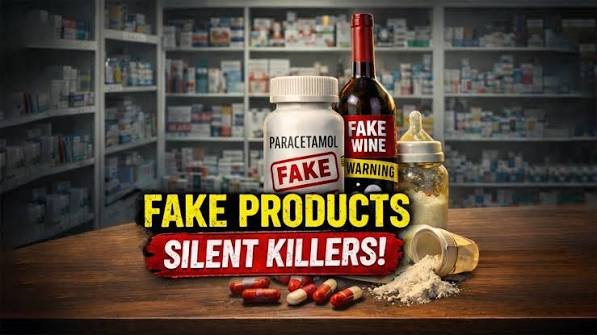
ABUJA, Nigeria – A toothpaste that smells different, a cream that leaves unexplained rashes or a drink with a suspicious seal can turn an ordinary shopping trip into a health risk—but increasingly, even experienced traders struggle to tell genuine products from convincing fakes. In this report, Oluwatobi Adu examines how counterfeit goods are infiltrating Nigeria’s marketplace, why consumers remain vulnerable and whether stronger enforcement and accessible verification systems can prevent avoidable harm.
When Fake Products Look Almost Real
For many Nigerians, buying everyday essentials has become an exercise in uncertainty. Toothpaste, soap, body lotion and drinks are expected to be safe when purchased from familiar shops. Yet consumers interviewed by Africa Health Report described experiences that left them questioning whether the products they bought were genuine.
Timilehin, a banker in his early thirties from Ogun State, said he checked expiry dates and examined the appearance, taste and texture of familiar products. “I often check expiry dates. If it hasn’t expired and it’s a product I am very familiar with, I check its appearance, taste or physically touch the product to know.”
He advised consumers to slow down when shopping and verify products using NAFDAC registration details. “Consumers should be careful and not be in a rush to consume products, check expiry dates, double check with NAFDAC code.”
However, an unexpired product can still be counterfeit, adulterated or poorly manufactured. Familiar packaging also does not guarantee that its contents are genuine. Dadson Semilore, a 27-year-old primary school teacher living in Apo Resettlement, Abuja, said counterfeiters had become so skilled that identifying fake products was increasingly difficult. “Really can’t differentiate well these days. The so-called fake products are doing a very good job trying to look original,” he said.
Other consumers reported suspicious changes in colour, smell, taste and packaging. Yet these differences, while useful warning signs, cannot independently establish that a product is counterfeit. For consumers, that creates a troubling dilemma: a product may appear genuine until something raises suspicion, sometimes after it has already been used.
A Skin Reaction Raises Questions About Product Safety
For 22-year-old songwriter and writer Owolabi Damola, the concern went beyond suspicious packaging. Damola, who lives in Ogun State, said he developed rashes and dark spots after using a body lotion oil he suspected was counterfeit.
He underwent several tests but said the cause remained unclear until a friend who used the same product experienced a similar reaction.
The experience raised concerns, although it did not establish that the product was counterfeit or directly caused the symptoms. Damola said he struggled to distinguish genuine products from imitations, even though he had purchased the product before. “I can’t really tell the original from fake because it’s not my first time buying the product; the fake looks so real,” he said.
He suggested that manufacturers introduce QR codes linked to NAFDAC records to help consumers verify products before use. Such systems could simplify verification, provided they connect to reliable regulatory records and include safeguards against copied or manipulated codes. Without accessible and trustworthy verification, consumers may remain unable to determine whether a product is safe before exposure occurs.
How Consumers Try to Spot Counterfeit Goods
Other consumers said they relied on differences in taste, colour, smell and packaging to identify suspicious products. Musa Tanko, a 22-year-old entrepreneur based in Dutse Alhaji, Abuja, recalled buying a Coca-Cola product he suspected was counterfeit because its seal appeared defective and its taste differed from what he expected.
He said identifying fake goods was particularly difficult when buying products he did not use regularly. “It is difficult to distinguish between fake and genuine products, especially products that are not used daily,” Tanko said.
He advised consumers to consider where they shop, inspect packaging and consult NAFDAC’s official channels for product-registration and safety information.
Abiodun Olayinka, a 25-year-old entrepreneur living in Lugbe, Abuja, said she once suspected a medicated bar soap was fake because of its colour and smell. She compared the product with information and images on manufacturers’ websites. “It’s difficult to distinguish fake products these days, so I go to product pages to check out their products, especially the differences,” she said.
Ada Polite, a 21-year-old entrepreneur in Bariga, Lagos, also described encountering products she suspected were counterfeit, including Hollandia, toothpaste and biscuits. She said differences in colour and smell prompted her concerns. “Really can’t differentiate these days. The so-called fake products are doing a very good job trying to look original, but most times the colours and smell of the content give it away,” Polite said.
However, changes in colour, smell or taste are not conclusive proof of counterfeiting. Genuine products can vary, while convincing fakes may escape casual inspection. This makes verification through reliable regulatory channels more important than relying on appearance alone.
Even Experienced Traders Struggle to Identify Fakes
The problem extends beyond consumers to retailers responsible for supplying everyday goods.
Musa Badamasi, a 60-year-old shop owner in Utako, Abuja, said identifying counterfeit products had become increasingly difficult, even for traders with years of experience.
He said he usually bought goods from familiar wholesalers and checked packaging and expiry dates. However, he acknowledged that these precautions could not guarantee authenticity. “Some products resemble the original so much that even a person wey don dey trade for years fit make a mistake.”
Badamasi said he took customer complaints seriously by examining disputed products and contacting suppliers. He added that suspected counterfeit goods could damage customer confidence in his business. He called for simpler ways for retailers to verify products and check their suppliers. “The government should give traders a simple way to confirm products and also check the people supplying these goods. We cannot know everything by ourselves.”
Yakub, a 40-year-old shop owner in Pana Village, Jabi, Abuja, said he checked expiry dates and seals and preferred suppliers with whom he had established relationships.
However, he recognised that packaging could not reveal everything about a product’s contents. “You fit check the outside, but you do not know everything about the content. I Dey check am well before I buy from the market.”
Yakub said customer complaints about unusual taste or smell prompted him to inspect products and contact suppliers or market representatives. He cautioned against declaring a product counterfeit without further checks. Like Badamasi, he called for scannable verification codes and simpler channels for reporting suspicious goods.
Their accounts reveal a weakness in the supply chain: when neither consumers nor retailers can confidently authenticate a product, responsibility cannot rest on vigilance at the point of purchase alone.
NAFDAC Warns of Changing Counterfeit Networks
Regulatory warnings suggest that the problem extends beyond individual shops and isolated products. On September 9, 2026, the National Agency for Food and Drug Administration and Control (NAFDAC) disclosed that intelligence indicated counterfeit networks linked to foreign syndicates were shifting from importing fake goods towards establishing manufacturing operations and distribution logistics within Nigeria.
The disclosure, attributed to Martins Iluyomade, NAFDAC’s Director of Investigation and Enforcement, raised concerns about the ability of counterfeit networks to operate within domestic supply chains. If counterfeit goods are manufactured or distributed locally, enforcement efforts must reach beyond imported consignments to manufacturing sites, storage facilities, wholesalers and retail outlets.
NAFDAC also warned Nigerians on October 8–9, 2026, against a viral social-media list claiming that several products sold in Nigeria were fake, adulterated or substandard. The agency said the list did not originate from NAFDAC and was neither an official regulatory alert nor a product recall. The warning highlights another risk: misinformation about counterfeit goods can undermine public confidence and cause consumers to distrust products without verified evidence. Nigerians must therefore navigate two related threats—potentially dangerous products and unverified claims circulating online. Both require credible information from reliable sources.
What the Enforcement Figures Reveal
The World Health Organization estimates that at least one in 10 medical products in low- and middle-income countries is substandard or falsified. This estimate concerns medical products, not all consumer goods sold in Nigeria.
Nevertheless, counterfeit and substandard medicines can have serious consequences for patients who depend on them to treat illnesses and prevent complications. NAFDAC’s enforcement figures also illustrate the scale of the agency’s activities against suspected counterfeit and substandard products. The agency destroyed products worth more than ₦120 billion between July and December 2024.
During enforcement operations in Lagos, Anambra and Abia between February and March 2025, authorities reportedly seized more than 137 truckloads of suspected counterfeit and substandard products valued at over ₦1.5 trillion. More than 11,000 shops were sealed during the operations.
In 2023, NAFDAC conducted 3,486 investigations and 26,453 surveillance operations, destroying products valued at more than ₦21.1 billion. The agency also reportedly received 225 complaints about suspected counterfeit products in August 2026.
These figures demonstrate substantial enforcement activity. However, they do not establish how much counterfeit merchandise remains in circulation or how effectively interventions prevent further distribution. They also highlight the need to distinguish between suspected products, confirmed counterfeits and substandard goods. Seizures and destruction figures alone cannot measure the full extent of the problem or prove that the market has become safer.
The critical question is whether enforcement is consistently identifying dangerous products, tracing those responsible and preventing the goods from reaching consumers.
How Counterfeit Products Can Harm the Body
An epidemiologist and disease-control specialist affiliated with Arden University in the United Kingdom, Dr Charles Adeyemo, described counterfeit and substandard products as a significant public-health concern.
Adeyemo, who also serves as an associate lecturer at London Metropolitan University and the University of Ulster, said the problem covers two broad categories: completely counterfeit goods and genuine products that have been adulterated, diluted or manufactured below required standards. “This is a major but silent public health crisis in Nigeria. When we say fake or substandard, we mean two things: completely counterfeited products, and genuine products that have been adulterated, diluted, or poorly manufactured below NAFDAC and SON standards.”
The health consequences depend on the product, the substances involved, the level of exposure and the individual affected. Contaminated food and drinks can expose consumers to dangerous substances. Some toxic alcohols, for example, can cause severe poisoning, blindness or death.
Counterfeit or substandard medicines present another danger. Products containing incorrect ingredients, insufficient amounts of active ingredients or contaminants may fail to treat an illness or cause harmful reactions. Ineffective antibiotics can also contribute to antimicrobial resistance when they fail to eliminate infections or are used inappropriately.
Cosmetics and personal-care products can pose risks when they contain unsafe ingredients or excessive concentrations of certain substances. Adeyemo warned that some bleaching creams containing excessive amounts of hydroquinone, mercury or corticosteroids can cause serious harm.
He added that the effects of exposure are not always immediately apparent. “The danger is that these effects are not always immediate. They accumulate silently over months and years.”
Possible symptoms following exposure to a harmful product include nausea, vomiting, diarrhoea, abdominal pain, skin rashes, itching, burns, headaches, dizziness and eye irritation. Severe poisoning or allergic reactions can cause difficulty breathing, seizures or sudden collapse.
However, these symptoms can have several causes and do not, by themselves, prove that a product is counterfeit. Consumers who develop unusual symptoms after using a product should stop using the suspected item and seek appropriate medical assessment. Anyone experiencing severe symptoms, including difficulty breathing or seizures, should seek emergency medical attention.
Adeyemo advised consumers to report suspected products to the relevant authorities and avoid self-medication. “If you experience unusual symptoms after changing your soap, cream, toothpaste, drink or food brand, stop usage immediately and report to your nearest healthcare facility and to NAFDAC. Do not self-medicate.”
Why Expiry Dates and Familiar Packaging Are Not Enough
Many consumers interviewed for this report said they checked expiry dates, seals, colours, smells and packaging before buying products.
These are useful precautions, but none can conclusively establish authenticity. Counterfeit products may carry copied registration numbers, reproduce manufacturers’ logos or display apparently valid expiry dates. Genuine products may also become unsafe because of improper storage, adulteration or other quality failures.
Adeyemo advised consumers to verify NAFDAC registration details through official channels rather than relying solely on numbers printed on packaging. Where available, consumers should use NAFDAC’s official product-verification tools and authentication services, following the agency’s current instructions.
Unusually low prices may warrant further scrutiny, particularly when they fall substantially below the normal market price. Consumers should also look for damaged seals, missing manufacturing information, suspicious labels and inconsistencies in packaging. However, visual inspection remains an initial precaution, not a guarantee of safety. For medicines and other regulated products, official verification is more reliable than comparing packaging images or relying on online reviews.
Why Consumers Cannot Fight Counterfeiting Alone
Consumers can take precautions, but they cannot independently investigate every manufacturer, wholesaler and distributor.
Retailers need practical ways to confirm that their stock comes from legitimate sources. Manufacturers must strengthen supply-chain safeguards, while regulators need the capacity to investigate complaints, test suspicious products and disrupt counterfeit operations.
Adeyemo urged consumers to report suspected counterfeit goods to NAFDAC through its official website, designated reporting channels or nearest office. Depending on the product and applicable standards, the Standards Organisation of Nigeria may also have a regulatory role.
He encouraged Nigerians to report suspicious products rather than simply discard them, as complaints can help regulators identify patterns and investigate potential threats. “Fake products thrive because of low awareness and economic hardship. As Nigerians, we must be vigilant about what we put in and on our bodies.”
Africa Health Report contacted a NAFDAC official for comment but had not received a response as of the time of filing this report.
Beyond Vigilance: Can Nigeria Make Its Markets Safer?
The experiences of consumers and retailers reveal a troubling contradiction. Nigerians are urged to inspect products carefully, yet even familiar brands can be difficult to authenticate by appearance alone.
A suspicious smell may trigger a complaint. A skin reaction may raise questions. A defective seal may prompt concern. But these warning signs can emerge only after a product has been purchased—and sometimes after it has been used.
The solution cannot be to expect every Nigerian to become a counterfeit investigator.
Regulators need accessible verification systems, responsive complaint channels and sustained surveillance. Manufacturers must strengthen supply chains and make product authentication easier. Retailers need traceable suppliers and clear procedures for checking suspicious stock. Consumers need reliable information that distinguishes confirmed safety alerts from online rumours.
Just as importantly, complaints must lead to credible investigations, and enforcement must extend beyond seizing goods to identifying and holding those responsible for manufacturing and distributing dangerous products accountable.
The value of goods seized, the number of shops sealed, and the volume of products destroyed are important enforcement indicators. But they do not answer the most important question: Are dangerous products being kept out of the hands of Nigerians?
Answering that question requires evidence that enforcement disrupts counterfeit supply chains, prevents repeat offences and improves the public’s ability to verify products before purchase.
Until those safeguards become more accessible and effective, consumers and retailers will continue to shoulder risks they cannot reasonably manage alone.
In a market where a fake can look genuine, vigilance matters—but it cannot replace effective regulation. The real measure of success is not how many counterfeit products authorities destroy, but how many never reach the people who depend on these products every day. Nigerians should not have to gamble with their health every time they buy the essentials of daily life.
About the Author


 Mirian Gom