


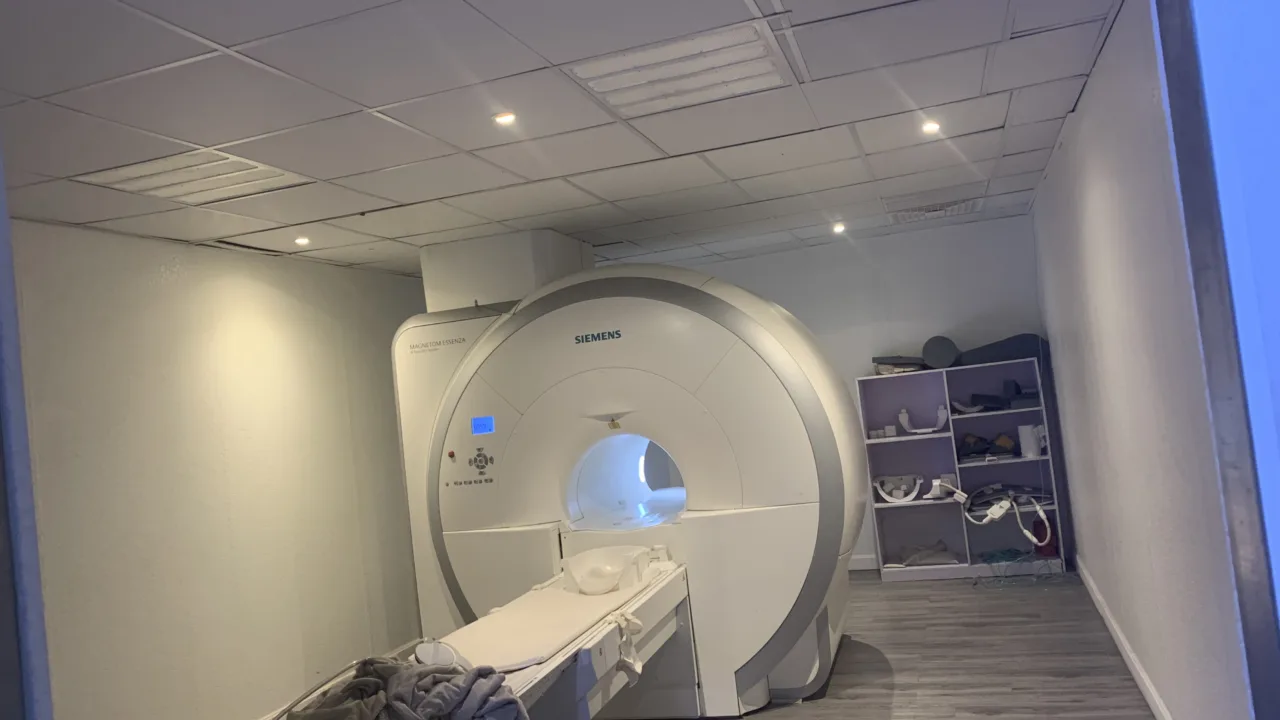
ABUJA, Nigeria – For two Nigerian families, an MRI examination intended to help doctors understand a loved one’s illness became the last stage of a distressing hospital experience: both men reportedly lost the ability to communicate after their scans and died shortly afterwards. Their accounts do not establish that the examinations caused their deaths, but they raise difficult questions about MRI safety, equipment quality control and who is responsible for monitoring standards in Nigeria. Oluwatobi Adu writes.
When Patients Returned from the Scanner Changed
Mrs. Adegbite still remembers the moment her 62-year-old husband went for an MRI examination. Earlier that day, he had complained of chest heaviness while exercising and became sweaty. The family rushed him to a hospital in Abuja, where he reportedly fell into a coma. After doctors stabilised him and conducted preliminary tests, they recommended an MRI scan to investigate his condition.
Mrs. Adegbite said her husband regained consciousness and could speak, smile and interact with relatives before the examination. However, his condition reportedly changed after the scan. “He was talking and smiling after the doctors stabilised him. But after he went into the MRI machine, everything changed. He stopped talking and could only look at everybody. He remained conscious for about a week. At one point, he asked to write down how he was feeling, but he could not write. Sadly, he later died in the hospital,” she said.
A similar experience befell Miss Evelyn’s family. Her 64-year-old father had suffered persistent illness and joint pain following two falls in Warri and Ogun State. Further examinations at a Lagos State hospital reportedly revealed internal bleeding and bone cancer. Although he remained conscious and could interact with relatives, doctors recommended an MRI scan before his planned chemotherapy.
Miss Evelyn said her father was taken to a diagnostic centre for the examination. She recalled that the machine produced loud noises during the procedure. “When they brought my father out, he was holding his ears because of the noise. Shortly afterwards, he fell to the ground and became paralysed. He stopped talking and could only cry for days to communicate with us. He could see his family members, but he could no longer communicate with us as he did before,” she said.
Her father died two days later. The family also heard claims that the machine was old and poorly maintained, although they had no independent evidence to establish this. Both accounts raise troubling questions. However, neither establishes that MRI exposure or equipment failure caused the patients’ deterioration. Their underlying illnesses were serious, and determining what happened would require medical records, maintenance logs and independent clinical investigations. Nevertheless, their experiences highlight a critical question: how effectively are MRI facilities in Nigeria maintained, regulated and monitored?
Research Exposes MRI Quality-Control Gaps
Concerns about MRI safety and reliability come amid limited access to diagnostic equipment and reported weaknesses in quality-control practices.
A 2023 survey, Status of Magnetic Resonance Imaging Systems and Quality Control Programs in Nigeria, gathered responses from 44 professionals across 24 MRI centres. It found that 83 per cent of the centres relied solely on service engineers to keep their machines operational. Meanwhile, 45 per cent reported inadequate understanding of MRI quality control.
The survey also found that 71 per cent had Radiation Safety Advisers whose responsibilities did not cover MRI. Researchers identified unclear regulatory requirements, staff shortages, heavy workloads and limited access to quality-control equipment as major challenges. A separate 2026 study published in the Nigerian Journal of Physics examined 100 brain MRI scans in Ibadan. It highlighted how imaging artefacts can affect diagnostic accuracy and recommended adjustments to scanning protocols, particularly when comparing low-field and high-field systems.
These findings underline an important distinction: a machine can be operational without consistently producing images of acceptable quality. Regular performance testing, maintenance and qualified personnel are essential to reliable diagnosis. Nigeria also faces a significant shortage of MRI equipment. Estimates cited in the report put the country’s total number of machines at about 58, with approximately one-third located in public hospitals.
In the South-West, reports indicate that only one of eight teaching hospitals had a functional MRI machine. In the North-East, more than 30 million people have reportedly had access to only one non-functional MRI machine. These shortages, compounded by unreliable electricity, limit access to essential diagnostic services. However, expanding MRI capacity without strengthening quality assurance and maintenance could create further problems.
Who Regulates MRI Safety in Nigeria?
Part of the oversight challenge lies in the technology itself. Unlike conventional X-rays and CT scans, MRI machines use strong magnetic fields and radiofrequency energy rather than ionising radiation.
In 2026, the Nigerian Nuclear Regulatory Authority (NNRA) completed the gazetting of regulations developed under the Nuclear Safety and Radiation Protection Act. However, its principal regulatory framework covers facilities and equipment involving ionising radiation. MRI’s different technology places it outside that primary framework.
The Radiographers Registration Board of Nigeria (RRBN) and the Association of Radiographers of Nigeria (ARN) have responsibilities relating to professional regulation and standards. Hospitals and diagnostic centres also maintain their own patient-screening and equipment-safety procedures. However, the absence of clearly defined, comprehensive national requirements specifically covering MRI equipment performance and quality control raises questions about accountability.
Who independently verifies that scanners function properly? How frequently are performance checks conducted? Who reviews maintenance records, and what happens when safety incidents are reported? These questions remain central to the debate over MRI oversight in Nigeria.
What Radiographers Say About MRI Risks
Medical radiographer Thliza Joseph Samuel told Africa Health Report that MRI machines require regular maintenance and specialised technical attention. He said servicing schedules vary across facilities, with some hospitals conducting maintenance every six months and others annually.
Samuel explained that MRI does not use ionising radiation. He also cautioned against directly attributing patients’ deterioration or deaths to MRI examinations without clinical evidence. “MRI cannot cause harm to people because it uses magnetic energy, so it doesn’t have radiation. It uses radiofrequency to make images,” he said.
He identified patient screening as an essential safety measure. Radiographers must review medical histories, check for metallic implants, confirm patient identities and assess claustrophobia before examinations. Patients requiring contrast agents must also undergo appropriate assessment.
Samuel stressed that MRI systems require specialised technical expertise, particularly when equipment develops faults or image quality becomes questionable. “MRI is a very complex machine. It’s not something like a car that maybe when you go to work on Toyota, you can work on Honda. You need to be specially trained on medical equipment,” he said.
He added that he was unaware of documented evidence establishing that most Nigerian facilities neglected equipment maintenance.
Inside an MRI Facility’s Safety Procedures
At E-Clinic and Diagnostics in Wuse 2, Abuja, a radiographer identified as Ofy described the centre’s procedures for protecting patients. She said the facility operates a four-zone safety system, restricting access to the changing area and scanner room to individuals who have undergone screening.
Patients complete forms disclosing previous surgeries, metallic implants and other relevant medical information. Radiographers then establish whether implants are compatible with MRI. The centre also screens patients for claustrophobia and provides reassurance during examinations.
Ofy said routine equipment checks include monitoring helium levels and inspecting cooling systems. She added that radiographers receive specialised MRI safety training and additional instruction when new equipment is installed. She stressed that patients with suspected metallic objects must undergo further assessment before scanning.
The procedures demonstrate the importance of screening, trained personnel and equipment maintenance. However, practices at one diagnostic centre cannot establish whether similar safeguards operate consistently across Nigeria.
Stronger Oversight Is Needed
The experiences of Mrs. Adegbite and Miss Evelyn cannot establish that MRI examinations caused their relatives’ deaths. Only independent clinical investigations could determine whether the scans contributed to their deterioration. However, their accounts expose a wider accountability challenge. Patients deserve confidence that diagnostic equipment is properly maintained, operators are adequately trained and safety procedures are consistently enforced.
Nigeria needs clearer and enforceable national standards covering MRI equipment commissioning, routine performance testing, preventive maintenance, operator training, patient screening and incident reporting. Facilities should maintain accessible records of servicing and quality-control checks. Independent inspections should also verify compliance.
The RRBN, ARN, hospital management, biomedical engineering professionals and Federal Ministry of Health must work towards clearly defined responsibilities, particularly given MRI’s position outside the NNRA’s principal ionising-radiation mandate. Reliable electricity and cooling infrastructure are equally important. A scanner that is poorly maintained, frequently unavailable or unable to produce dependable images cannot deliver the diagnostic service patients need.
Ultimately, acquiring more MRI machines will not guarantee safer healthcare. Nigeria must invest equally in maintenance, technical expertise, quality assurance and regulatory accountability. For families entering an MRI facility, the expectation is simple: that the examination will be conducted safely and its findings will help guide treatment. Ensuring that expectation is met requires a system in which someone is clearly responsible for checking the machines.







Join the conversation