

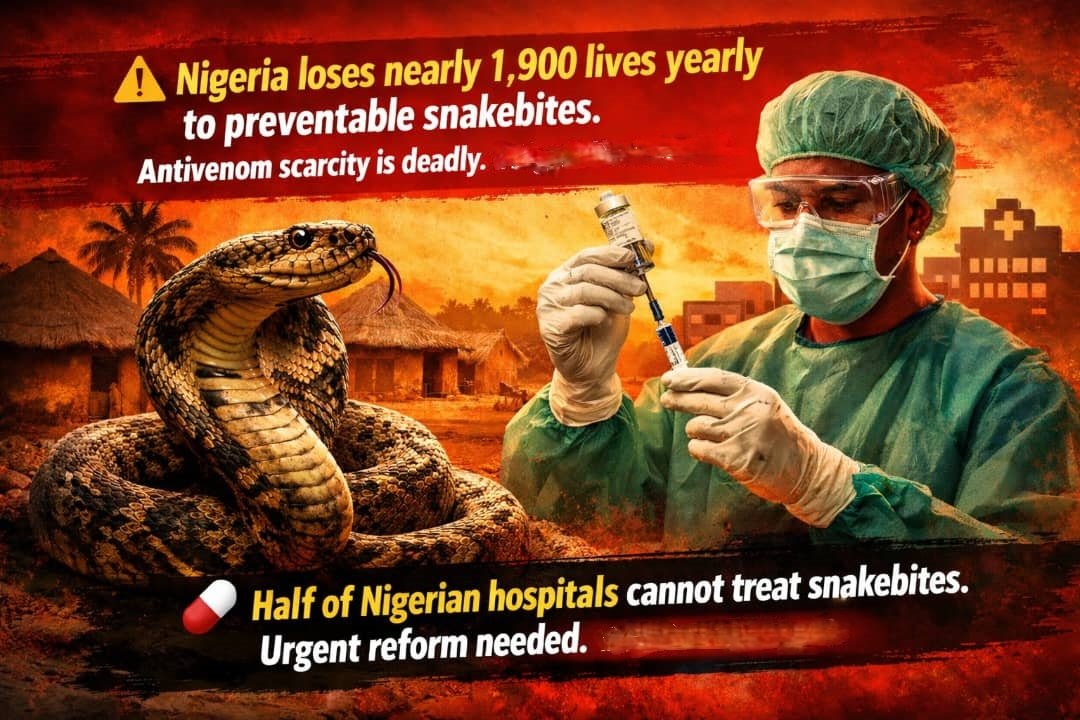
Nigeria cannot continue to lose lives to preventable snakebites. Every year, nearly 43,000 Nigerians are bitten by snakes, with approximately 1,900 fatalities—a number that would be unthinkable in a country with adequate healthcare access. Yet antivenom, the only recognised treatment by the World Health Organisation, remains scarce, expensive, and largely inaccessible.
The tragic death of 26-year-old rising singer Ifunanya Nwangene, who captivated audiences on The Voice Nigeria, underscores the deadly consequences of this neglect. Her passing is not an isolated incident; it is the human cost of a long-standing public health failure. Rural farmers and marginalised communities, who face the highest risk, often travel miles or rely on traditional remedies because antivenom is unaffordable, ranging from N180,000 to N250,000 per dose—an amount equivalent to four months’ wages for minimum-income earners.
Experts on Neglected Tropical Diseases warn that weak health systems, poor infrastructure, and chronic antivenom shortages drive these preventable deaths and long-term disabilities. Half of Nigerian health facilities lack the capacity to treat snakebite envenoming, and even specialised hospitals often do not have antivenom in stock. “We have the science, expertise, and capability to produce antivenom locally, but what is lacking is commitment and political will,” says Professor Patricia Lar of the University of Jos.
The Federal Government must act decisively. Subsidising antivenom, supporting local production, and making treatment available at primary healthcare centres are urgent steps. The Nigerian Senate’s call for mandatory hospital stocking and coordinated emergency referral systems is welcome, but more comprehensive policies are required.
Snakebite deaths are preventable—but only if Nigeria prioritises this neglected crisis. It is time to turn statistics into action, and in doing so, save thousands of lives before more tragedies like Nwangene’s occur.

Join the conversation