


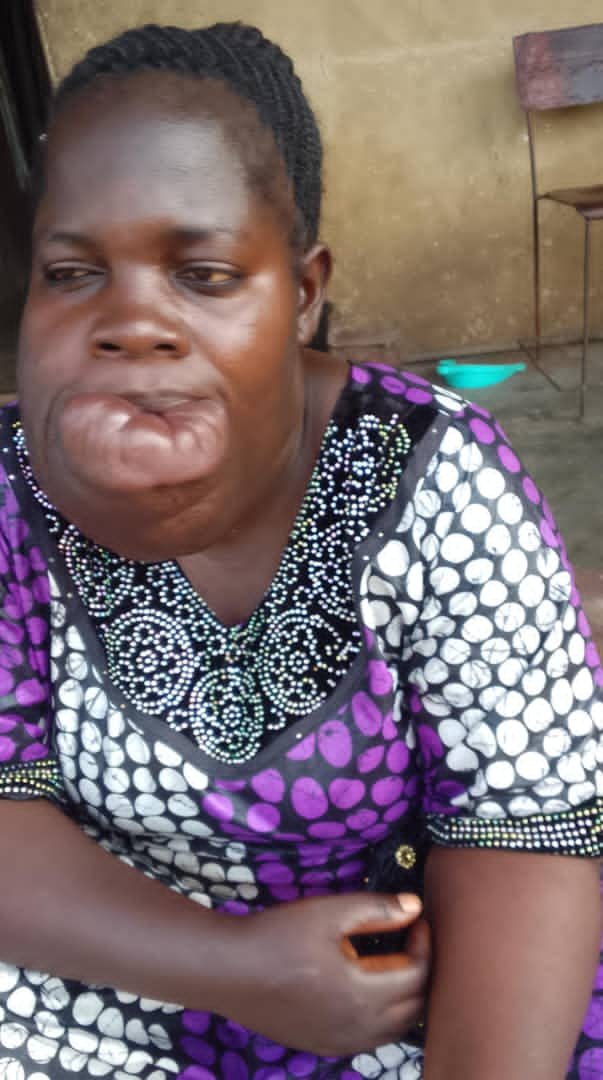
ABUJA, Nigeria – When Deborah Ajibade first noticed a swelling on her cheek in her early twenties, she did what health experts encourage every Nigerian to do—she sought medical attention. She expected answers. Instead, she began a journey that would stretch across years, ending with a cancer diagnosis she could not afford to treat. Her story, documented by Oluwafunbi Bello, reflects a troubling reality facing many Nigerians. Despite growing awareness campaigns, delayed cancer diagnosis remains a major challenge, driven by missed warning signs, limited diagnostic capacity, weak referral systems and the high cost of treatment. For many patients, reaching the hospital is only the beginning of an even more difficult battle.
A Swelling That Never Went Away
Deborah remembers when the swelling first appeared.
Her elder siblings took her to a hospital, hoping it was a minor health problem that could easily be treated.
According to Deborah, she was told it was likely “shegede” and was given medication.
“It started when I was in my early 20s and my elder siblings took me to the hospital and the nurse gave me treatment saying it’s probably shegede,” she recalled.
The swelling never disappeared.
Instead, it slowly became part of her daily life.
Nearly a decade later, at age 30, she sought further medical care at Egbe Teaching Hospital in Kwara State.
The diagnosis changed everything.
“When I went to Egbe Teaching Hospital last year, I was diagnosed with cancer.”
Doctors referred her to the University of Ilorin Teaching Hospital (UITH) for specialist treatment.
But another obstacle emerged.
Money.
“I was referred to the University of Ilorin Teaching Hospital where I couldn’t go because of money.”
Having heard how expensive cancer treatment could be, Deborah said she simply could not afford to continue.
“I’ve also heard cancer treatment is expensive, so I couldn’t go.”
Today, beyond living with the illness itself, she says the visible changes to her face have affected her confidence and personal life.
“I couldn’t even find a husband because of how I look.”
When Seeking Care Isn’t Enough
Deborah’s experience highlights a misconception about delayed cancer diagnosis.
Many people assume patients arrive late because they ignore symptoms.
That was not Deborah’s experience.
She sought medical attention when the swelling first appeared.
Her story instead illustrates how delays can occur at multiple stages—from recognising symptoms and obtaining appropriate investigations to receiving specialist referrals and ultimately accessing treatment.
It also demonstrates that receiving a diagnosis does not automatically translate into receiving care.
Financial barriers remain one of the biggest obstacles for many Nigerian cancer patients.
Why Early Diagnosis Matters
Consultant oncologist Dr Emmanuel Taiwo says timing can make the difference between successful treatment and poor outcomes.
Cancer becomes progressively harder to treat as it advances.
“It has different stages, and if it’s at the highest stage, it is very risky and hard to treat,” he said.
According to the World Health Organization (WHO), cancers detected early are generally more responsive to treatment, improving survival rates while reducing complications and treatment costs.
By contrast, advanced cancers often require more aggressive—and more expensive—care.
A National Pattern
Deborah’s story mirrors findings from recent research across Nigeria.
A 2025 study on cancer diagnosis pathways found patients waited a median of 12 months between noticing symptoms and receiving a diagnosis.
For head-and-neck cancers, the delay extended to 15 months.
Researchers also found patients typically visited three different health facilities before receiving a confirmed diagnosis.
Several factors contributed to these delays, including:
Financial constraints
Underestimating early symptoms
Delayed referrals
Limited diagnostic services
Weak health-system coordination
The findings suggest that many delays occur even after patients have entered the healthcare system.
The Cost of Delayed Treatment
For many Nigerians, diagnosis marks the beginning—not the end—of the struggle.
Treatment often involves repeated investigations, surgery, chemotherapy, radiotherapy and long-term follow-up.
Without adequate financial protection, many patients abandon treatment altogether.
The WHO identifies cost, referral delays, inadequate diagnostic infrastructure and poor access to specialist care among the major barriers affecting timely cancer treatment globally.
Deborah’s experience reflects each of these realities.
She accepted the diagnosis.
She wanted treatment.
She simply could not afford it.
Awareness Alone Will Not Save Lives
Cancer awareness campaigns have become more common across Nigeria.
But experts say awareness alone is not enough.
There is a critical difference between knowing cancer exists and receiving timely diagnosis and treatment.
The WHO distinguishes early diagnosis from cancer screening.
Early diagnosis focuses on patients who already have symptoms, ensuring they receive prompt evaluation and treatment.
Screening, by contrast, aims to detect disease before symptoms develop.
Deborah had symptoms.
She sought care.
Yet years passed before she received a definitive diagnosis.
Her story demonstrates why improving cancer outcomes requires strengthening the entire care pathway—not simply encouraging more people to visit hospitals.
Closing Nigeria’s Cancer Diagnosis Gap
Health experts say Nigeria can significantly improve cancer survival by investing in earlier diagnosis and faster access to treatment.
Priority actions include:
Strengthening diagnostic services in primary and secondary healthcare facilities.
Training frontline health workers to recognise persistent warning signs requiring urgent referral.
Expanding specialist oncology services beyond major urban centres.
Improving referral systems to reduce delays between hospitals.
Increasing financial protection through broader health insurance coverage for cancer care.
Sustaining public education that encourages Nigerians to seek medical evaluation when symptoms persist.
These measures would help patients move more quickly from suspicion to diagnosis—and from diagnosis to treatment.
More Than a Medical Condition
For Deborah, cancer has changed far more than her health.
It has altered her appearance, interrupted her treatment journey and affected how she sees her future.
Her story is a reminder that delayed cancer diagnosis is not simply a medical statistic.
It is measured in years lost to uncertainty, families struggling to raise money, and patients whose best chance of survival slips away while they wait for answers.
As Nigeria continues expanding cancer awareness campaigns, the next challenge is ensuring that awareness leads to action.
Recognising symptoms must be followed by timely diagnosis.
Diagnosis must lead to affordable treatment.
Only then can more Nigerians receive not just a diagnosis—but a genuine chance to survive.




Join the conversation