


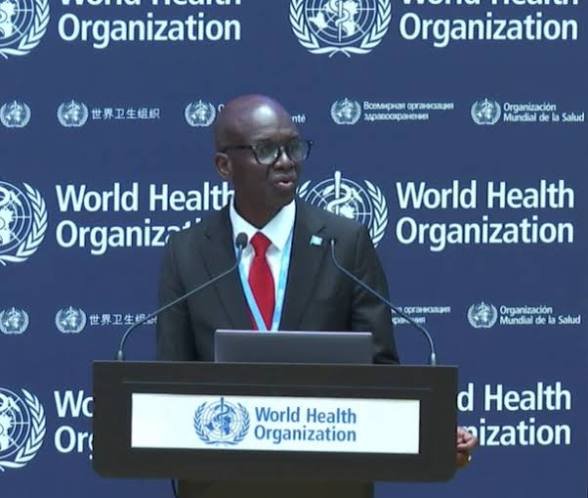
ABUJA, Nigeria – The World Health Organisation (WHO) has warned that funding shortages and gaps in vaccination coverage could reverse progress towards eradicating polio in Africa, urging governments and international partners to sustain investment in immunisation and outbreak response.
In a message marking World Polio Day on Friday, WHO Regional Director for Africa, Dr Mohamed Janabi, said predictable funding and stronger political commitment were essential to protecting children against the disease. Janabi said the WHO African Region’s certification as free of indigenous wild poliovirus in 2020 demonstrated what coordinated public health action could achieve. However, he warned that continued poliovirus transmission in some areas and inadequate vaccination coverage threatened the gains made.
He noted that independent assessments in 2026 had confirmed the closure of type 2 poliovirus outbreaks in Burundi, Ghana, Guinea-Bissau, the Republic of the Congo and Uganda. However, the detection of type 1 poliovirus in Madagascar, following the closure of an earlier outbreak in 2025, showed that progress could be reversed where vaccination coverage remained inadequate.
According to Janabi, more than 168 million children received at least one dose of polio vaccine through 55 vaccination campaigns conducted in 22 African countries between January and September 2026.
Coordinated campaigns in Angola, the Democratic Republic of the Congo (DRC) and Namibia in March also reached more than 10 million children, he said. Janabi commended health workers, community leaders and parents for helping vaccination teams reach children, including those living in remote and hard-to-reach communities.
The WHO regional director warned that limited funding was forcing vaccination campaigns to prioritise areas considered most at risk, potentially leaving other vulnerable populations without adequate protection.
The Lake Chad Basin and the DRC remain areas of concern, with continued transmission challenging efforts to interrupt the virus’s spread. In the DRC, additional vaccination rounds required to respond to a type 2 poliovirus outbreak were still awaiting funding, threatening progress towards the region’s 2026 eradication targets.
Janabi said every child needed to receive all recommended doses of polio vaccine, alongside access to reliable routine immunisation services.
He identified conflict, displacement, distance and concerns about vaccines as barriers to reaching every child, calling for health services to be brought closer to communities. Despite the funding challenges, Janabi highlighted improvements in poliovirus surveillance and laboratory capacity across the region.
He said laboratories tested more than 100,000 polio samples in 2025, with more than 90 per cent analysed within agreed timelines.
The expansion of sequencing capacity from two to four laboratories had also improved the timeliness of results from below 50 per cent to nearly 70 per cent, he added.
The accreditation of Nigeria’s Maiduguri laboratory had further strengthened the region’s ability to detect and respond to poliovirus.
Janabi also pointed to the piloting of newer technologies, including Direct Detection Nanopore Sequencing, which could reduce laboratory turnaround times and accelerate public health responses.
He called on African governments to increase domestic funding for immunisation and urged international partners to provide predictable financial support for vaccination campaigns, surveillance and outbreak response.
Join the conversation