 Hussaini Ibrahim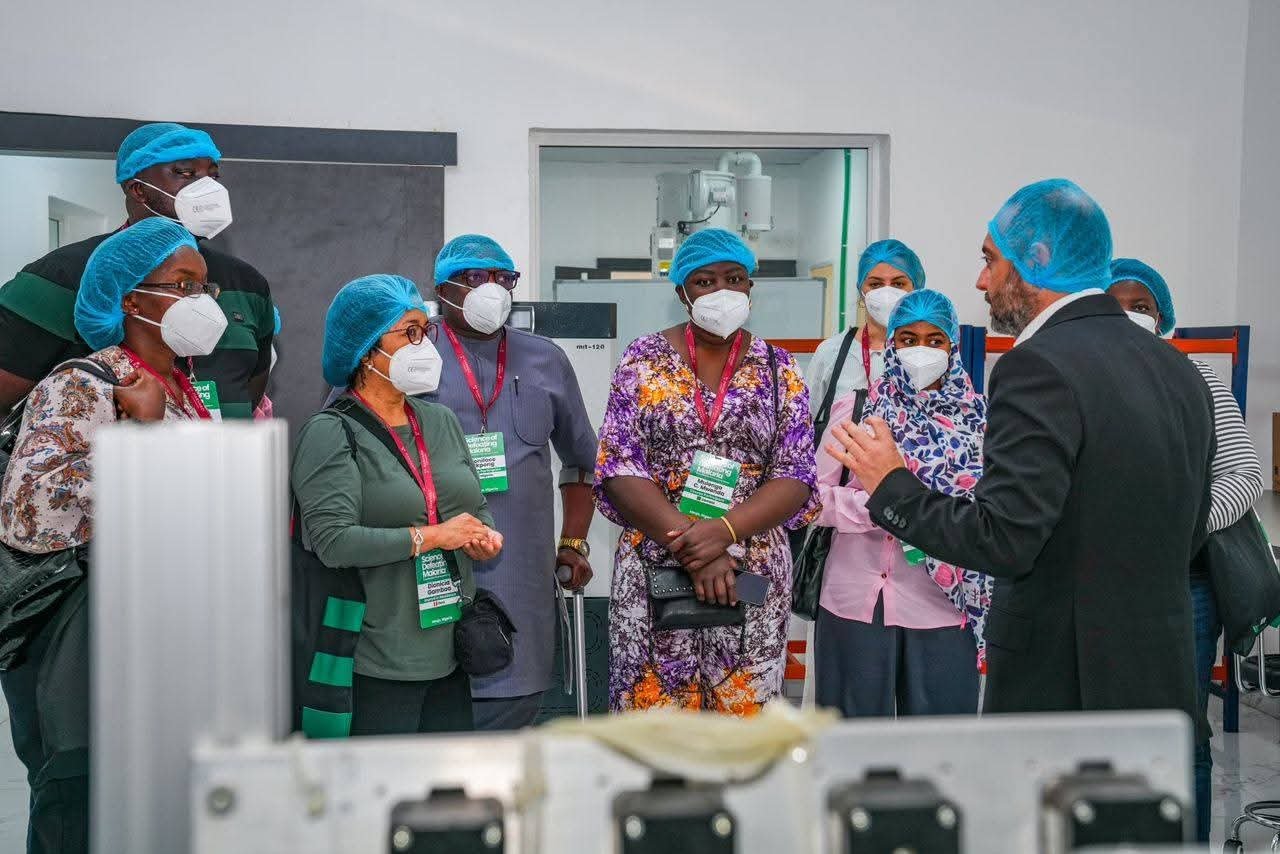
Participants at the Science of Defeating Malaria Leadership Development Course in Abuja discussing Africa's future malaria response.
KANO, Nigeria – As international aid pipelines narrow and global health priorities shift, Nigeria is confronting a question that could shape the future of malaria control across Africa: can the country carrying the world’s heaviest malaria burden learn to fight the disease on its own? In this report, Hussaini Ibrahim examines how policymakers, scientists and health experts gathering in Abuja are weighing Nigeria’s growing push for local manufacturing, domestic financing and health sovereignty against the realities of weak health systems, unequal access and the daily struggles of communities still living with malaria.
For decades, Nigeria’s malaria response has been sustained largely through international support.
From insecticide-treated nets and anti-malarial medicines to rapid diagnostic kits and preventive programmes, donor-backed interventions have formed the backbone of efforts to control one of the country’s deadliest diseases.
But The Landscape Is Changing
As global health funding becomes increasingly uncertain and development partners adjust their priorities, governments across Africa are being forced to rethink the long-term sustainability of disease control programmes.
For Nigeria, the challenge is particularly urgent.
The country continues to account for the largest share of malaria cases and deaths globally, placing it at the centre of both the crisis and the search for solutions.
Children under five remain the most vulnerable, while pregnant women continue to face heightened risks of severe anaemia, miscarriage, maternal complications and low birth weight babies.
Against this backdrop, Nigeria hosted the inaugural Science of Defeating Malaria Leadership Development Course in Abuja.
The week-long programme brought together about 65 policymakers, scientists, programme managers and public health experts from 35 countries to discuss how African nations can move beyond donor-driven responses and build malaria programmes that are locally financed, locally managed and locally sustained.
The Discussions Extended Beyond Conference Halls
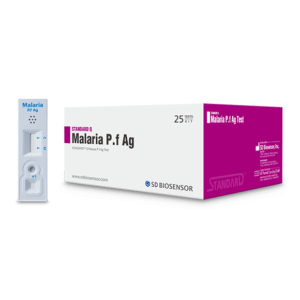
Participants visited the NASENI-Troment Biotechnology Factory in Abuja’s Idu Industrial Area, where rapid diagnostic test kits are being produced under the N-CheckUP brand.
The facility, established through a partnership between the National Agency for Science and Engineering Infrastructure and Torment Nigeria Limited, has become a symbol of Nigeria’s growing ambition to reduce dependence on imported health commodities.
Supporters argue that local manufacturing represents more than industrial development.
It is increasingly viewed as an issue of health security.
Producing diagnostic kits locally could reduce supply delays, lower costs and strengthen access to essential commodities during periods of global market disruption or donor shortfalls.
Yet experts caution that manufacturing alone cannot transform malaria outcomes.
Director-General of the National Agency for the Control of AIDS, Dr. Temitope Ilori, said the country’s malaria crisis extends far beyond healthcare.
“The malaria burden is not just a health crisis; it is a development emergency that undermines our human capital, especially among women and children who form the backbone of our families and communities,” she said.
“With declining donor support, we must accelerate domestic financing reforms. Health sovereignty means integrating malaria control into a resilient, domestically funded system that delivers for every Nigerian, from the urban slums of Lagos to the rural hamlets of the Northeast.”
Her remarks reflect growing concern among health experts that essential public health programmes cannot continue to rely indefinitely on funding streams and supply chains that remain outside national control.
Nigeria’s health sector has repeatedly experienced the consequences of exchange-rate fluctuations, procurement delays and international supply disruptions.
Malaria commodities remain part of that vulnerability.
For many specialists, local innovation therefore represents more than economic opportunity.
It is increasingly viewed as a pathway to resilience.
A public health expert involved in malaria programming said recent gains could easily be reversed without stronger domestic systems.
“Nigeria has made strides with tools like seasonal malaria chemoprevention reaching millions of children and the rollout of malaria vaccines,” the expert said.
“But true elimination requires more than imported nets and drugs. We need sustained investment in local research, robust surveillance and community ownership. Local manufacturing is promising, but it must be backed by quality assurance, strong regulation and equitable distribution if it is to make a real difference.”
Those Concerns Are Perhaps Most Visible at The Community Level
For frontline workers, the biggest challenge often remains access.
Fatima Yusuf, a malaria programme officer in Kano State, said many families still struggle to obtain timely diagnosis and treatment.
“Every day, I see mothers carrying feverish children who have walked long distances for a test that is often unavailable or too expensive,” she said.
“When facilities run out of diagnostic kits or treatment, we lose precious time, and in some cases, we lose lives. Local production gives us hope, but it has to be backed by reliable distribution, strong logistics and affordability at the last mile.”
Her experience highlights the central dilemma facing Nigeria’s malaria response.
Policy reforms and manufacturing investments may generate optimism, but their success ultimately depends on whether they improve services in primary healthcare centres, maternity clinics and rural communities.
Local production cannot automatically repair weak supply chains, poor road networks, delayed budget releases or shortages of healthcare workers.
Nor can it address many of the underlying drivers of malaria transmission, including poverty, inadequate housing, poor sanitation and climate vulnerability.
For health analysts, this is why the conversation about self-reliance must go beyond factories.
It requires stronger investment in primary healthcare, disease surveillance, public health research, data systems and social protection.
Equity Remains Equally Important
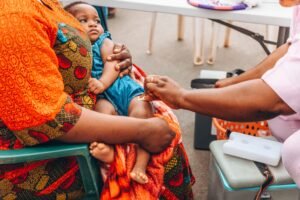
The burden of malaria continues to fall disproportionately on rural households, low-income families, pregnant women and young children.
For many households, the costs of transport, diagnosis and treatment can push already vulnerable families deeper into poverty.
Ensuring that local innovation reaches these communities remains one of the greatest tests of Nigeria’s emerging strategy.
Yet supporters believe the country has a rare opportunity.
Investments in biotechnology, growing conversations around domestic ownership and efforts to strengthen local production could reposition Nigeria from being the world’s biggest malaria burden to becoming a centre for African health innovation.
Hosting the leadership course and expanding local manufacturing point towards a strategic shift.
If sustained, Nigeria could move from being primarily a recipient of malaria interventions to becoming a producer of solutions and a reference point for other high-burden countries.
However, challenges remain.
Financing gaps, procurement bottlenecks, uneven state capacity and weak last-mile delivery systems continue to threaten progress.
For Nigeria to lead Africa’s malaria response, experts say local innovation must achieve more than symbolic value.
It must save lives, it must improve diagnosis, it must reduce costs, and most importantly, it must restore confidence in the health system.
In the end, the question raised in Abuja is not whether Nigeria possesses the ambition to lead.
The real question is whether that ambition can be translated into a resilient, equitable and sustainable model of malaria control.
For the child shivering with fever in a rural clinic, the pregnant woman battling recurrent infections and the health worker managing the last available diagnostic kits, the answer will not be measured by conference speeches or factory output.
It will be measured at the last mile.
And there, where malaria remains most deadly, Nigeria’s promise of self-reliance will either succeed or fail.
About the Author


 Korede Abdullah
 Mirian Gom