Hussaini Ibrahim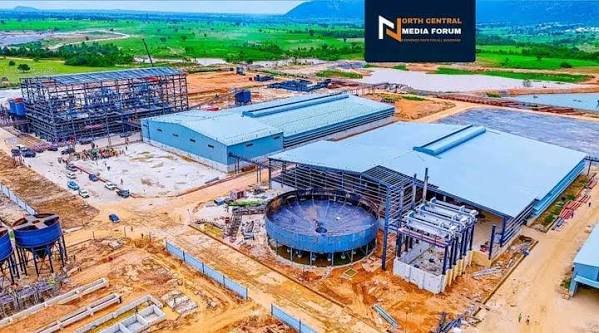
NASARAWA, Nigeria – For decades, crude oil has dominated Nigeria’s economy, generated billions of dollars while exposing the country to boom-and-bust cycles, weak industrialisation and persistent governance challenges. Now, with the commissioning of a $250 million lithium processing plant in Nasarawa State, the Federal Government believes the country’s future may lie in the minerals powering the global transition to clean energy. But can lithium become Nigeria’s next economic success story—or will it simply recreate the structural weaknesses that defined the petroleum era? In this report, Hussaini Ibrahim examines whether Nigeria’s lithium strategy can truly drive industrialisation or merely replace one resource dependency with another.
A $250 Million Bet on Nigeria’s Green Future
The fundamental question, however, remains: can lithium become for Nigeria what crude oil once was—or will the country merely repeat the structural mistakes of the petroleum sector?
Dr. Amina Okoro, a mining economist and senior fellow at the Centre for Extractive Industries Policy in Abuja, argues that the Nasarawa plant represents progress but not yet transformation. “Nigeria has announced value-addition policies before,” she notes. “The petroleum sector was supposed to deliver refining, petrochemicals and downstream industries. Instead, we exported crude and imported refined products for decades. Lithium risks the same trajectory if policy remains focused on primary processing rather than integrated industrial ecosystems.”
Okoro points out that the global lithium value chain is highly concentrated. Converting spodumene concentrate into battery-grade lithium carbonate or hydroxide, then into cathode materials and ultimately into cells and packs, requires successive layers of capital-intensive technology, reliable power, specialised chemicals and skilled labour.
“What we have in Nasarawa is essentially a large concentrator. That captures some value and creates local jobs—over 1,000 direct and 2,000 indirect according to the operators—but the bulk of the economic rent still accrues further downstream in China, South Korea, Japan and, increasingly, the United States and Europe. Without deliberate industrial policy linking processing to precursor manufacturing and eventually battery assembly, Nigeria will remain a supplier of intermediate feedstock rather than a competitive player.”
She warned that the current investment model, dominated by Chinese capital, mirrors the early phase of many African resource booms.
“Chinese firms have injected more than $1.3 billion into Nigerian lithium processing capacity since 2023. While this capital is welcome, technology transfer, local content requirements and equity participation by Nigerian entities must be non-negotiable. If we simply host Chinese plants that process Nigerian ore for export to Chinese battery factories, we will have substituted one form of resource dependence for another.”
While Okoro focuses on industrial policy, Dr. Chinedu Eze, a critical minerals and battery value-chain specialist who previously advised the African Development Bank on green minerals, argues that Nigeria’s biggest challenge is competitiveness.
“The world is actively seeking to diversify lithium supply away from the current China-Australia-Chile concentration,” he says. “Africa holds significant reserves, and Nigeria’s basement complex offers commercial-grade deposits across Nasarawa, Kaduna, Kwara, Kogi, Ekiti and elsewhere.”
Why Lithium Has Become the World’s Most Sought-After Mineral
Eze cautions, however, that mineral deposits alone do not guarantee competitiveness.
“Battery manufacturers demand consistent quality, reliable logistics, transparent offtake contracts and ESG compliance. Nigeria’s power grid remains unreliable, rail infrastructure is limited and ports are congested. A processing plant that cannot guarantee uninterrupted power or efficient evacuation of products will struggle to compete with established producers.”
He noted that Zimbabwe, the Democratic Republic of Congo, Ghana and Namibia are also positioning themselves within the global battery value chain, warning that Nigeria’s long history of policy inconsistency could undermine investor confidence.
“The African Continental Free Trade Area creates a theoretical market of 1.4 billion people. If Nigeria can produce battery cells or even battery packs competitively, it can serve West and Central Africa. That requires coordinated industrial policy across the solid minerals, industry and power sectors.”
Competition Is Already Fierce
Beyond industrial competitiveness, environmental sustainability presents another major challenge.
Professor Fatima Bello, an environmental and resource governance expert at Bayero University University, Kano and former adviser to the United Nations Environment Programme on extractive industries in West Africa, says lithium processing carries significant environmental risks if poorly regulated.
“Lithium processing is not a clean industry. It generates large volumes of tailings, consumes significant water and energy, and can contaminate soil and groundwater if not properly managed,” she says.
Bello warns that expanding industrial mining without rigorous environmental monitoring and meaningful community engagement could recreate the ecological damage associated with historic tin mining on the Jos Plateau and oil production in the Niger Delta.
She also raised concerns over artisanal mining, child labour and supply-chain transparency.
“If Nigeria wishes to attract premium offtake from Western battery makers, it must formalise the artisanal sector, eliminate child labour and enforce traceable supply chains. Otherwise, Nigerian lithium may struggle to access high-value markets.”
Can Nigeria Avoid Another Resource Curse?
Beyond environmental concerns lies the question of transparency and accountability.
The Executive Secretary of the Nigeria Extractive Industries Transparency Initiative, Orji Ogbonnaya Orji, says the rapid growth of the lithium sector makes stronger governance essential.
“As lithium investment scales up, the risks of revenue leakage, transfer pricing and opaque ownership structures also increase,” he says.
Orji explains that NEITI is working with the Ministry of Solid Minerals Development to strengthen beneficial ownership disclosure, contract transparency and public reporting within the sector.
“The public must know who owns these lithium assets, what fiscal terms have been negotiated and how much revenue actually accrues to the government. Without that visibility, the political economy of lithium could replicate some of the governance weaknesses experienced in the oil sector.”
Across all four expert interviews, one message remains consistent: the Nasarawa processing plant is an important beginning, but it is only one component of a much larger industrial transformation.
What Must Nigeria Get Right?
Experts say Nigeria must build integrated value chains, invest in reliable infrastructure, strengthen environmental regulation, improve transparency, develop specialised technical skills and ensure consistent policies if lithium is to become a genuine engine of economic diversification.
As Okoro concludes: “Oil taught Nigeria that resource wealth without institutional quality produces volatility, inequality and missed opportunities. Lithium offers a second chance because the global energy transition is still unfolding. Countries that combine mineral resources with credible governance, reliable infrastructure and genuine industrial ambition will capture the higher end of the value chain.”
Lithium’s Biggest Test Is Yet to Come
The opening of the Nasarawa processing plant marks an important milestone, but history suggests that mineral wealth alone does not guarantee national prosperity. Nigeria’s oil reserves generated enormous revenues, yet decades later the country still struggles with limited refining capacity, weak industrial linkages and persistent governance challenges.
Experts interviewed for this report argue that lithium presents a rare second chance. Unlike crude oil, the global battery industry is still evolving, giving Nigeria an opportunity to move beyond exporting raw minerals into higher-value manufacturing, technology and skilled employment.
Whether that opportunity is realised will depend not on the number of lithium plants commissioned, but on the strength of the institutions guiding them. Without reliable infrastructure, transparent governance, environmental safeguards and deliberate investment in battery manufacturing, Nigeria could once again export its wealth while importing the industries built from it.
The real question, therefore, is no longer whether Nigeria possesses lithium. It is whether the country has the political will to ensure that this new mineral economy succeeds where the oil economy fell short.
About the Author

 Korede Abdullah
 Oluwatobi Adu