 Mirian Gom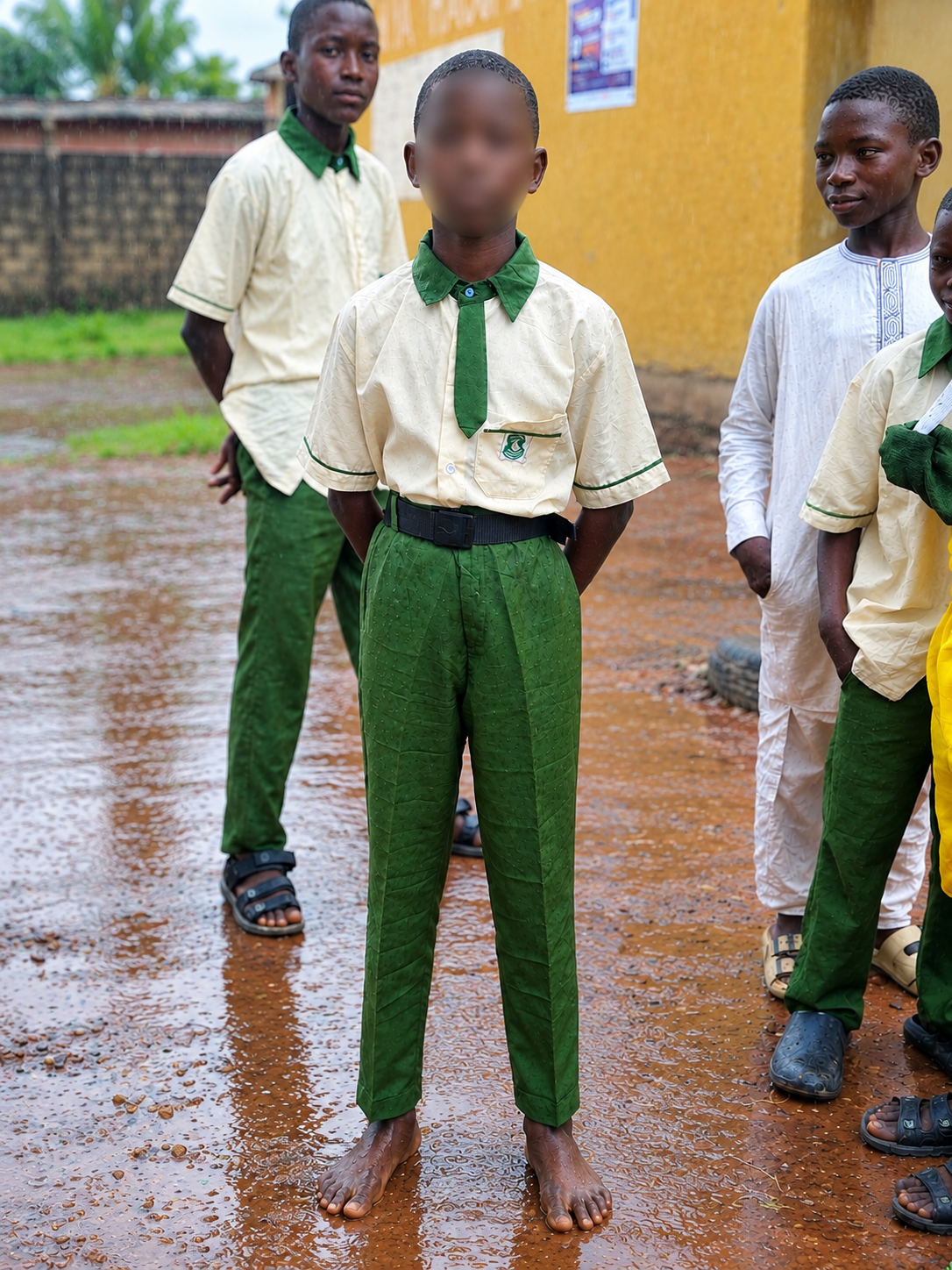
12-year-old Salisu stands barefoot among pupils during a UBEC inspection at Nyanya Hausawa school in Abuja. (Photo credit: Gom Mirian/AHR)
ABUJA, Nigeria – As drizzle fell over the assembly ground of Nyanya Hausawa Primary and Government Junior Secondary School in Abuja, 12-year-old Salisu Abbas stood barefoot among his classmates, clapping excitedly as officials of the Universal Basic Education Commission (UBEC) arrived at commission renovated classrooms.
A JSS II pupil, Salisu had no sandals on his feet as he joined other pupils to welcome the officials.
His teacher confirmed that Salisu had been coming to school without shoes.
Asked why he was barefoot, Salisu, speaking in Hausa, said his sandals became unusable during the previous term, but his parents could not afford to buy a replacement before school resumed. “My sandals got bad last term, but my parents could not afford to buy me a new one. When school resumed, I had no choice but to resume and learn because I want to be a soldier when I finish school,” he said.
Salisu said his mother had told him that he could only become a soldier after completing his education. He said the advice had strengthened his determination to remain in school despite his family’s financial difficulties. “I am from Plateau State originally, but insecurity forced us to leave the state and stay here at Nyanya,” he said.
Salisu said he is the last of 10 children in his family. He said all his older siblings attended primary school but did not proceed to secondary school. “My father is a mechanic while my mother sells food at the roadside,” he said.
Despite his family’s circumstances, Salisu said he remained determined to complete his education and achieve his ambition. “I would like the government to provide us with food and aid me with the necessary things I need to finish my school and become a soldier to fight those enemies that drove us from our ancestral home,” he said.
Salisu’s experience came to light on a day when UBEC officials were highlighting efforts to improve public school infrastructure.
The commission said it had renovated more than 4,000 classrooms across Nigeria and introduced a Whole School Approach aimed at ensuring that government interventions address the wider needs of schools. The approach includes facilities such as classrooms, toilets, water, electricity, security and digital learning infrastructure.
For Salisu, however, the absence of sandals has not stopped him from attending school or participating in school activities.
His immediate goal remains completing his education.
His ambition after that is clear: he wants to become a soldier.
About the Author

 Korede Abdullah