
Black Gold, Burning Questions: Can Nigeria Turn a $100 Oil Surge into Real Prosperity?
 Korede Abdullah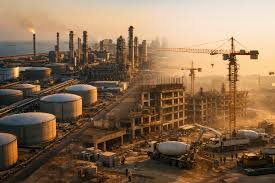
LAGOS, Nigeria – As oil tankers inch through tense waters and global markets tremble, Nigeria finds itself on the edge of a familiar paradox — sudden wealth shadowed by persistent doubt. In this report, Korede Abdullah, interrogates whether a rare surge in crude oil prices can finally translate into meaningful change for millions of Nigerians, or whether history is poised to repeat itself.
A Windfall Rises from Global Turbulence
The global oil market has once again surged past the symbolic $100-per-barrel mark, driven by escalating tensions across the Middle East and the closure of the Strait of Hormuz — a chokepoint through which a fifth of the world’s oil supply flows.
For Nigeria, Africa’s largest oil producer, the implications are immediate and profound. The 2026 national budget, pegged conservatively at $65 per barrel with projected output of 1.84 million barrels per day, now appears strikingly modest against current realities.
This mismatch signals a rare fiscal opening. With crude oil still accounting for roughly 70 percent of government revenues and over 90 percent of foreign exchange earnings, every incremental rise in price carries exponential consequences.
But beneath the promise lies a deeper, more complex question: will this surge alter the lived realities of Nigerians, or merely inflate government accounts?
Counting the Billions — and the Stakes
Development economist Dr. Mojeed Saliu offers a stark calculation of the opportunity before Nigeria.
“The difference between the benchmark price of $65 and a market price above $100 is substantial. If sustained over time, that gap could translate into billions of dollars in additional revenue for Nigeria.”
At current production levels, analysts estimate that Nigeria could earn an additional $66 million daily — translating to over $2 billion monthly.
Yet Saliu is quick to caution that revenue alone is not the solution.
“The challenge lies not in the revenue potential, but in ensuring that these additional earnings are captured and appropriately allocated to benefit the country.”
This is where Nigeria’s long-standing fiscal dilemma resurfaces — the gap between income and impact.
From Abuja to the Grassroots: Will It Trickle Down?
Under Nigeria’s fiscal structure, oil revenues are pooled into the Federation Account and shared among federal, state, and local governments. In theory, this ensures broad distribution. In practice, the results have been uneven.
“The impact on citizens depends on how effectively the funds are invested in productive sectors such as infrastructure, healthcare, education, and job creation,” Saliu explains.
Without transparent systems, increased allocations risk becoming abstract figures — impressive on paper, invisible in everyday life.
Echoes of the Past: A Cautionary Tale
Nigeria’s history with oil windfalls is as instructive as it is troubling.
During the Gulf War in the early 1990s, oil prices spiked dramatically, generating an estimated $12 billion in unexpected revenue. Yet much of this windfall was never clearly accounted for.
“About $12 billion accrued to Nigeria, but a significant portion was not clearly accounted for in official records,” Saliu recalls.
The investigative panel led by the late economist Dr. Pius Okigbo called for robust oversight mechanisms. However, incomplete implementation left lingering questions — and a legacy of mistrust.
Today, that history casts a long shadow over current expectations.
Voices from the Street: Skepticism Runs Deep
In Lagos, where economic realities bite hardest, optimism is tempered by experience.
Trader Abiola Adeyemi speaks plainly:
“We have heard this kind of news before whenever oil prices go up, but ordinary people do not see the difference in their daily lives.”
This sentiment reflects a broader national mood — one shaped by decades of unrealised promises.
Public affairs analyst Funke Cole underscores the structural issue:
“The real issue is not just the increase in revenue but how transparently and responsibly those funds are managed.”
She adds:
“Improved living conditions depend on whether government policies translate those resources into practical benefits for citizens.”
For many Nigerians, the question is no longer whether the country will earn more — but whether they will feel it.
Saving for Tomorrow or Spending Today?
Experts argue that the true test of leadership lies in how the windfall is managed.
Saliu advocates a dual-track approach: immediate fiscal stabilisation alongside long-term savings.
“Funds managed by the Nigeria Sovereign Investment Authority can act as a buffer against future oil price shocks.”
Strategic reserves, he argues, could shield the economy during downturns while financing major infrastructure and industrial projects.
At the same time, portions of the windfall could be deployed to service Nigeria’s growing public debt or address urgent budgetary needs.
“Properly managed, these measures would enhance fiscal resilience,” he notes.
Beyond Oil: The Imperative of Diversification
If there is one lesson Nigeria cannot afford to ignore, it is the volatility of oil itself.
“The goal should be to convert temporary revenue surges into sustainable gains,” Saliu insists.
He points to agro-processing, renewable energy, technology, and manufacturing as critical sectors for investment.
Diversification is not merely an economic strategy — it is a survival imperative.
Without it, Nigeria remains tethered to the unpredictable swings of global oil markets.
Refining the Future: A Gamechanger Emerges
Amid these challenges, one project stands out as a potential turning point — the Dangote Refinery.
With a refining capacity exceeding 650,000 barrels per day, it represents a shift from crude export dependency to value-added production.
“If properly leveraged, Dangote Refinery could convert domestic crude into higher-value products for export, expanding foreign exchange earnings, supporting industrialisation, and generating thousands of jobs across the value chain,” Saliu explains.
By reducing reliance on imported refined products, the refinery could also ease pressure on Nigeria’s foreign reserves and stabilise domestic fuel supply.
Global Risks, Local Consequences
Yet the same geopolitical tensions driving higher oil prices also carry risks.
Human rights lawyer Femi Falana warns that instability in the Middle East could reverberate domestically.
“Domestic petrol prices have skyrocketed, and reliance on foreign powers for economic stability is risky.”
He calls for a broader strategy:
“Diplomatic engagement with China and Russia is necessary to mitigate external risks, alongside strengthening Nigeria’s military and security apparatus.”
Falana’s argument highlights a critical paradox — the very forces boosting Nigeria’s revenues could simultaneously undermine its economic stability.
The Accountability Test
At the heart of the debate lies a simple but urgent truth: revenue does not equal development.
“Increased revenue creates potential, but it does not guarantee improvement in living standards,” Saliu emphasises.
Cole echoes this with a call for systemic reform:
“Citizen engagement and independent oversight are vital to ensure accountability.”
Transparency, audits, and legislative scrutiny are not optional — they are essential.
Without them, the current opportunity risks becoming yet another missed chapter in Nigeria’s economic story.
A Defining Moment
Nigeria stands at a crossroads.
The current oil price surge offers more than just fiscal relief — it presents a rare chance to rewrite a long-standing narrative of squandered opportunity.
If managed wisely, the windfall could fund infrastructure, strengthen institutions, diversify the economy, and improve millions of lives.
If mismanaged, it will simply deepen public cynicism and widen the gap between promise and reality.
For now, the oil is flowing, the revenues are rising, and the world is watching.
The question is whether Nigeria will finally seize the moment — or let it slip away once again.
About the Author

 Edino Chubiyo Cornelius
 Hussaini Ibrahim

 Koko Maxwella