
Why Nigeria’s Hospitals Keep Getting Caught in the Strike Cycle
 Edino Chubiyo Cornelius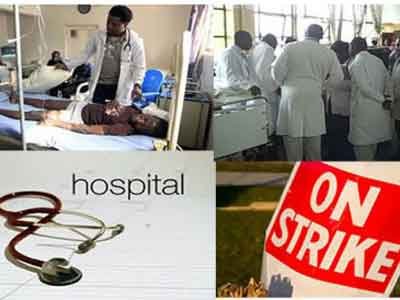
ABUJA, Nigeria – One disagreement can bring an entire hospital to a standstill. Operations are postponed; clinic appointments disappear from hospital schedules and anxious families are left wondering whether treatment will resume before a patient’s condition deteriorates. While the latest strike threat by the Nigerian Association of Resident Doctors (NARD) was suspended after negotiations with the Federal Government, the crisis exposed a deeper problem that has haunted Nigeria’s public health system for years. In this report, Edino Cornelius examines why healthcare strikes keep returning, what they cost patients and what must change to break a cycle that repeatedly places lives at risk.
When Negotiations Become a Medical Emergency
For Nigerians who depend on public hospitals, industrial disputes are rarely abstract labour issues.
They can determine whether a patient receives surgery on time, attends a follow-up appointment or continues life-saving treatment.
Each strike threat raises the same fear among patients: will the hospital still be open tomorrow?
The latest dispute involving the Nigerian Association of Resident Doctors brought those concerns back into focus after the association threatened an indefinite nationwide strike over unpaid allowances, welfare concerns, working conditions and other unresolved demands.
Although the action was suspended following discussions with the Federal Government, many Nigerians believe the relief may only be temporary.
The larger question remains unanswered:
Why do Nigeria’s hospitals keep returning to the same crisis?
Government Promises Reform
The Minister of State for Health and Social Welfare, Dr Iziaq Salako, says the Federal Government is working to improve healthcare workers’ welfare.
According to him, efforts are underway to review professional allowances and establish a more structured framework for negotiations with health unions.
The latest dispute may have been defused, but previous agreements have often faltered during implementation.
For many observers, that recurring gap between promises and delivery lies at the heart of Nigeria’s healthcare strike cycle.
When Hospitals Slow Down, Patients Pay the Price
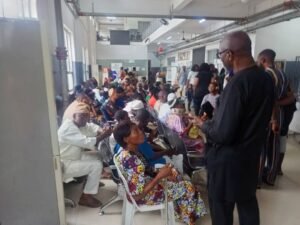
The immediate victims of industrial action are often patients.
Routine consultations are postponed.
Elective surgeries are rescheduled.
Specialist clinics operate below capacity.
Although emergency services may continue during some industrial actions, access to routine healthcare becomes uncertain.
For many Nigerians, private hospitals are simply unaffordable.
Abuja resident Chukwu Emeka Ebuka knows that reality first-hand.
“I had already started treatment when the doctors stopped work. I was told to wait until the situation was resolved, but I could not afford to continue treatment at a private hospital. It was frustrating because there was nothing I could do except wait and keep checking when the doctors would return.”
Beyond delayed treatment, strikes often increase financial pressure on families forced to seek alternative care or repeatedly travel to hospitals without receiving treatment.
Doctors Say Strikes Are a Last Resort
Healthcare workers argue that industrial action is rarely their preferred option.
According to Resident Doctor Dr Umar Shareef, unresolved welfare issues eventually leave workers with few alternatives.
“Nobody wants to abandon patients. But when workers have outstanding payments and the conditions in which they work are becoming difficult, there has to be a response. Many issues are discussed repeatedly, but implementation is what determines whether another dispute will happen.”
Among NARD’s demands were outstanding professional allowances, salary arrears, promotion arrears, residency training funding and improved working conditions.
For doctors, the dispute is about more than pay.
It is also about creating a working environment capable of delivering quality healthcare.
The Real Problem: Agreements That Are Never Fully Implemented
Health policy analyst Dr Isha Ismaila believes Nigeria’s recurring strikes stem less from negotiations than from implementation failures.
“Nigeria has a problem of implementation. Government and unions can reach an agreement today, but if the agreed timelines are not followed, frustration builds again. There should be a system that tracks every agreement and makes it clear which agency is responsible for delivering it.”
That assessment reflects a long-standing criticism of labour relations within Nigeria’s public sector, where agreements are frequently signed but implementation is delayed or only partially completed.
Public relations expert Aminu Babangida argues that dialogue should become routine rather than crisis-driven.
“Negotiations should not begin only when a strike is about to start. There should be regular meetings where both sides review outstanding agreements and resolve problems before they become industrial disputes.”
Beyond Patients: The Hidden Cost
The consequences extend beyond delayed medical care.
Resident doctors undergoing specialist training may lose valuable clinical experience during prolonged disruptions.
Hospitals can also lose revenue as patients seek care elsewhere.
Perhaps most damaging is the gradual erosion of public confidence.
Repeated cancellations and uncertainty encourage many Nigerians to view public hospitals as unreliable, pushing those who can afford it towards private healthcare while leaving poorer patients with few alternatives.
Breaking a Costly Cycle
Healthcare experts agree that suspending strikes does not solve the underlying problem.
Long-term industrial peace depends on honouring agreements, improving working conditions, providing predictable funding for workers’ entitlements and maintaining continuous dialogue between government and health unions.
For patients, however, the issue goes beyond labour relations.
Healthcare should not depend on whether negotiations succeed or collapse.
Until implementation becomes as important as negotiation, Nigeria’s public hospitals risk remaining trapped in the same familiar pattern—demands, negotiations, strike threats, temporary settlements and renewed disputes.
Breaking that cycle is no longer only about protecting healthcare workers.
It is about protecting the millions of Nigerians whose access to treatment depends on a public health system they can trust.
About the Author


 Oluwatobi Adu

 Hope Ajayi