Nigeria’s Health Insurance Boom: Why NHIA Patients Still Queue Before Dawn
 Oluwafunbi Bello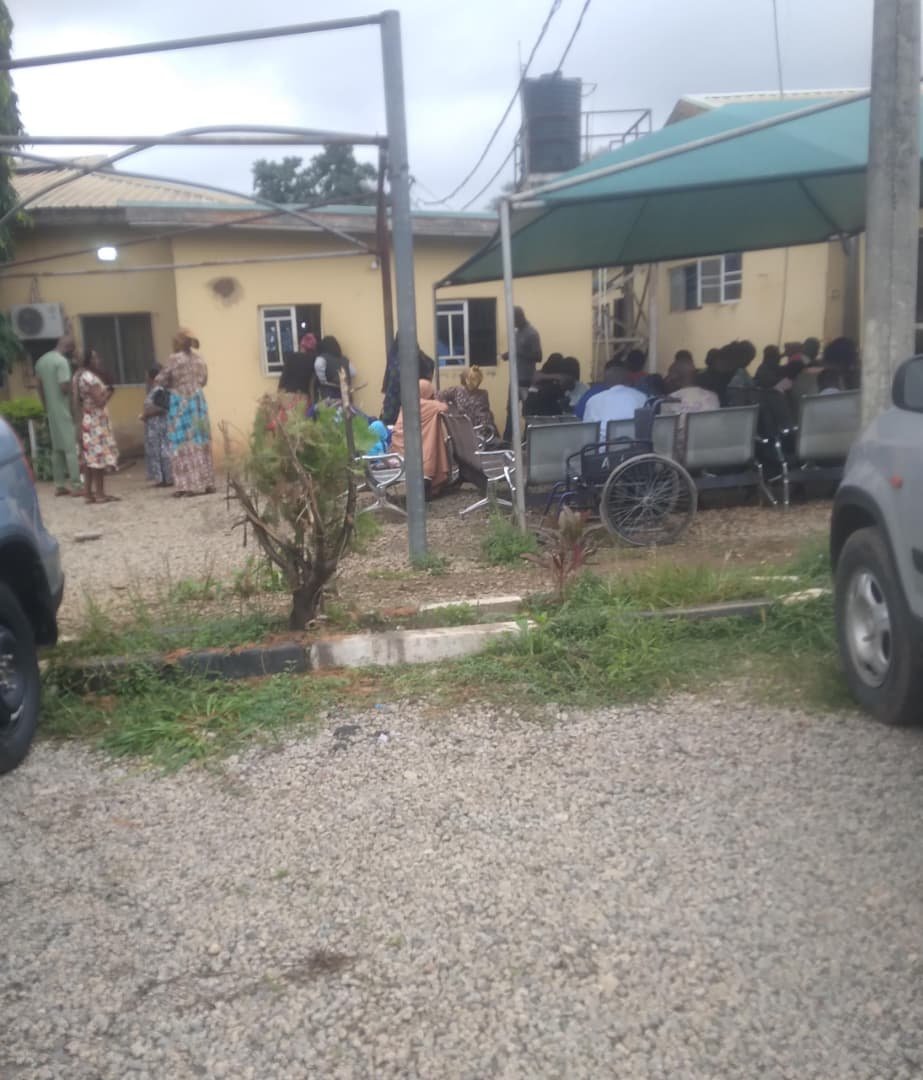
NHIA beneficiaries waiting to be called for vital signs assessment at Kubwa General Hospital. (Photo credit: Oluwafunbi Bello/AHR)
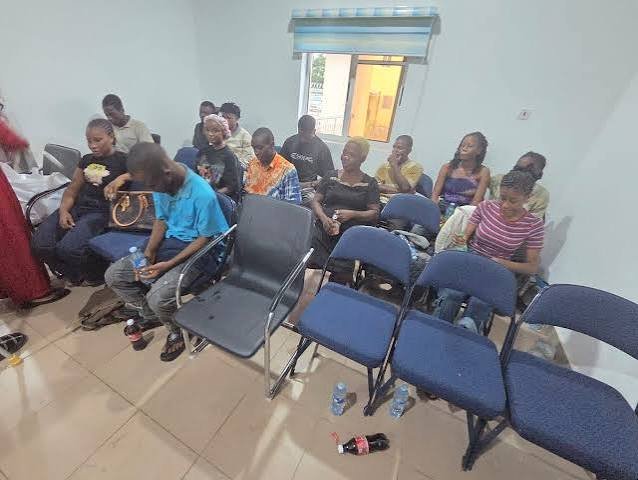
ABUJA, Nigeria – Before the first rays of sunlight reach Kubwa General Hospital, the day’s race for healthcare is already under way. By 6 a.m., dozens of patients are seated beneath the waiting shed, clutching National Health Insurance Authority (NHIA) cards that promise affordable treatment but not necessarily timely care. Some have travelled from neighbouring communities, while others arrived before dawn to secure one of the limited consultation slots. In this report, Oluwafunbi Bello spent time at one of Abuja’s busiest public hospitals, where the Federal Government’s celebrated expansion of health insurance tells only part of the story, raising a crucial question: Is Nigeria’s health insurance revolution delivering quality healthcare—or simply creating longer queues?
Government Celebrates Record Enrolment
In June 2026, the NHIA announced that more than 22 million Nigerians were enrolled in health insurance—about 10 per cent of the country’s population and a 35 per cent increase in enrolment.
The Authority attributes the growth to implementation of the NHIA Act, expansion of state health insurance schemes and renewed efforts by the Federal Government to achieve Universal Health Coverage (UHC).
The milestone also aligns with President Bola Tinubu’s healthcare reform agenda, which seeks to reduce the heavy burden of out-of-pocket medical spending that has pushed millions of Nigerians into poverty.
However, figures alone tell only part of the story.
The race begins before sunrise
For beneficiaries at Kubwa General Hospital, healthcare often begins with a race against time.
Mrs. Grace Boniface, who lives in neighbouring Nasarawa State and has remained on the scheme for several years, said arriving early determines whether a patient will receive treatment.
“I’ve been under the insurance for many years and the insurance is good. You just have to come as early as possible. I got here shortly after 6 a.m. and I was already number 28. The numbers are called one after another for weight, temperature and blood pressure before we eventually see the doctor,” Boniface said.
Her experience illustrates an irony increasingly common across public hospitals: insurance may remove financial barriers, but it cannot guarantee prompt access to care.
Affordable care—but not without limitations
For many patients, the NHIA has become a financial safety net, shielding households from catastrophic medical bills.
Mrs. Moses Oyiza, a businesswoman enrolled in the scheme for more than a decade, believes the benefits far outweigh the inconveniences.
“You can’t get everything from the insurance, but at least I don’t pay consultation fees. When drugs are prescribed, I only pay 10 per cent of the cost and sometimes the drugs are not available at the NHIA pharmacy, so I have to buy them outside. Health insurance also covers childbirth, and I know because I have seen people benefit from it,” Oyiza said.
Her testimony captures both the strengths and weaknesses of Nigeria’s health insurance model.
While subsidised medicines significantly reduce treatment costs, periodic drug shortages continue to shift part of the financial burden back onto patients, undermining one of the scheme’s central promises.
More Enrollees, Same Hospitals
Perhaps the clearest evidence of the system’s growing pressure is visible in the daily queue.
Mr. Nnamdi Kenneth said he arrived before 5 a.m., expecting to be among the first patients. Even then, the hospital was already filling up.
“I got here before 5 a.m. and I was number two. More than 50 people came this morning, but they stopped at number 40. Today they were able to attend to up to 40 patients because there were 3 doctors available. If there is only 1 doctor on duty, they may not attend to more than 25 patients. Many people have to return another day, so it helps if someone living nearby can collect a number for you early,” Kenneth said.
Inside the NHIA System
Within Kubwa General Hospital, NHIA officials insist the process itself is straightforward.
Mr. Chidi, an official at the hospital’s NHIA office, explained how beneficiaries move through the system.
“A patient only needs to present their NHIA card, and we process it before sending the file to the doctor. If drugs are prescribed, the doctor sends the prescription directly to the NHIA pharmacy where the patient pays only 10 per cent of the drug cost,” Chidi said.
He added that members of the National Youth Service Corps enjoy additional protection.
“National Youth Service Corps members do not pay the 10 per cent co-payment because their medications are fully covered. Where a service is not available in this hospital, we obtain a referral code and referral letter so the patient can continue treatment at another accredited hospital,” Chidi added.
The referral mechanism, he noted, is designed to ensure continuity of care when specialist services are unavailable.
NHIA: ‘We are Making Progress’
The NHIA’s Federal Capital Territory Coordinator, Mr. Williams Ebiokobo, acknowledged that Nigeria still has a long journey towards universal health coverage but argued that substantial progress has been made.
“More than 22 million Nigerians are now insured, which is about 10 per cent of the country’s population. We are not where we want to be yet, but we are making progress because healthcare is expensive and health insurance protects people from paying completely out of pocket,” Ebiokobo said.
He explained the different benefit levels under the scheme.
“Health insurance has three levels: primary, secondary and tertiary. At the primary level, consultation and registration are covered, while patients pay only 10 per cent of medicine costs. At the secondary level, specialist consultations are covered after authorisation by the Health Maintenance Organisation. At the tertiary level, services such as MRI and CT scans are shared on a 50-50 basis between NHIA and the patient,” he said.
On cancer treatment, Ebiokobo pointed to a cost-sharing partnership with Roche Pharmaceuticals.
“For cancer patients, Roche Pharmaceuticals covers 50 per cent of medication costs, NHIA pays 30 per cent, while the patient contributes 20 per cent. The programme is available at the Federal Medical Centre, Jabi, National Hospital Abuja and some hospitals in other states,” Ebiokobo said.
He also sought to correct a widespread misconception.
“Many people believe registration for health insurance is free, but that is not correct. Registration depends on the category of enrollment and is not entirely free,” he added.
Beyond Enrolment: The Next Test
The NHIA Act of 2022 transformed health insurance from a largely voluntary programme into a cornerstone of Nigeria’s universal health coverage strategy.
Through partnerships with state governments, Health Maintenance Organisations and development partners, millions of Nigerians who previously had no financial protection against illness have entered the system.
That achievement is significant.
But reporting from Kubwa General Hospital suggests the next phase of reform may prove even more difficult.
Insurance cards cannot compensate for shortages of doctors. They cannot eliminate overcrowded clinics, or guarantee medicines remain in stock. Nor can they reduce waiting times where infrastructure has failed to keep pace with rising demand.
A Promise Still Waiting to Be Fulfilled
As the last patients leave Kubwa General Hospital shortly before sunset, another list is already being prepared for tomorrow morning.
Before dawn breaks again, dozens more Nigerians will gather beneath the same waiting shed—not because they doubt the promise of health insurance, but because they still hope the promise will one day be matched by the healthcare they receive.
About the Author

 Korede Abdullah
 Mirian Gom