Mountains of Hope: Inside Lagos’ High-Stakes Race to Turn Trash into Prosperity
 Korede Abdullah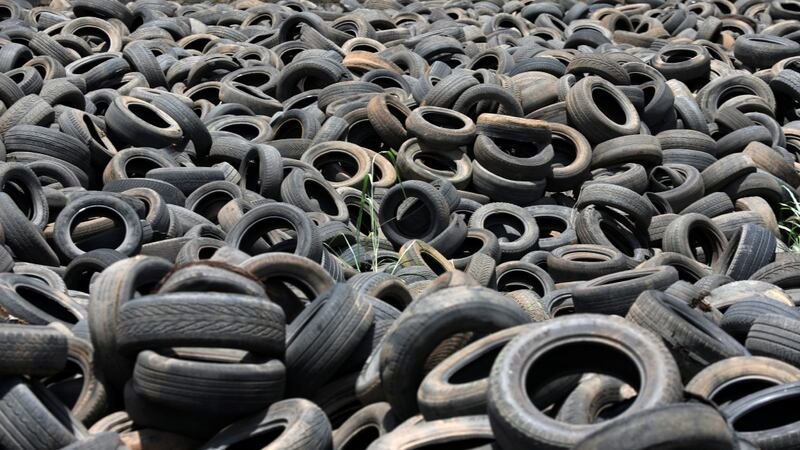
LAGOS, Nigeria – Lagos’ waste economy pulses with a raw, unfiltered energy—an ecosystem where scavengers, innovators, policymakers and private companies collide daily in a contest for survival, dignity and environmental renewal. From the chaotic peaks of the Olusosun landfill to the quiet industry of tyre recyclers reshaping Nigeria’s circular future, the city’s waste sector reveals stories of human grit, political tension and overlooked economic promise. In a metropolis where refuse piles up as quickly as opportunity slips away, nothing is ever simply waste; every bottle, tyre and electronic scrap becomes someone’s livelihood, someone’s calculation, someone’s hope. In this report, Korede Abdullah goes inside the people, places and power struggles driving Lagos’ high stakes attempt to turn trash into prosperity.
A City on the Brink: Lagos’ Rising Mountains of Refuse
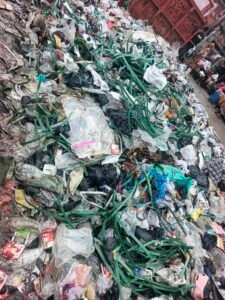
On a humid Wednesday morning at the Oko-Filling dumpsite in Igando, 38-year-old scavenger Musa Nasir surveys the sprawling sea of plastic, metal and decomposing waste. His sack hangs loosely over his shoulder—an extension of his body after 12 years on the job.
“Every day, this place shows me two things—suffering and opportunity,” he says quietly.
His words reflect the paradox behind Lagos State’s bold push toward a waste-to-wealth transition, a campaign designed to transform refuse into revenue, energy, and a foundation for the circular economy it hopes to build. But for now, this vision is still wrestling with the reality of a city generating over 13,000 tons of waste daily.
Policies on Paper, Pressure in the Streets

The Lagos State Government insists that change is overdue. Commissioner for Environment and Water Resources, Tokunbo Wahab, argues that residents must adjust their habits if Lagos is to survive the environmental pressures of rapid urbanisation.
But not everyone is convinced. Environmental activist Bisi Olatunji says enforcement still depends heavily on neighbourhood privilege.
“Some streets look better, but many communities are still left behind,” she explains.
And then there are the people caught in the crossfire—such as Umar, a 27-year-old former cart pusher displaced by recent bans.
“I used to make about N3,000 a day,” he says. “Now, the system just doesn’t have space for us.”
Urban Mines: The Hidden Wealth in Lagos’ Dumpsites

The city’s dumpsites—Olusosun, Solous 3, Badagry, Epe and Oke-Afa—contain valuable plastics, metals, organic waste, textiles and electronic scraps worth billions.
Circular economy specialist Dr. Rotimi Ogunleye calls them “Nigeria’s largest untapped mines.”
“These dumps are not just waste—they are urban mines. If properly managed, each site could generate thousands of jobs and supply raw materials for manufacturing plants across Nigeria.”
Organic waste alone makes up nearly half of all landfill deposits and could power biogas plants or enrich agricultural soil.
Citizens as Co-Creators of Value
Every Thursday, Lagos residents gather at designated collection points to exchange sorted recyclables for cash. At Alimosho, trader Mama Folashade arrives with two bulging bags of plastic bottles.
“This money helps me buy pepper and rice,” she says.
But sociologist Dr. Idowu Oluwafemi Amos warns that the programme’s future depends heavily on accountability.
“People need to know the rewards are consistent and the system is transparent.
Private Partners Redrawing the Waste Economy
Through partnerships with companies like Zoom Lion, Mondo 4 Africa, HAK Waste and Haggai Logistics, Lagos aims to move from waste collection to full waste conversion.
LAWMA Managing Director Dr. Muyiwa Gbadegesin calls the partnerships “essential to Lagos’ survival.”
But economist Dr. Tosin Yusuf is cautious.
“Private partnerships must not become private monopolies. Transparency is non-negotiable.”
The Human Cost of a Green Transition
While environmental gains are significant, the shift has produced casualties. Hundreds of informal workers have lost livelihoods following the ban on cart pushers.
Dr. Amos believes Lagos must learn from Rwanda and Kenya.
“Environmental gains should not translate to social losses.
“Integrate displaced workers into formal cooperatives or train them as certified waste collectors.”
When Tyres Become Black Gold

In Ibadan, entrepreneur Ifedolapo Runsewe, founder of FREEE Recycle, is rewriting the story of tyre waste in Nigeria.
“Creating something new from what would otherwise be lying somewhere as waste is my motivation,” she says.
Her company has recycled more than 100,000 tyres, producing playground tiles, paving bricks, flip-flops, and rubber mats. Scavengers now earn N70–N100 per tyre, forming a new economic chain.
Yet Runsewe’s operation remains expensive.
“We spend heavily on self-generated electricity, and funding for capital-intensive recycling is difficult.”
Environmental economist Houssam Azem calls FREEE Recycle “one of West Africa’s most practical circular economy models.”
The Buried Wealth Beneath Nigeria’s Largest Dumpsite
Olusosun, once West Africa’s largest dumpsite, spans more than 100 acres. Even as it undergoes decommissioning, experts say its potential remains vast.
Environmental engineer Kehinde Hussain Subair tells Africa Health Report:
“Olusosun can be transformed into a renewable energy hub or a compost magnate if methane capture technology is deployed.”
Countries like Brazil and India now power thousands of households using repurposed dumpsites—Lagos could follow suit.
Lagos at a Critical Environmental Crossroads
Field checks show fewer drainage blockages after the styrofoam ban. The state also reports reduced flash flooding in some corridors.
But Subair warns: “Unchecked landfill growth is a time bomb.”
Scaling solutions such as biogas, composting, tyre recycling and waste-to-fuel technology remains urgent for a coastal megacity already threatened by rising seas.
Lessons from Kigali and Amsterdam
Kigali’s success comes from strict sorting laws and environmental education starting from the classroom. Amsterdam thrives on transparency and incentives that reward citizens who recycle responsibly.
“A circular economy is a lifestyle, not just a government project,” Subair says.
“Lagos must make recycling irresistible—not optional.”
About the Author

 Otamere Gladness
 Koko Maxwella
 Edino Chubiyo Cornelius