Between Mercy and Memory: Inside Borno’s High-Stakes Bid to Rebuild After Boko Haram
 Hussaini Ibrahim
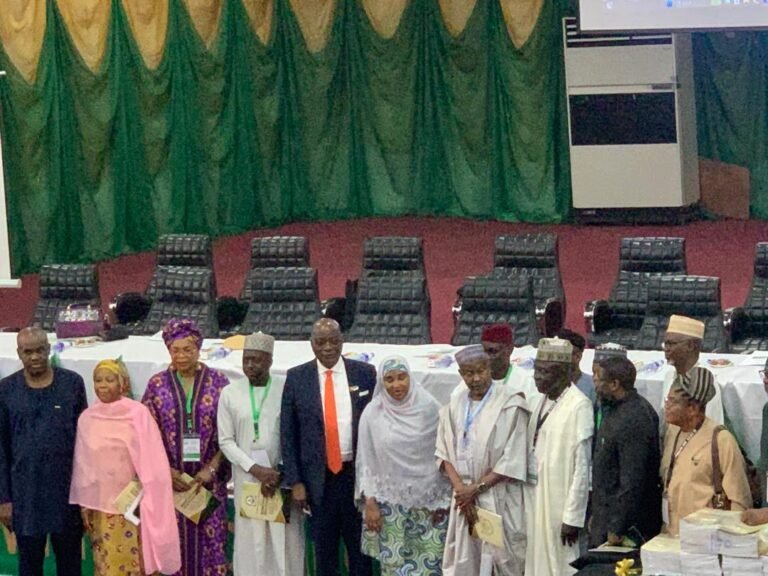
KANO, Nigeria – In Nigeria’s insurgency-ravaged North-East, where communities still bear the scars of over a decade of violence, a fragile experiment in forgiveness is taking shape as survivors are asked to coexist with former fighters under the Borno State Government’s reintegration programme. Hussaini Ibrahim reports that the initiative, known as the Borno Model, was launched in 2021 and operationalised in April 2022 following mass surrenders after the death of Boko Haram leader Abubakar Shekau. Developed with support from the United Nations Development Programme (UNDP), the programme has since processed more than 300,000 former Boko Haram and ISWAP members and their families, making it one of Africa’s largest deradicalisation efforts aimed at rebuilding trust and restoring communities shattered by years of conflict.
For more than a decade, Boko Haram’s insurgency has defined life across Borno State and the wider Lake Chad basin—leaving tens of thousands of dead, displacing millions and levelling entire communities. Today, even as the intensity of violence declines in some areas, a deeper and more complex challenge is unfolding rebuilding trust in a society fractured by terror.
At the heart of this effort is the Borno Model, a state-driven reintegration programme that departs from purely military responses to insurgency. Instead, it blends disarmament, demobilisation, rehabilitation and reintegration with psychosocial support, education and livelihood assistance—an approach officials describe as both strategic and humane.
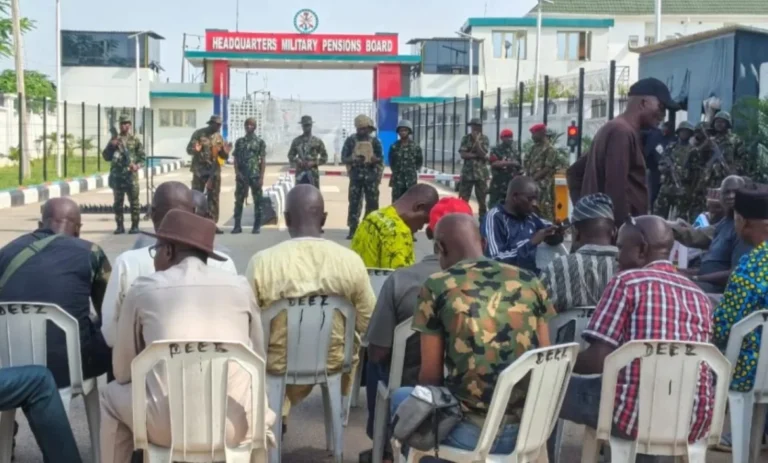
Returnees, including former fighters, women and children, are received at military-controlled entry points, where they undergo screening and profiling before being transferred to rehabilitation centres. Over several months, they receive counselling, religious reorientation, literacy training and vocational skills in trades such as tailoring, carpentry, welding and agriculture.
For the Borno State Government, the logic is straightforward: reducing insurgent ranks without further bloodshed while offering a pathway back into society.
A senior government official, who spoke on condition of anonymity, explained the thinking behind the programme:
“If even 10,000 fighters surrender without firing a bullet, that means thousands of lives are saved and communities have a chance to recover.”
Billions of naira have been committed to the initiative, covering resettlement packages, livelihood grants and post-reintegration monitoring. Yet beyond the numbers lies a more difficult question—whether communities are ready to accept those who once inflicted deep harm.
Global parallels, local realities
Security analysts say the Borno Model reflects a broader global shift towards non-kinetic conflict resolution strategies.
Dr Kabiru Sani, a security and conflict resolution expert, compares the initiative to Colombia’s reintegration process following the 2016 peace deal with the FARC.
“What Borno is attempting is similar in principle. Colombia showed that you cannot defeat every insurgency purely through force,” he said.
However, he notes key differences.
“In Colombia, there were structured mechanisms for truth-telling and reparations. In Borno, the numbers are impressive, but accountability structures and victim-centred justice are still developing.”
While Colombia’s model was anchored in strong national institutions, Nigeria’s approach remains largely state-led, raising concerns about long-term sustainability and institutional backing.
Dr Sani warns that without sustained investment in trauma healing, job creation and community reconciliation, the risk of relapse among former fighters remains real.
Communities caught between fear and fatigue
In Maiduguri and surrounding communities, reintegration is not merely a policy—it is a lived reality shaped by fear, memory and uncertainty.
Falmata, a 23-year-old resident whose identity is withheld for safety reasons, describes a social environment marked by unease.
“They don’t often laugh or interact with people. They isolate themselves in one place,” she said. “Even the way they look makes people uncomfortable.”
For many residents, suspicion extends to the families of former fighters.
“People feel some of them still communicate secretly with their husbands. Whether true or not, the fear is there.”
The emotional toll of past violence remains heavy.
“When victims see those, they believe destroyed their families, the pain comes back immediately. Peace becomes hard.”
Tensions occasionally erupt into violence. Falmata recounts an incident at Bulumkutu junction where a dispute escalated after a tricycle rider recognised a traffic official as someone linked to his family’s tragedy.
“The rider picked a stone and attacked him. It took police intervention to stop what could have turned deadly.”
Such incidents highlight the fragility of coexistence—and the depth of unresolved trauma.
Justice or Imbalance?
Critics argue that the programme risks creating a moral imbalance, where former fighters receive support while victims continue to struggle.
Many survivors still face poverty, displacement and psychological distress, with limited access to compensation or structured support systems.
Security experts also warn of potential recidivism.
A retired military officer, speaking anonymously, cautioned:
“Rehabilitation should not mean blind trust. Some may be genuine; others may be strategic defectors waiting for opportunity.”
This tension—between forgiveness and accountability—remains at the core of the debate surrounding the Borno Model.
A Cautious Path Forward
Despite its challenges, the programme has recorded measurable gains. The wave of defections following Shekau’s death significantly weakened insurgent ranks, easing pressure on military operations in parts of Borno State.
Humanitarian organisations also credit the initiative with enabling the return of displaced persons and reviving economic activities in some communities.
Yet analysts stress that long-term success will depend on expanding the programme beyond reintegration to include comprehensive transitional justice—ensuring accountability, supporting victims and rebuilding trust.
For now, the Borno Model stands as a bold but deeply contested experiment—one that sits at the intersection of survival, forgiveness and memory.
In a region where the past is never far away, the question remains: can a society truly heal while living with those who once tore it apart?
About the Author


 Oluwatobi Adu
 Hope Ajayi