
Birth on the Floor, Billions on the Road: Inside Nigeria’s Rural Healthcare Divide
 Hussaini Ibrahim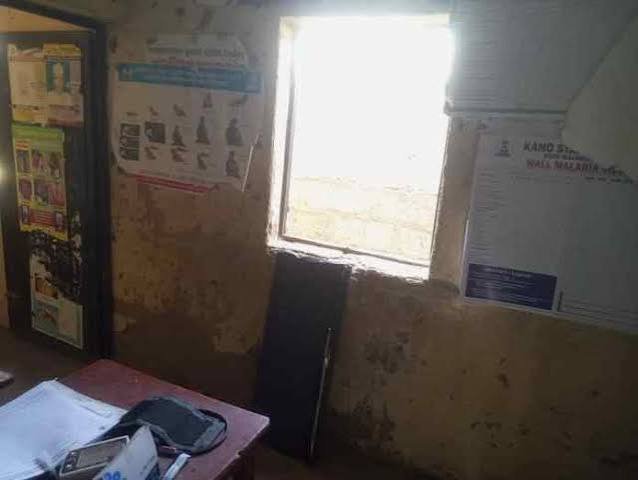
KANO, Nigeria – As rain battered the rusted roof of a Primary Health Centre in Badari village, Gwarzo Local Government Area of Kano State, 28-year-old Aisha Yusuf lay in labour with little more than hope to keep her alive. Water pooled beneath her as darkness swallowed the delivery room. There was no electricity, no functional delivery bed and no equipment to manage an emergency. When health workers realised they could do no more, they referred her to a general hospital nearly 30 kilometres away—a journey she barely survived. Aisha’s ordeal is not an isolated tragedy but a window into Nigeria’s neglected primary healthcare system. In this report, Hussaini Ibrahim uncovers how, even as controversy rages over the reported ₦110 billion spent on luxury vehicles and support packages for members of the National Assembly, mothers in rural Kano continue to give birth in conditions that endanger both their lives and those of their newborns.
For many women across rural Kano, childbirth is less a moment of joy than a test of survival.
The evidence of neglect becomes apparent long before patients reach the maternity ward. At the Badari Primary Health Centre, aging wooden benches serve as waiting areas, cracks run through weather-beaten walls, and the limited number of functional delivery beds forces some women in labour onto mats spread across the floor whenever the facility becomes overcrowded.
For Aisha, the memories remain painfully vivid.
“I was in labour during the rainy season. The roof was leaking badly, and they told me to go to the general hospital in Kano, which is about 30 kilometres away,” she recalled.
“I almost lost my baby on the way. We don’t need luxury; we only need a hospital that can treat us.”
Like thousands of expectant mothers across northern Nigeria, Aisha depends entirely on public primary healthcare because private hospitals are financially beyond her family’s reach. Her experience mirrors the daily reality in many rural communities where shortages of skilled personnel, essential medicines and basic medical equipment continue to undermine maternal and child healthcare despite years of government promises to strengthen primary healthcare services.
The plight of communities such as Badari has drawn renewed national attention following the controversy surrounding the reported ₦110 billion spent on luxury vehicles and support packages for members of the National Assembly.
The debate intensified after the Federal High Court in Lagos reportedly ruled, in a suit brought by the Socio-Economic Rights and Accountability Project (SERAP), that the expenditure breached constitutional provisions and procurement regulations. SERAP subsequently urged that the funds be recovered and redirected to critical sectors, including healthcare and education.
Although the National Assembly has defended aspects of the expenditure, the controversy has reignited difficult questions about national priorities in a country where many citizens still struggle to access the most basic healthcare.
Nowhere is that disconnect more visible than in rural health centres like Badari.
For frontline health workers, every shift demands difficult decisions with limited resources.
A community health worker at the facility, who requested anonymity because he was not authorised to speak to journalists, said staff routinely operate under overwhelming pressure.
“Sometimes one health worker attends to dozens of patients in a single shift. During emergencies, we simply do our best,” he said.
The greatest challenge, he explained, begins after sunset.
“At night the situation becomes worse because there is no stable electricity. If a woman develops complications during delivery, we have no option but to refer her to another hospital. Sometimes the delay can be dangerous.”
For many families, reaching that referral hospital is a struggle in itself.
Poor road networks, transport costs and long distances often delay emergency care, while some women first seek help from traditional birth attendants before arriving at the clinic.
“There are cases where families cannot even afford transportation. Some patients arrive very late because they first try traditional birth attendants before coming here.”
Each delayed referral increases the risk of complications in a region that continues to bear one of Nigeria’s heaviest maternal health burdens.
Public health physician Dr Fatima Abdullahi believes the controversy surrounding lawmakers’ spending has exposed a much deeper problem than political optics.
According to her, it has once again highlighted the chronic underfunding of primary healthcare—the foundation upon which every effective health system is built.
“If resources of that magnitude were invested in healthcare, hundreds of primary healthcare centres could be upgraded,” she said.
She says the needs are neither extravagant nor unattainable.
“We are talking about facilities that need solar power, functioning maternity wards, reliable water supply, ambulances, laboratory equipment, essential drugs and qualified personnel.”
Dr Abdullahi argues that strengthening primary healthcare remains one of the most cost-effective ways to reduce preventable maternal and child deaths.
“Nigeria continues to record one of the highest maternal mortality rates globally. Northern Nigeria carries a significant proportion of that burden. Investment in primary healthcare saves lives because that is where most women first seek medical attention.”
Without sustained investment, she warns, the consequences will continue to be measured in lives lost rather than budgets saved.
“You cannot expect quality healthcare when health workers operate without basic equipment. A functioning primary healthcare system reduces pressure on tertiary hospitals and improves survival rates.”
Her assessment underscores a reality confronting many rural communities: Nigeria’s primary healthcare crisis is no longer simply about ageing buildings or outdated equipment. It is about the choices reflected in public spending and the value placed on the lives of those who depend on the country’s most fragile health facilities.
For mothers like Aisha Yusuf, those choices are felt not in policy documents or budget speeches, but in the terrifying uncertainty of childbirth under a leaking roof, in a dark delivery room, wondering whether help will arrive before it is too late.
The challenges confronting Badari Primary Health Centre are not unique. They reflect a wider healthcare crisis stretching across Gwarzo Local Government Area and many rural communities in Kano State, where frontline health workers have become accustomed to improvising in facilities that fall far short of the standards required to provide safe maternal care.
For Nurse Halima Bello, who has spent eight years at another primary healthcare centre in Gwarzo, working under pressure has become routine.
“We work under difficult conditions every day,” she said.
The shortage of functional delivery beds, she explained, frequently forces health workers into impossible choices during emergencies.
“There are times when patients deliver on benches or even on the floor because all available beds are occupied or damaged.”
The strain extends beyond infrastructure. Limited manpower means a handful of healthcare workers are expected to meet the needs of several communities simultaneously.
“Sometimes only two nurses are available to cover an entire facility serving several communities. We attend antenatal patients, deliveries, immunisation, emergencies and outpatient consultations all at once.”
Despite the relentless workload, Bello said health workers continue because they know many patients have nowhere else to seek care.
The lack of reliable electricity only deepens those challenges, affecting everything from vaccine storage to emergency obstetric care.
“Vaccines require proper storage. Emergency procedures require adequate lighting. Sometimes we depend on rechargeable lamps or torchlights.”
For Bello, the national debate over public spending has inevitably reached the corridors of rural health facilities.
“If even a fraction of the money being discussed nationally was invested in rural healthcare, the difference would be enormous.”
Where government support has fallen short, communities have increasingly stepped in.
Residents of Badari say they have repeatedly raised personal contributions to repair parts of the health centre, replace broken furniture and maintain the premises whenever official intervention failed to materialise.
Community leader Mallam Sani Ibrahim said those efforts have become acts of necessity rather than choice.
“We have repaired doors, bought plastic chairs and even contributed money to maintain the surroundings,” he said.
Yet, he noted, community goodwill cannot replace sustained public investment.
“Our leaders receive treatment in the best hospitals, but ordinary villagers struggle to access the most basic healthcare.”
His appeal is not for state-of-the-art facilities, but for healthcare centres capable of delivering the services they were built to provide.
“People are not asking for luxury hospitals. We simply want health centres where women can safely give birth and children can receive treatment.”
Healthcare experts argue that the conditions documented in Kano are symptomatic of a broader national challenge confronting Nigeria’s primary healthcare system.
Over the years, governments have introduced initiatives such as the Basic Health Care Provision Fund alongside donor-supported programmes aimed at revitalising primary healthcare. While some communities have benefited from renovated facilities and improved services, many rural clinics continue to struggle with ageing infrastructure, inadequate staffing, irregular drug supplies and weak maintenance systems that undermine long-term progress.
For a public health researcher at Bayero University, the issue extends beyond infrastructure to the choices that shape national development.
“No country develops by neglecting healthcare,” he said.
He argued that investment in primary healthcare should be viewed as a foundation for economic growth rather than simply another item of public expenditure.
“Healthy citizens are productive citizens. Every naira invested in primary healthcare produces long-term social and economic benefits.”
Reducing maternal mortality, he added, requires more than constructing new buildings.
“You need trained personnel, functioning equipment, regular drug supply, electricity, water and effective referral systems. These are basic requirements.”
His observations reinforce what healthcare professionals have consistently argued: meaningful reform depends not on isolated projects but on sustained investment in the systems that keep health facilities functioning long after official commissioning ceremonies have ended.
Ultimately, the debate sparked by public spending is about far more than budget lines or procurement figures. It is about the values reflected in national priorities and whether those priorities address the needs of citizens whose lives depend on functioning public services.
For policymakers, investment decisions are recorded in appropriation bills, expenditure reports and government accounts. For families in communities like Badari, however, those same decisions are measured differently—by whether a health centre has trained staff on duty, life-saving medicines on its shelves and the capacity to safely deliver a child.
Outside the Badari Primary Health Centre, Aisha Yusuf gently holds the child she nearly lost.
The debates unfolding in Abuja may appear distant from this quiet farming community, but their consequences are written into the lives of women like her, who depend on public healthcare at the most vulnerable moments of their lives.
Looking at her baby, she reflects on what she believes should never be considered a privilege.
“We vote like every other Nigerian,” she said quietly.
“We don’t want expensive things. We only want hospitals that work.”
She paused before delivering a final appeal that echoes far beyond Badari.
“No mother should have to deliver her baby on the floor while billions of naira are being spent elsewhere.”
Her words are more than a mother’s plea; they are an indictment of a system in which the distance between political promises and lived reality continues to be measured in preventable suffering. The story of Badari is, ultimately, not only about one neglected clinic or one difficult childbirth. It is about the choices a nation makes, the priorities it rewards and the people it leaves waiting. Until public investment is judged not by the value of government convoys but by the safety of delivery rooms, the strength of rural health centres and the lives they save, mothers like Aisha will continue to bear the true cost of Nigeria’s healthcare divide.
About the Author

 Oluwatobi Adu


 Hope Ajayi