
Grounded by Crisis: Can Airbus Rescue Nigeria’s Aviation Industry?
 Edino Chubiyo Cornelius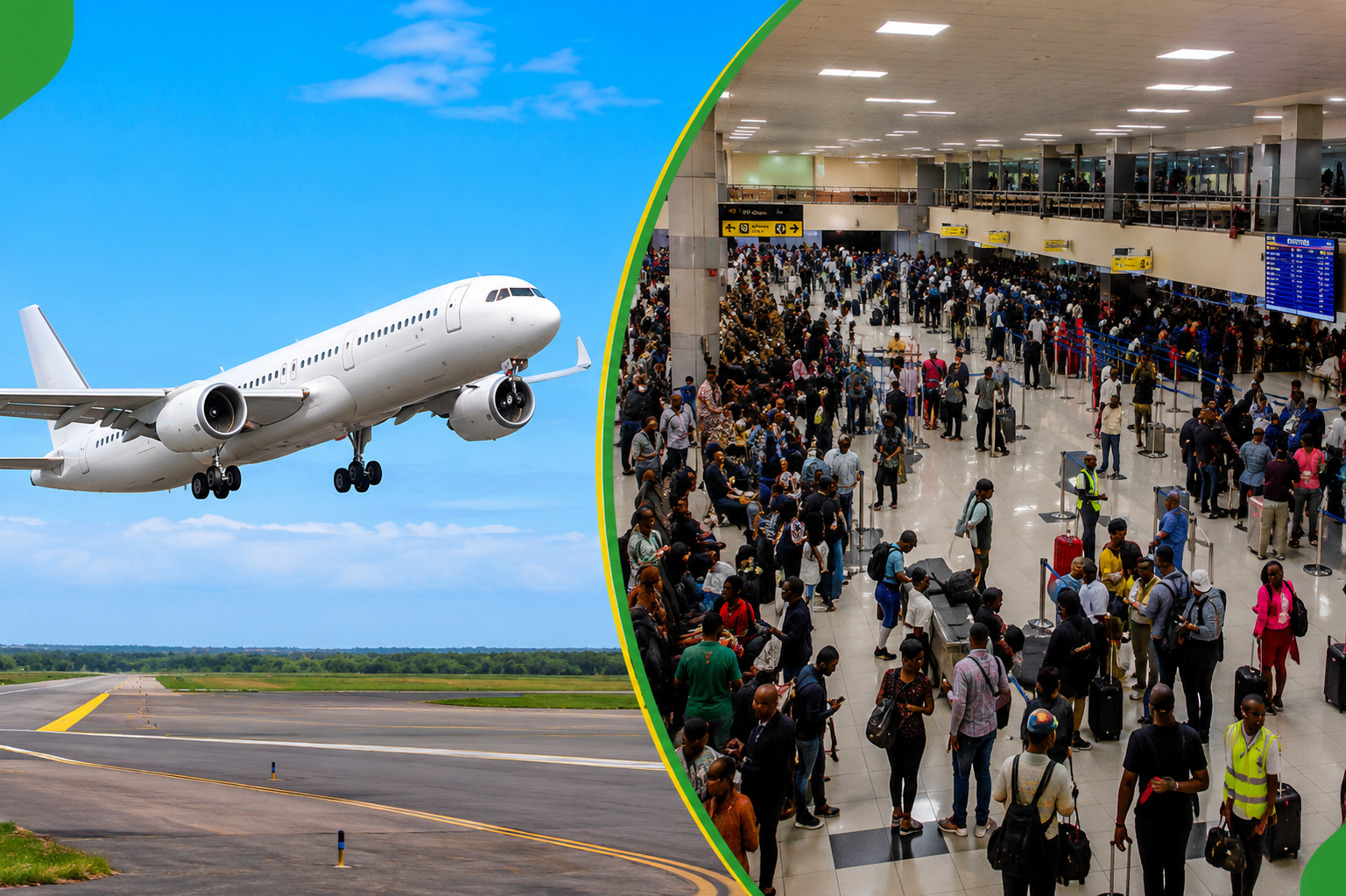
ABUJA, Nigeria – Every day, thousands of Nigerians walk into airport terminals expecting a routine journey. Many leave hours later stranded by delays, cancellations and mounting travel costs. Behind those disruptions lies a deeper crisis. Domestic airlines are battling soaring jet fuel prices, crippling foreign exchange pressures, expensive overseas aircraft maintenance, mounting debt and shrinking profit margins. Now, a proposed partnership between Nigeria and global aircraft manufacturer Airbus has raised hopes that one of the country’s most troubled sectors could finally be heading for recovery. But aviation experts warn that aircraft deals alone cannot fix decades of structural failures.
Nigeria’s aviation industry sits at the heart of Africa’s largest economy. In 2025, the country’s airports handled approximately 17.94 million passengers, including 13.09 million domestic travellers and 4.85 million international passengers, underscoring the sector’s importance to commerce, investment and national connectivity. Domestic travel alone accounted for nearly 73 per cent of total passenger traffic. Yet despite this growth, many airlines remain trapped in a cycle of financial distress. Edino Cornelius, writes.
A Sector Flying into Headwinds
Recent discussions between President Bola Ahmed Tinubu and Airbus have generated cautious optimism across the aviation community.
During a meeting on the sidelines of the Africa CEO Forum in Kigali, Rwanda, Airbus proposed establishing maintenance and hangar facilities in Nigeria as part of efforts to position the country as a regional aviation and aerospace hub. President Tinubu welcomed the proposal, describing it as an opportunity to strengthen aviation infrastructure, create technical capacity and support national development priorities.
For industry stakeholders, the proposal touches on one of the sector’s most persistent challenges: maintenance.
Nigeria lacks sufficient internationally certified Maintenance, Repair and Overhaul (MRO) facilities, forcing many airlines to send aircraft abroad for heavy maintenance checks. The result is a continuous outflow of scarce foreign exchange and prolonged aircraft downtime.
Aviation finance expert Michael Adeyinka believes this has become one of the industry’s biggest economic burdens.
“Everything involved in airline operations has become more expensive,” he explained during an interview in Abuja.
“Aircraft maintenance is paid for in dollars, aviation fuel prices keep rising, spare parts are costly, insurance is expensive, and airlines are also dealing with unstable exchange rates.”
According to him, local maintenance capacity could significantly reduce operating costs.
“Most airlines still send aircraft abroad for major checks. That means huge amounts of foreign exchange leave the country regularly.”
“If the Airbus partnership eventually leads to the establishment of internationally certified maintenance facilities in Nigeria, local airlines could reduce operational expenses significantly.”
However, he warned that infrastructure alone cannot solve deeper problems.
“If government policies remain inconsistent, airlines will continue facing survival problems regardless of foreign partnerships.”
The Fuel Crisis Driving Airlines to the Edge
While maintenance costs remain a challenge, jet fuel has become an even bigger threat.
Fuel accounts for between 30 and 40 per cent of airline operating costs in Nigeria, far above global averages. Earlier this year, domestic airlines threatened to suspend operations after reporting a 270 per cent increase in aviation fuel prices.
Industry pressure forced the federal government to intervene.
President Tinubu subsequently approved a 30 per cent debt relief package for airlines and directed regulators and fuel marketers to negotiate fairer pricing arrangements.
Although local refining capacity has expanded, airlines say fuel remains prohibitively expensive. Reuters reported that jet fuel prices climbed to as much as ₦3,300 per litre in parts of the country, forcing operators to cancel flights and cut routes.
The consequences are increasingly visible to passengers.
Business consultant Kelechi Nwosu said domestic air travel has become unpredictable.
“You can arrive at the airport early in the morning and still remain there for several hours without clear information.”
“For businesspeople, delays affect meetings, contracts and important schedules.”
Traveller Mariam Abdullahi echoed similar frustrations.
“Airlines keep increasing fares because of fuel and operational costs, but passengers are the ones carrying the burden.”
“People now spend huge amounts on flights that are not even guaranteed to depart on time.”
The Hidden Cost to Nigeria’s Economy
The aviation crisis extends far beyond airports.
Reliable air transport is critical for economic productivity, trade, tourism, healthcare delivery and emergency response.
For businesses, delayed flights translate into missed contracts, postponed investments and reduced productivity.
For healthcare providers, aviation disruptions can affect emergency medical evacuations, transportation of critical medical supplies and access to specialised healthcare services across regions.
For development agencies operating in difficult terrain, aviation often provides the fastest link to remote communities.
Security researcher Esther Nnamdi said aviation infrastructure should be viewed as part of broader national development.
“Aviation security is broader than what many people think,” she explained.
“It involves airport infrastructure protection, surveillance systems, access control, airspace monitoring, and the safety environment around airports.”
According to her, insecurity around transport corridors leading to airports has become an additional concern.
“There are travellers who worry more about getting safely to the airport than the actual flight itself.”
She argued that technical partnerships must be accompanied by broader institutional reforms.
“You can acquire modern aircraft and still face security vulnerabilities if the surrounding systems remain weak.”
Safety Under Financial Pressure
As airlines struggle financially, aviation experts warn that safety oversight becomes even more important.
Retired pilot and aviation safety consultant Captain Yusuf Danlami insists economic pressures must never compromise maintenance standards.
“In aviation, there is no room for excuses,” he said.
“An airline cannot ignore maintenance requirements because of financial problems. Safety procedures must always come first.”
He believes regulators face an increasingly difficult task.
“When operators are under pressure financially, regulators must become even more vigilant.”
“Passengers trust airlines with their lives. Regulators must ensure that trust is protected at all times.”
Nonetheless, he sees potential value in the Airbus discussions.
“If Nigeria can develop stronger local maintenance and engineering capacity through partnerships with global aviation companies, that would reduce pressure on operators and improve efficiency.”
Airbus: Solution or Symbol?
While the Airbus proposal has been welcomed by government officials, some industry analysts remain cautious.
Questions persist over the economic viability of a major Airbus-led maintenance hub, particularly given the relatively small number of Airbus aircraft currently operating within Nigeria. Some analysts argue that long-term success would require attracting airlines from across West and Central Africa to use such a facility.
Others point to Nigeria’s history of ambitious aviation announcements that failed to deliver lasting transformation.
Aviation officer Tunde Babalola believes implementation will determine whether the partnership succeeds.
“Partnerships alone do not automatically solve industry problems,” he said.
“What matters is whether there is a serious long-term strategy behind these discussions.”
According to him, debt remains one of the biggest threats confronting domestic operators.
“Several operators are struggling quietly.”
“Some airlines are surviving only because they keep restructuring operations and cutting costs wherever possible.”
He argues that access to affordable financing remains one of the industry’s greatest weaknesses.
“Investors want predictability. They want stable policies and long-term planning before committing serious capital.”
More Than an Aviation Story
The debate surrounding Airbus is ultimately about far more than aircraft maintenance.
It is about whether Nigeria can build the infrastructure needed to support economic growth, attract investment, create technical jobs and strengthen regional connectivity.
The Airbus proposal offers a potential pathway towards reducing maintenance costs, retaining foreign exchange and developing local engineering expertise. Yet industry experts insist that sustainable recovery will require more comprehensive reforms.
These include stable aviation policies, affordable financing, improved airport infrastructure, stronger regulatory oversight, enhanced security systems and lower operating costs.
For millions of Nigerians who rely on air transportation, the expectations are simple: safe flights, reliable schedules and affordable fares.
Whether the Airbus partnership becomes a genuine turning point or another unfulfilled promise will depend on what follows the announcement.
Until then, Nigeria’s aviation industry remains suspended between ambition and uncertainty — still flying but struggling to reach cruising altitude.
About the Author


 Mirian Gom
 Korede Abdullah

 Oluwatobi Adu