Drowning Megacity: Climate Chaos, Urban Neglect Push Lagos to the Brink
 Korede Abdullah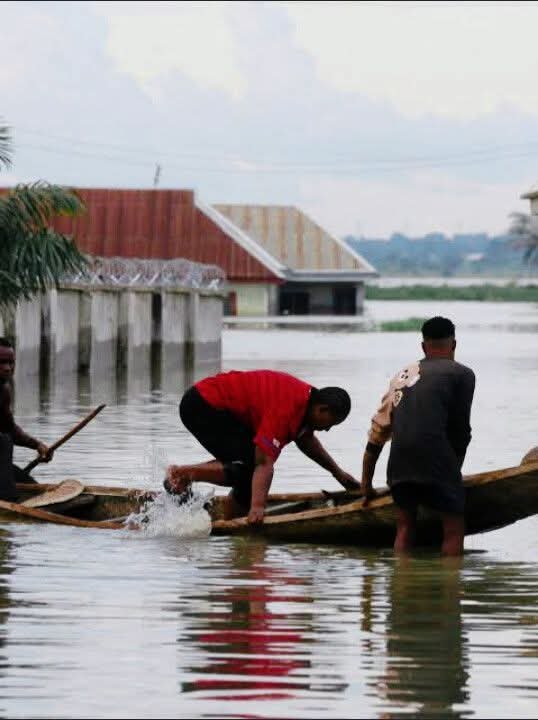
LAGOS, Nigeria – As Lagos braces for another season of intense rainfall and rising flood risks,in this report, Korede Abdullah examines how climate pressures and urban planning failures are converging to threaten lives, livelihoods and public health in Nigeria’s commercial capital.
Gathering Storm Over A Coastal Megacity
Lagos is once again entering the rainy season under mounting pressure—from the skies above and the systems below. Climate change is intensifying rainfall patterns, while decades of rapid, often unregulated urbanisation have left critical infrastructure overstretched and vulnerable.
With a population exceeding 20 million, sprawling informal settlements and extensive development along coastlines and wetlands, even moderate flooding can trigger cascading crises—humanitarian, economic and public health.
Findings by Africa Health Report consistently show that flooding episodes in Lagos are closely followed by spikes in waterborne diseases such as cholera, typhoid fever and diarrhoeal infections. As floodwaters contaminate drinking sources and sanitation systems, public health risks escalate sharply.
Experts further warn that stagnant water left behind creates breeding grounds for mosquitoes, increasing the likelihood of malaria outbreaks—turning seasonal floods into prolonged health emergencies.
Government Sounds Early Warning
At the centre of official alerts is Lagos State Commissioner for Environment and Water Resources, Tokunbo Wahab, who has urged residents to prepare for a potentially severe season.
Speaking at a recent climate briefing in Alausa, Wahab cautioned:
“Lagos State is expected to experience above normal rainfall… the high amounts of rainfall sometimes would lead to flooding events in parts of the state.”
He explained that such briefings aim to translate complex meteorological data into actionable guidance for residents, businesses and transport operators who face recurring disruptions during heavy rains.
However, analysts note that while early warnings are critical, their effectiveness is often undermined by low public compliance—a gap that public health experts say heightens exposure to disease when preventive measures are ignored.
Climate Forecast Raises Red Flags
Drawing on projections from the Nigerian Meteorological Agency (NiMet), Wahab outlined a worrying pattern: early onset of rains, delayed cessation and above-normal precipitation.
“This also implies an early onset of the rainy season, a longer-than-normal length and a delayed end,” he said.
The forecast also points to shifting rainfall distribution and temperature anomalies—signals that climate variability is becoming more intense and less predictable.
Environmental analysts describe these projections as a clear policy warning, stressing that prolonged wet conditions could sustain disease transmission cycles and strain already burdened healthcare systems.
Changing Weather Patterns, Longer Rains
The outlook is further complicated by weak La Niña conditions and neutral ENSO patterns—both associated with increased rainfall across West Africa.
These dynamics suggest extended wet periods from late March through early December, placing additional pressure on flood-prone communities and drainage systems already struggling to cope.
Meteorological experts warn that such conditions heighten the risk of extreme weather events, including intense storms and prolonged flooding.
Health specialists add that extended exposure to polluted floodwaters can lead to skin infections, respiratory illnesses and leptospirosis—particularly in densely populated, low-income communities.
Mapping The Flood Geography
Rainfall projections indicate significant variation across Lagos divisions, including Ikeja, Badagry, Ikorodu, Lagos Island and Epe, with annual totals nearing 2,000mm.
Wahab warned that strong winds at the beginning and end of the season could further compound risks.
“Lives and properties may be at risk… commercial activities disruption, flight delays and resulting revenue loss could arise.”
Flooding in Lagos is far from uniform. Certain districts—due to their topography, proximity to water bodies and infrastructural deficits—consistently bear the brunt.
In these high-risk zones, public health experts note a recurring cycle: flooding followed by disease outbreaks, worsened by overcrowded shelters and limited access to clean water.
Urban planning failures deepen exposure
While climate change is a key driver, structural weaknesses continue to amplify Lagos’ vulnerability.
Blocked drainage systems, construction on floodplains and unchecked development in high-value areas such as Lekki and Victoria Island have compounded the problem.
Poor enforcement of building regulations and the expansion of informal settlements along canals and wetlands have further strained flood management efforts.
Historical precedents underline the danger. The devastating 2012 floods, which claimed over 360 lives and displaced millions, remain a stark reminder of the consequences of systemic failure.
Public health reviews indicate that such disasters often lead to prolonged displacement, malnutrition, mental health challenges and widespread outbreaks of communicable diseases—especially among vulnerable populations.
Government response and preventive measures
In response to the looming threat, the Lagos State Government says it has intensified drainage maintenance, waste management and inter-agency coordination.
Wahab highlighted collaboration with the Ogun-Oshun River Basin Development Authority to regulate water releases from Oyan Dam, while emergency response agencies have been placed on high alert.
“We will beef up our enlightenment efforts… to avoid needless loss of lives and property,” he said.
Authorities have also deployed drainage engineers across local government areas and strengthened early warning systems to improve response times.
Health agencies are expected to scale up disease surveillance, vaccination campaigns and public health advisories to mitigate post-flood outbreaks.
Sanitation Drive As First Line Of Defence
The reintroduction of the monthly environmental sanitation exercise is being positioned as a critical flood control measure.
Wahab emphasised the importance of waste management:
“We are clearing the drains simultaneously because this is the only sure path to securing our city against flooding.”
The initiative underscores the role of community participation, with agencies such as the Lagos Waste Management Authority working alongside local councils and private operators to clear refuse and unblock waterways.
Observers note that behavioural change remains a crucial missing link, as indiscriminate waste disposal continues to clog drainage systems and worsen flooding.
Experts Warn Of Long-Term Climate Threats
Beyond seasonal risks, experts warn of a far more alarming future.
Professor Peter Elias of the Centre for Housing and Sustainable Development cautioned that rainfall levels in Lagos could double by 2050, with severe consequences.
“Over 44,000 people and more than 6,000 buildings in Ajegunle-Ikorodu are exposed to flood risks,” he said.
He stressed that existing drainage infrastructure is inadequate for future climate realities, calling for urgent upgrades to handle more extreme weather conditions.
Without such interventions, experts warn that Lagos could face a sustained increase in climate-sensitive diseases, placing further strain on public health systems and economic productivity.
A Governance Test Beyond Forecasts
For analysts, the looming flood season represents more than a meteorological challenge—it is a test of governance, planning and accountability.
While early warnings from NiMet provide critical data, experts such as Dr Temilade Sesan and Professor Timothy Nubi argue that implementation gaps remain the biggest risk.
Without stronger enforcement of urban planning laws, infrastructure investment and community-level adaptation, Lagos risks turning predictable rainfall into recurring disaster.
Ultimately, the crisis is not one of information, but of action.
As climate pressures intensify and urban vulnerabilities persist, the question confronting Lagos is stark: can Africa’s largest city adapt in time—or will it continue to drown in a cycle of preventable disasters?
About the Author


 Hope Ajayi
 Mirian Gom