War Beyond the Battlefield: How the US–Israel–Iran Conflict Is Quietly Squeezing Nigerian Homes
 Korede Abdullah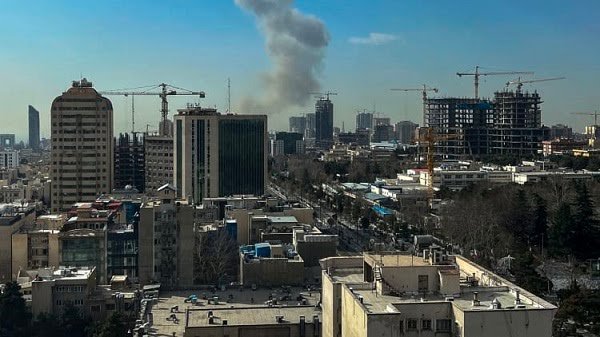
LAGOS, Nigeria – When wars erupt thousands of kilometres away, they often feel distant — dramatic headlines on television screens, missile strikes replayed in short clips, and diplomatic statements issued from foreign capitals.
But for millions of Nigerians navigating crowded markets, waiting at petrol stations, or calculating how to stretch their monthly income, the escalating tensions involving the United States, Israel and Iran are becoming more than distant geopolitics. The conflict is steadily weaving itself into everyday life — pushing up fuel prices, tightening food budgets, straining hospitals and placing new pressure on businesses already battling economic uncertainty.
In homes across Nigeria, the Middle East war is not simply a story of missiles and military alliances. It is increasingly a story about the cost of cooking gas, the price of bus fares, and the ability of families to afford healthcare.
This is the invisible battlefield where global politics meets the Nigerian wallet. Korede Abdullah, writes.
A Distant War, A Local Shockwave
The growing confrontation involving the United States, Israel and Iran is unfolding in one of the most strategically important regions in the global energy market. While the fighting and political tensions remain concentrated in the Middle East, the economic tremors are spreading across continents.
For Nigeria — a country deeply tied to global oil markets — the consequences can be swift.
Economist Dr. Tosin Ahmed Yusuf, speaking exclusively with Africa Health Report, explained that the global oil trade is heavily dependent on the Middle East, particularly the Strait of Hormuz, a narrow but crucial maritime corridor.
“Roughly 20 percent of global oil supply passes through the Strait of Hormuz,” Yusuf said.
Any instability around the route, he noted, can trigger panic in global energy markets and send crude prices soaring — with ripple effects reaching countries far removed from the conflict zone.
Nigeria is one of them.
Fuel Prices Climb as Oil Markets React
Global energy markets are highly sensitive to geopolitical shocks. The current Middle East tensions have already sparked sharp movements in oil prices.
Within days, Brent crude oil surged to around $85 per barrel, up from roughly $72 earlier in the week, as traders reacted to fears of supply disruptions.
Some oil facilities in the region have also faced operational interruptions. Major energy companies such as Saudi Aramco and QatarEnergy reportedly suspended certain operations temporarily amid security concerns following attacks and regional instability.
For countries that import refined petroleum products — including Nigeria — such volatility quickly filters into domestic markets.
Although Nigeria is a major crude oil producer, it still relies significantly on imported refined fuels and market-linked pricing structures.
That means when global crude prices rise, petrol prices at home often follow.
Petrol Shock Ripples Through Daily Life
Across Nigeria, motorists and commuters are already feeling the squeeze.
Petrol prices in several retail outlets have climbed to about ₦960 per litre, while the gantry price at the Dangote Refinery has reportedly increased to roughly ₦875 per litre, reflecting the rising cost of crude oil.
For ordinary Nigerians, these numbers translate into immediate financial pressure.
Transport fares rise. Delivery costs increase. Small traders pay more to move goods from one market to another.
Dr. Yusuf warns the chain reaction is almost inevitable.
“The most immediate effect would likely be higher fuel prices, which will push up transport fares, food distribution costs and the prices of basic commodities,” he said.
In an economy where transportation underpins almost every sector — from agriculture to retail — even modest fuel increases can quickly cascade through the system.
Food Inflation Looms Larger
Nigeria’s food supply chain is particularly vulnerable to rising fuel costs.
Most agricultural produce travels long distances from rural farms to urban markets in diesel-powered trucks. When fuel becomes more expensive, transporters often pass the cost on to traders — who then pass it on to consumers.
The result is a familiar pattern for Nigerian households: higher prices for staple foods.
Items such as rice, garri, beans and yam could become more expensive if transportation costs continue to rise.
Economists warn that the Middle East crisis may worsen inflation at a time when many families are already grappling with rising living expenses.
For households struggling to balance rent, school fees and food costs, the impact can be severe.
Cooking Gas Prices Surge
The pressure is not limited to petrol.
Investigations by this newspaper reveal that the price of liquefied petroleum gas (LPG) — widely used by Nigerian households for cooking — has also surged sharply.
Within a single week, the ex-depot price jumped by about 13 percent, rising to ₦18 million per 20 metric tonnes from ₦15.95 million the previous week.
Retail prices have followed suit.
The average price of cooking gas now stands at about ₦1,400 per kilogram, representing a significant increase from roughly ₦1,000 per kilogram recorded only days earlier.
Energy analysts say the escalation in the Middle East conflict has disrupted global energy supply chains and triggered speculation in petroleum markets, driving prices upward.
For families already adjusting to higher food costs, the surge in cooking gas prices adds yet another financial burden.
Businesses Feel the Pressure
Nigeria’s fragile manufacturing sector could also face growing strain if energy prices continue rising.
Many factories rely heavily on diesel-powered generators because of unreliable electricity supply. Small businesses — from bakeries to welding workshops — operate under similar conditions.
When diesel prices rise, production costs increase almost immediately.
Business owners then face difficult decisions: absorb the losses, raise prices, or reduce output.
Analysts warn that sustained fuel inflation could affect industries ranging from food processing and manufacturing to construction and retail, ultimately pushing consumer prices even higher.
For small businesses already struggling with inflation and currency fluctuations, the war’s economic fallout could deepen existing challenges.
Hospitals Brace for Rising Costs
The healthcare sector is also likely to feel the pressure.
Many hospitals across Nigeria depend on diesel generators to power critical infrastructure — including laboratories, operating theatres and diagnostic equipment.
According to medical expert Dr. Akin Iyanda, rising energy prices could significantly increase the cost of running healthcare facilities.
“When fuel prices rise, hospitals that depend heavily on diesel generators to power laboratories, operating theatres and other life-saving equipment will experience higher operating costs,” Iyanda told Africa Health Report.
“In many cases, these costs eventually reflect in hospital bills, making healthcare less affordable for ordinary Nigerians.”
At a time when many Nigerians already struggle with access to affordable healthcare, rising hospital costs could push medical treatment further out of reach for vulnerable households.
Risk of Drug Shortages
Beyond operational costs, the conflict could also disrupt Nigeria’s pharmaceutical supply chain.
The country imports a significant portion of its medicines, laboratory supplies and medical equipment from overseas.
If global shipping routes are disrupted or transportation costs rise, drug prices may increase — and shortages could emerge.
Dr. Iyanda warns that economic hardship could also change how Nigerians seek medical care.
“When households are struggling to pay for food, transportation and other basic needs, healthcare spending often becomes secondary,” he said.
Patients may delay hospital visits, skip routine check-ups, or stop purchasing prescribed medications — decisions that can have serious long-term health consequences.
Security Concerns at Home
Beyond economic effects, analysts say geopolitical tensions in the Middle East could also influence Nigeria’s domestic security landscape.
Public affairs analyst Dr. Victor Okhai, speaking during a television programme monitored by our correspondent, suggested that developments in Iran may resonate within certain communities in northern Nigeria.
According to Okhai, the reported assassination of Iran’s Supreme Leader has already sparked reactions among Shiite groups in the country.
He noted that the Islamic Movement of Nigeria, led by Sheikh Ibrahim El-Zakzaky in Zaria, has historically been associated by analysts with Iranian ideological influence.
“Developments in Iran have historically influenced Shiite movements in Nigeria, especially in the northern part of the country,” Okhai said.
“If tensions escalate, we could see demonstrations or clashes that may heighten sectarian divisions in parts of the country.”
Such unrest, he warned, could disrupt markets, transportation and local economic activities in affected areas.
The Oil Paradox
Ironically, the same crisis that may worsen living conditions for ordinary Nigerians could increase government revenue.
When global oil prices rise, Nigeria’s export earnings often increase because the country sells crude oil on international markets.
Yet economists caution that higher national revenue does not automatically translate into relief for citizens.
Dr. Yusuf describes this contradiction as Nigeria’s oil paradox.
“Nigeria’s situation is paradoxical,” he said.
“Higher oil prices may increase government revenue, but the benefit does not automatically translate to relief for ordinary Nigerians.”
In practice, while government coffers may grow, households often continue to face higher transportation costs, expensive food, and rising living expenses.
A Global War Felt at the Kitchen Table
For many Nigerians, the conflict between global powers in the Middle East may seem distant and abstract.
But its consequences are increasingly tangible.
Every rise in petrol prices alters commuting costs. Every surge in cooking gas affects family meals. Every increase in transport expenses pushes food prices higher.
The war may be fought in another region of the world, but its economic shockwaves are reaching deep into Nigerian households — quietly reshaping daily life.
And for millions already living under the weight of inflation, the conflict abroad may yet become another battle fought at the kitchen table.
About the Author


 Hope Ajayi
 Mirian Gom