Buried Alive by Rubbish: Inside Abuja’s Silent Public Health Emergency
 Oluwatobi Adu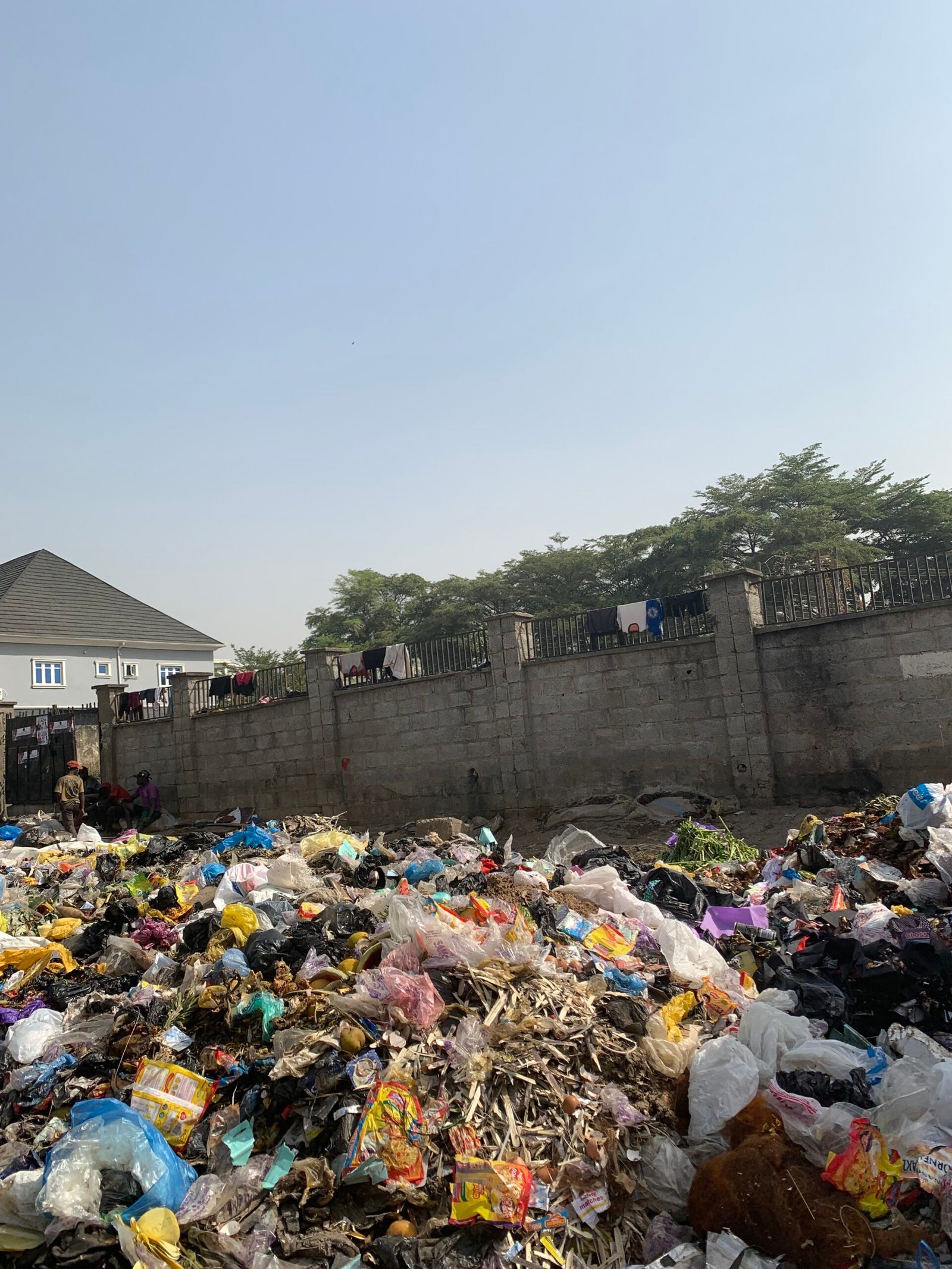
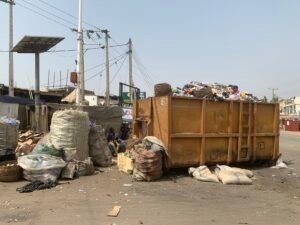
ABUJA, Nigeria – The stench hits first — sharp, sour, and impossible to ignore. Then come the flies, hovering in black clouds over rotting food scraps and plastic waste. In Gwarinpa and Jabi, two of Abuja’s most populated and commercially active districts, overflowing dumpsites have become grim fixtures of everyday life, standing in stark contrast to Nigeria’s carefully curated image of its federal capital.
This is not merely an environmental nuisance. It is a slow-burning public health emergency, unfolding in plain sight. In this report, Oluwatobi Adu documents how mounting piles of uncollected waste are eroding urban liveability, fuelling disease risks, and exposing deep cracks in Abuja’s waste management system — even as residents improvise survival strategies amid official inertia.
From Global Warning to Local Reality
The crisis in Gwarinpa and Jabi mirrors a troubling global pattern. A recent World Health Organisation (WHO) report, Throwing Away Our Health: The Impacts of Solid Waste on Human Health, warns that poorly managed solid waste is driving an escalating public health burden worldwide.
Globally, municipal solid waste is increasing at unprecedented rates, while many cities — especially in low – and middle-income countries — lack the systems to handle it safely.
“Solid waste reflects how our societies produce and consume, and how we treat people and the environment in the process,” said Dr Ruediger Krech, Director and interim, Department of Environment, Climate Change, One Health & Migration at the WHO.
“If we continue to treat waste as an afterthought, we will lock in avoidable disease, climate pollution and deep social inequities.”
WHO estimates that 25 per cent of the global burden of disease is linked to preventable environmental hazards — a statistic that casts Abuja’s situation in a deeply alarming light.
Gwarinpa: Living and Trading Beside Filth
In Gwarinpa’s 3rd Avenue, refuse spills out of metal bins onto the roadside, forming a dense carpet of decomposing waste. Traders sell cooked food just metres away, their stalls separated from the dumps by little more than indifference and necessity.
Martins, a self-acclaimed community waste coordinator, told Africa Health Report that residents have repeatedly raised complaints with authorities, to no avail.
“We have complained several times through different channels, still the government is not hearing us, but we have decided to manage it ourselves.”
Desperation has bred improvisation. With help from a neighbouring housing agency, residents now rely on a privately provided trash van.
“This is not dirty, it has reduced and the smell has subsided a little. We want to appreciate the housing company that’s helping us pack it once in a week.”
Yet, despite weekly collections, the air remains heavy with odour, and waste continues to accumulate faster than it can be removed.
Jabi: Waste Along the Arteries of the City
Across town in Jabi, refuse lines major roads, greeting commuters and motorists alike. For truck driver Yusuf, the sight has become an unsettling routine.
“This is not appropriate, and I believe it is not safe for human health.”
He believes the failure to act promptly reflects a wider neglect.
“The government and waste management officials need to address the situation urgently.”
Here, too, waste blocks drainage channels, raising fears of flooding during the rainy season — a precursor to outbreaks of waterborne diseases.
Residents Speak: Shared Blame, Shared Fear
On Gwarinpa’s First Avenue, Mrs. Ayeni, a long-time resident, worries about what lurks within the rubbish.
“This can cause mosquitoes, rodents, and it is not even safe for people selling near it.”
She acknowledges that residents themselves play a role in worsening the problem.
“This problem is caused by people living in this environment, we need to come together to create a healthy environment.”
Yet she insists that official efforts remain insufficient. “I believe the waste management officials are doing their best, but they need to do more.”
Her solution includes stricter policies and penalties against roadside dumping, combined with community education.
Expert Insight: A Public Health Time Bomb
Environmental health expert, Mrs. Kadiri warned that the health implications of poor waste disposal extend far beyond unpleasant smells.
“Poor waste disposal poses a serious threat to public health because it creates conditions that encourage the spread of disease.”
She explained that uncollected refuse attracts vectors such as rodents, flies, and mosquitoes, which transmit illnesses including cholera, typhoid fever, malaria, and Lassa fever.
“When waste blocks drainage channels, it leads to flooding, which contaminates water sources and increases the risk of waterborne diseases.”
Air pollution is another silent danger. “Open waste burning and decomposing refuse release harmful gases and particles into the air, worsening respiratory conditions, especially among children, the elderly, and people with pre-existing health issues.”
For Mrs. Kadiri, waste management is inseparable from public health.
“This is why proper waste management is not just an environmental issue but a public health necessity.”
She emphasised shared responsibility: “Improving waste management requires shared responsibility: it is also not a social service. Residents need to understand that it is what you give to the environment, that the environment gives back to you.”
Her warning about the future is stark. “If waste pollution is allowed to persist, the long-term consequences will be severe. Public health costs will rise due to increased disease outbreaks, pressure on healthcare facilities, and reduced productivity.”
A Capital at a Crossroads
Abuja’s rapid growth has outpaced its waste management capacity. In districts like Gwarinpa and Jabi, the consequences are now impossible to ignore. Overflowing dumpsites signal not just infrastructural failure, but a looming health crisis that could overwhelm an already strained healthcare system.
Without improved collection systems, stronger enforcement against illegal dumping, sustained public education, and investment in modern waste infrastructure, residents remain trapped in a cycle of exposure and neglect.
The voices from the streets are united in one demand: act now.
Because in Abuja, the rubbish is no longer just piling up — it is closing in.
About the Author

 Mirian Gom