


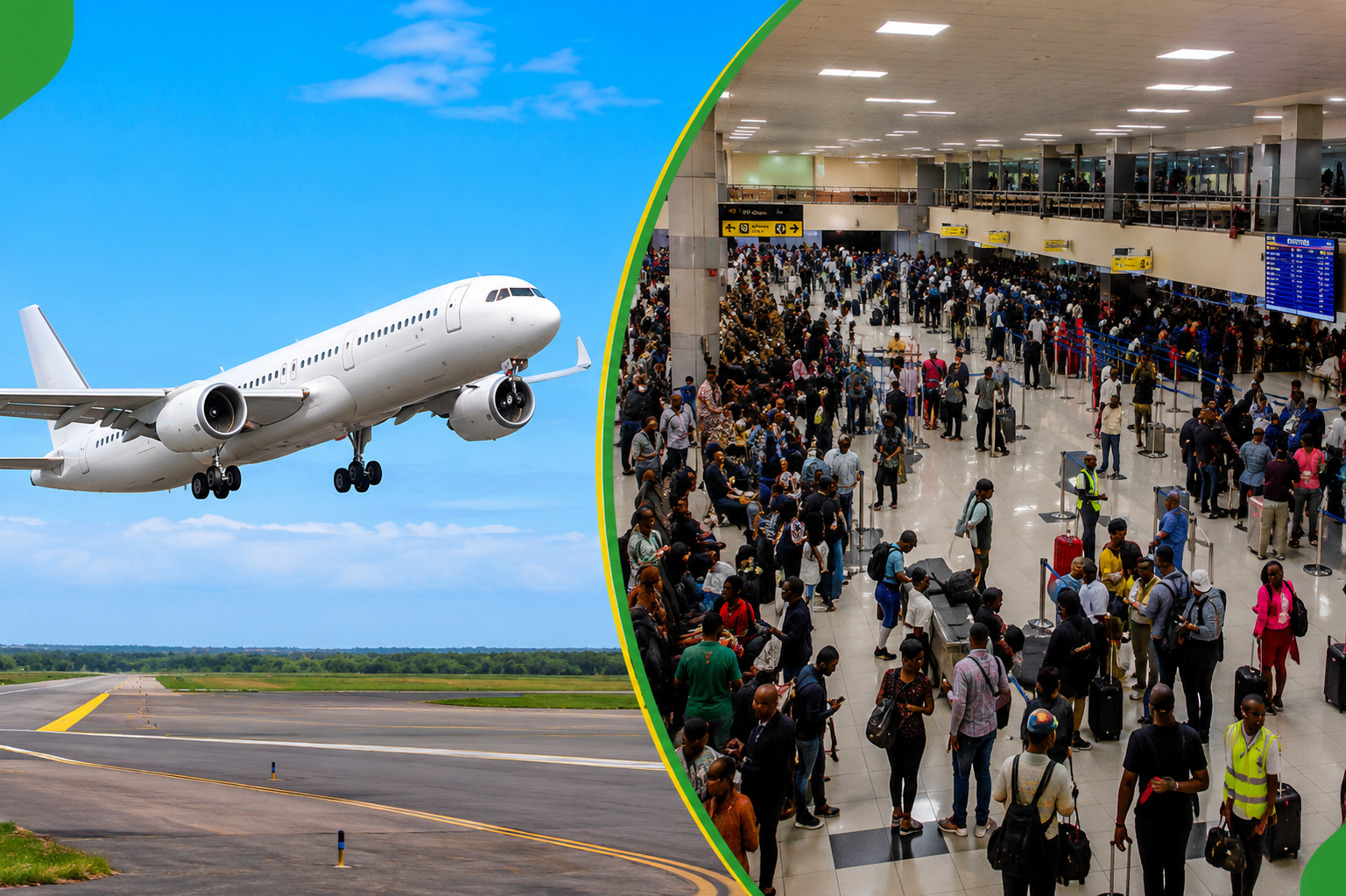
ABUJA, Nigeria – Buying an airline ticket comes with a simple expectation: arrive at the airport, board the aircraft and reach your destination on time. For many Nigerian travellers, however, that journey often ends in frustration. Flights are delayed for hours or cancelled without warning. Passengers are denied boarding despite holding valid tickets. Luggage goes missing. Refunds take months, while poor communication leaves stranded travellers searching for answers. In this report, Edino Cornelius examines why consumer complaints continue to dominate Nigeria’s aviation sector despite regulations designed to protect passengers. Through the experiences of travellers, legal experts, aviation professionals and regulators, the report asks a critical question: Are Nigeria’s aviation consumer rights working in practice, or only on paper?
When Flights Stop, Passengers Pay
The nationwide aviation disruption of August 11, 2026, brought the issue back into public focus.
Industrial action by aviation unions disrupted operations at major airports, leaving thousands of passengers stranded.
For workers, it was an industrial dispute.
For airlines, it was an operational crisis.
For passengers, it meant missed business meetings, cancelled family events, disrupted holidays and expensive changes to carefully planned journeys.
While extraordinary circumstances can limit airlines’ liability under the Nigeria Civil Aviation Regulations (NCAR) 2023, passengers still retain important rights relating to information, assistance, refunds and, in some situations, compensation.
The disruption exposed a broader problem that predates the strike.
Nigeria’s aviation consumer protection system exists.
Many passengers simply struggle to benefit from it.
The Problem Started Long Before August
Flight disruptions have remained one of the biggest complaints in Nigeria’s aviation industry.
Delays, cancellations, refund disputes, baggage problems and poor customer communication have become recurring concerns.
In December 2025, the Nigeria Civil Aviation Authority (NCAA) summoned Rano Air, United Nigeria Airlines and XeJet over alleged breaches of passenger protection regulations relating to delays, cancellations, refunds and passengers’ right to information.
The intervention highlighted that regulators themselves acknowledge persistent compliance challenges.
The issue is no longer whether airlines experience disruptions.
Every airline does.
The real concern is how passengers are treated when those disruptions occur.
When Communication Breaks Down
For many travellers, poor communication is often worse than the delay itself.
Aisha Ibrahim, an Abuja-based businesswoman, says uncertainty creates unnecessary stress.
“My biggest complaint is the lack of information. Sometimes nobody can tell you when the flight will leave or what your options are.”
She believes most passengers simply do not understand their legal rights.
“Many people don’t know when they qualify for compensation or refunds.”
Her frustration reflects one of the biggest weaknesses in Nigeria’s aviation consumer protection system.
Passenger rights exist.
Passenger awareness does not.
Refunds That Become Another Battle
For many travellers, cancelled flights are only the beginning.
Obtaining refunds can become another lengthy struggle.
In 2026, the Federal High Court affirmed the authority of the Federal Competition and Consumer Protection Commission (FCCPC) to investigate airline consumer complaints involving refunds and ticket pricing.
The NCAA also reported that Max Air refunded more than ₦182 million to 956 passengers during the second quarter of 2026, highlighting the growing scale of refund disputes.
The concern for passengers is rarely whether refunds eventually happen.
It is how long they take.
Understanding Passenger Rights
Aviation lawyer Barrister Emmanuel Umoru says many passengers misunderstand the difference between refunds and compensation.
“Not every cancellation automatically means the airline has violated the law.”
According to him, passenger rights depend on several factors, including:
The reason for the disruption.
Whether adequate notice was given.
The provisions of the Nigeria Civil Aviation Regulations.
He advises passengers to retain every document connected to their journey.
“Keep your ticket, boarding pass, receipts, emails and text messages. They may become important if you need to escalate your complaint.”
These records can strengthen complaints submitted to the NCAA Consumer Protection Department.
Airlines Face Challenges Too
Retired pilot and aviation safety consultant Captain Yusuf Danlami believes operational disruptions cannot always be avoided.
Aircraft develop technical faults.
Weather changes unexpectedly.
Industrial disputes occur.
Airport restrictions emerge.
But he argues that airlines should be judged by how they respond afterward.
“An airline may not prevent every disruption, but it should never leave passengers in the dark.”
Prompt communication, alternative travel arrangements and compliance with passenger protection regulations, he says, distinguish responsible airlines from poor performers.
Travel Agents Often Carry the Burden
Travel agents frequently become the first point of contact when flights are disrupted.
Mr Sabo, Director of Delight Travel Agency in Abuja, says passengers naturally expect immediate solutions.
“We’re often waiting for information from the airline ourselves.”
According to him, delayed communication affects everyone.
“If airlines quickly confirm whether passengers will be rebooked or refunded, we can help much faster.”
The Hidden Cost of Flight Disruptions
The price of a disrupted journey often extends far beyond the airline ticket.
Business appointments are missed.
Hotel bookings are wasted.
Connecting international flights are lost.
Family ceremonies cannot be postponed.
Businessman Chinedu Eze says the ticket itself was his smallest financial loss.
“I had already arranged transport and business meetings. Everything had to change.”
Many passengers wrongly assume airlines automatically cover these indirect losses.
Legal responsibility, however, depends on the circumstances surrounding each disruption.
When Your Luggage Doesn’t Arrive
Consumer protection does not end once passengers land safely.
Lost, delayed or damaged baggage remains another major source of complaints.
The NCAA’s passenger protection framework provides remedies for baggage-related disputes and has announced plans to deploy Radio Frequency Identification (RFID) technology to reduce missing luggage.
Passengers are entitled to assistance under specified conditions rather than being left to navigate the problem alone.
Denied Boarding Despite Having a Ticket
Another growing complaint involves passengers denied boarding despite holding valid tickets.
Nigeria’s Civil Aviation Regulations contain provisions covering involuntary denied boarding and overbooking.
Passengers affected should receive clear explanations, available alternatives and remedies required under the law.
Consumer protection is not simply about refusing boarding.
It is about ensuring passengers understand their options.
Can Regulation Restore Passenger Confidence?
The NCAA has strengthened cooperation with the FCCPC to improve consumer protection across the aviation industry.
According to NCAA Director of Public Affairs and Consumer Protection Michael Achimugu, the Authority resolved 65 per cent of passenger complaints in 2025, with plans to improve further.
The progress is encouraging.
Yet many passengers continue to judge the system by what happens at the airport—not by statistics.
A complaint mechanism is valuable only if travellers can easily access it and receive timely resolutions.
Bridging the Gap Between Rights and Reality
Experts say improving consumer protection requires more than stronger regulations.
Priority reforms include:
Greater public awareness of passenger rights before travel.
Faster processing of airline refunds.
Better communication during delays and cancellations.
Stronger enforcement of NCAA passenger protection regulations.
Improved coordination between airlines, travel agents and regulators.
Simpler complaint procedures with faster resolution timelines.
These measures would help transform passenger rights from legal provisions into practical protections.
Passengers Deserve More Than Promises
Disruptions will always occur in aviation.
No airline can eliminate technical faults, adverse weather or unforeseen operational challenges.
But how airlines respond determines whether passengers remain customers—or become victims.
A cancelled flight should not become weeks of uncertainty.
A refund should not require a legal battle.
A missing suitcase should trigger immediate assistance, not endless complaints.
Nigeria already has one of Africa’s most comprehensive passenger protection frameworks.
The challenge is ensuring every traveller experiences those protections in real time.
Until that happens, many Nigerian passengers will continue asking the same question whenever flights go wrong:
If consumer rights exist, why do passengers still pay the highest price?



Join the conversation