
How Nigeria’s Deadly Shortcut Culture is Turning City Roads into Killing Fields
 Oluwafunbi Bello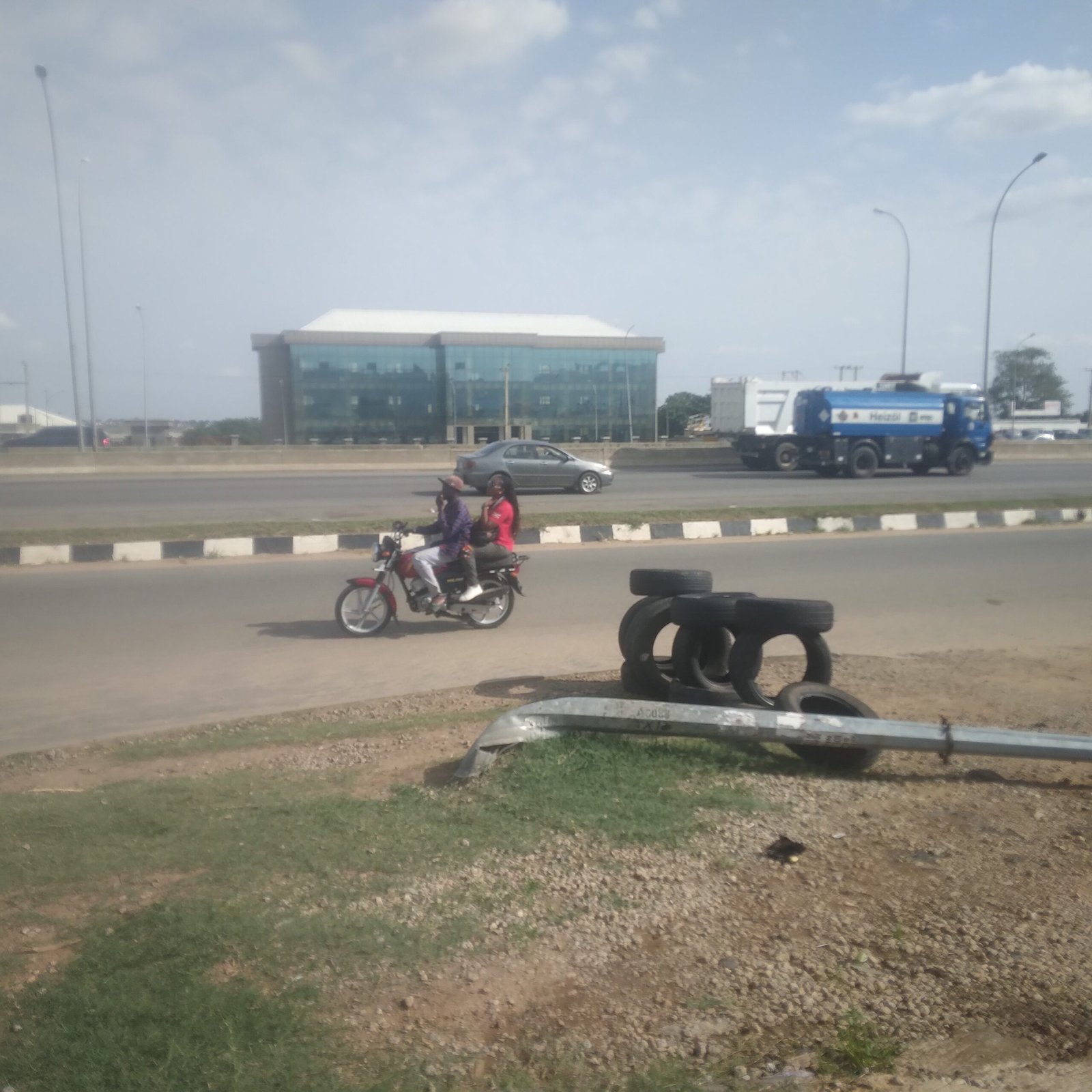
ABUJA, Nigeria – The screams came moments after the crash. A commercial motorcycle rider, trying to shave a few minutes off his journey by driving against traffic, shot out from a junction and smashed into an oncoming vehicle along a busy Abuja expressway. Residents rushed towards the wreckage, some filming, others praying. But for many who gathered that Sunday afternoon, the horror was painfully familiar. Across Nigeria’s fast-growing cities, reckless motorcycle riding, one-way driving and routine traffic violations by commercial transport operators are no longer isolated incidents — they are becoming part of daily life, leaving behind broken bodies, traumatised families and roads increasingly defined by chaos rather than order. Oluwafunbi Bello, writes.
Just days after the first crash, another violent collision unfolded near the Eterna filling station close to the NNPC Junction in Kubwa, Abuja. This time, 24-year-old James Chisom became one of the latest victims of a traffic culture many residents say has spiralled dangerously out of control.
For more than a week, she remained hospitalised at the General Hospital Kubwa, battling severe injuries to her knee and leg — wounds witnesses insist could have been avoided had traffic rules been respected.
“Since the accident, I have not been able to work because of the pain in my leg,” Chisom said.
“I still feel pains in my knee and leg, and the stitches may even leave scars on my body. Sometimes when I remember how the accident happened, I just feel lucky that I survived it.”
For Chisom, survival came at a cost. Her mobility, income and emotional wellbeing were all suddenly disrupted by a stranger’s decision to ignore traffic laws in pursuit of speed and convenience.
But residents around Kubwa say her experience is far from unique.
Across major districts in Abuja — including Gudu, Gwarimpa and the ever-congested NNPC Junction — commercial motorcyclists and taxi drivers are increasingly accused of disregarding traffic lights, ignoring road signs and driving against traffic, often in full public view.
At the site of Chisom’s accident, eyewitnesses described one-way driving as so common that many residents barely react to it anymore unless somebody gets hurt.
Mr. Oche Daniel, a car washer who has worked near the filling station exit for about two years, said he had witnessed multiple crashes linked to reckless riding.
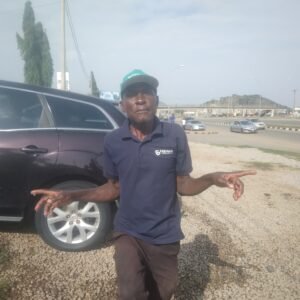
“Since I’ve been washing cars at the exit of the filling station for about two years now, I’ve seen about seven accidents here because of one-way driving, and these aboki riders won’t listen whenever they’re warned,” he said.
Another car washer, Mr. Desmond Godwin, echoed the same concerns.
“One-way driving is too common on this route,” he said.
For many residents, what is most disturbing is not merely the frequency of the violations, but the growing boldness with which they are committed. Riders weave through moving traffic, commercial drivers run red lights, and vehicles emerge unexpectedly from forbidden lanes with little regard for pedestrians or other motorists.
The recklessness, residents say, has become normalised.
Yet many commercial riders argue that Nigeria’s economic realities are fuelling the dangerous behaviour.
With soaring fuel prices and shrinking daily earnings, some riders openly admit they break traffic laws to save money and maximise profit.
A commercial motorcycle rider, Ayau Muazu, said many operators deliberately take one-way routes to reduce fuel consumption and cut travel time.
“The reason why most bike men take one-way na because of fuel. You know say fuel don cost, so to reduce where the fuel go carry them pass to the bus-stop where they go wait for customers, na why they dey mostly take one-way,” he said.
His explanation reflects a wider economic desperation gripping many urban transport workers across Nigeria, where inflation and rising living costs have squeezed incomes and intensified competition for passengers.
Taxi Drivers Face Similar Pressures.
Mr. Kunle Adebayo, a commercial driver in Abuja, admitted that many transport operators knowingly violate traffic laws to increase the number of trips they can complete in a day.
“Most drivers jump traffic or take one-way because everybody wants to meet up and carry as many passengers as possible in a day,” he said.
“If you spend too much time obeying traffic at some junctions, another driver don already carry the passengers before you come back. Fuel is expensive now and drivers are struggling, so many of them just want to go and return quickly to make more money.”
But road users and safety advocates insist that economic hardship cannot excuse behaviour that places lives in danger.
For pedestrians, passengers and unsuspecting motorists, a single reckless decision can trigger life-altering consequences within seconds.
Across Abuja and other Nigerian cities, reports of avoidable crashes involving motorcycles and commercial vehicles are becoming increasingly frequent. Victims range from schoolchildren hit while crossing roads to commuters left with permanent disabilities after collisions caused by one-way driving or traffic light violations.
Road safety experts warn that such violations are particularly dangerous because they remove the reaction time drivers and pedestrians normally rely on to avoid collisions.
When vehicles suddenly emerge from the wrong direction, motorists often have only seconds — sometimes less — to respond.
The Result Can Be Catastrophic
Responding to concerns over the rising incidents, Mrs. Ikechukwu Osajiri, a call agent with the Federal Road Safety Corps (FRSC), said offenders are punished whenever apprehended.
“We don’t tolerate one-way driving and people caught doing that are punished. This one-way driving is because road safety officers are not there and I’m going to call the nearest command there to inform them and let them disburse officers to the areas,” she said.
Her response points to what many residents describe as one of the biggest drivers of the crisis: inconsistent enforcement.
In many accident-prone areas across Abuja, traffic offenders frequently operate without fear of consequences, particularly in locations where road safety officials are absent.
Where enforcement does exist, some motorists simply wait until officers leave before resuming dangerous practices.
For urban planners and public safety observers, the issue also exposes deeper structural problems within Nigeria’s transport system. Poor road design, weak regulation of commercial motorcycles, inadequate traffic monitoring and limited public transport alternatives have all contributed to a culture where dangerous shortcuts flourish.
And when accidents occur, victims are often left to bear the burden alone.
For Chisom, recovery remains uncertain.
The physical pain may eventually ease, but the emotional scars of that afternoon remain vivid.
Like countless others injured on Nigerian roads, she became collateral damage in a transport culture where impatience, weak enforcement and economic hardship increasingly collide.
As reckless motorcycle riding and traffic violations continue to rise, residents are urging the FRSC and other traffic enforcement agencies to intensify patrols, deploy officers to known black spots and impose stricter penalties on offenders.
Many are also calling for sustained public awareness campaigns aimed at changing attitudes towards road safety, particularly among commercial transport operators.
Without stronger enforcement and a collective shift in road behaviour, residents fear that Nigeria’s urban roads may continue to claim more innocent victims — not because tragedies are unavoidable, but because too many dangerous shortcuts have been allowed to become routine.
About the Author

 Mirian Gom
 Korede Abdullah
 Oluwatobi Adu