
Why Nigerian Women Are Still Dying in Childbirth Despite Years of Investment – UNFPA
 Mirian Gom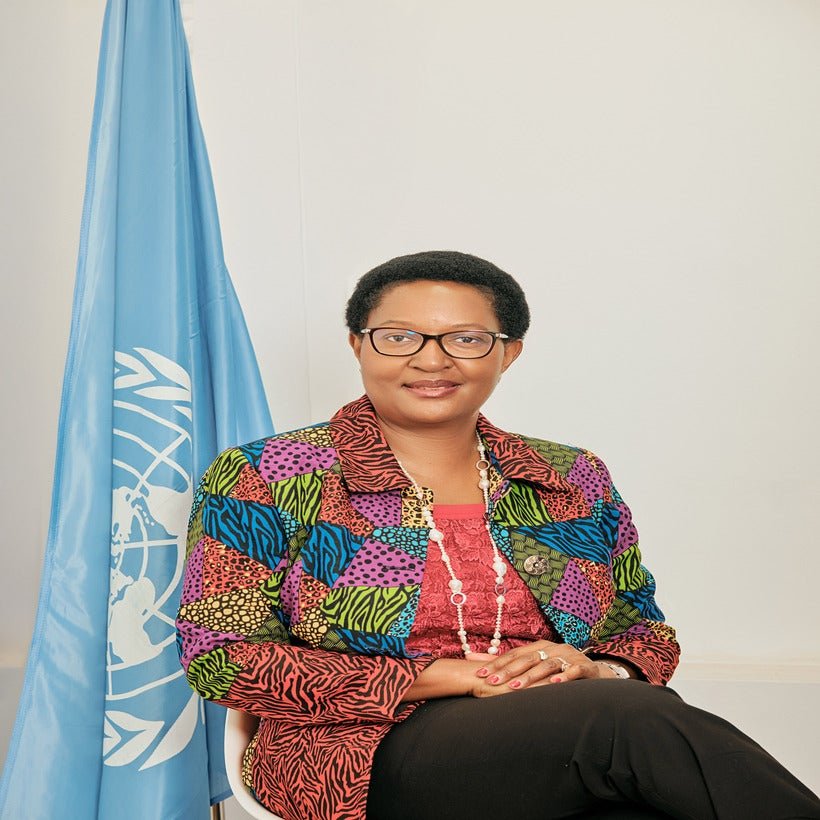
UNFPA Nigeria Country Representative, Muriel Mafico
ABUJA, Nigeria – Nigeria remains one of the most dangerous places in the world to give birth, accounting for nearly one-quarter of global maternal deaths. In this exclusive interview with Africa Health Report’s Gom Mirian, United Nations Population Fund (UNFPA) Nigeria Country Representative Muriel Mafico explains why thousands of Nigerian women continue to die from preventable pregnancy-related complications, what government and development partners are doing to reverse the trend, how health worker migration is affecting maternal healthcare, and why she believes Nigeria still has a unique opportunity to save thousands of mothers’ lives.”
Nigeria accounts for nearly one in four maternal deaths globally. Why is maternal mortality still so high?
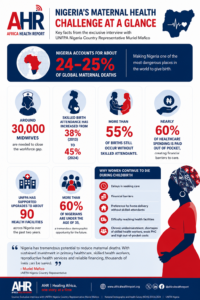
Mafico: Nigeria contributes about 24 to 25 per cent of the global maternal mortality burden, meaning one in every four women who die during pregnancy, childbirth or shortly afterwards dies here. That is why maternal mortality remains an issue of grave concern.
The reasons are multiple and interconnected, we often talk about the three delays. The first is the delay in deciding to seek care because many women do not recognise danger signs during pregnancy. The second is the delay caused by financial barriers—women know they need care but cannot afford transportation or treatment. The third is the delay in reaching a health facility on time, even after the decision has been made.
Beyond these, some women still prefer home deliveries without skilled birth attendants, increasing the risk of complications.
On the health system side, chronic underinvestment in maternal and newborn health, shortages and poor distribution of skilled health workers, weak primary healthcare services and high out-of-pocket healthcare costs continue to undermine maternal health outcomes.
What is government doing to change this situation?
Mafico: We are seeing encouraging efforts at both the federal and state levels.
Although Nigeria is yet to meet the Abuja Declaration target of allocating 15 per cent of national budgets to health, governments are increasingly investing domestic resources in healthcare. States are procuring essential maternal health commodities, while the National Health Insurance Authority is expanding access to healthcare for vulnerable populations.
Development partners are also supporting states through matching funds and technical assistance. While investment is still below what is required, the commitment to improving maternal and newborn health is becoming stronger.
Has this investment translated into measurable progress?
Mafico: Yes, but the progress is not moving fast enough.
According to the National Demographic and Health Survey, the proportion of births attended by skilled health workers increased from 38 per cent in 2013 to about 45 per cent in 2024. While that is progress, it still means that more than half of Nigerian women give birth without skilled assistance.
We are also seeing mixed results. The unmet need for family planning has increased, showing that many women who want contraceptive services are still unable to access them.
There are also huge regional disparities. In parts of the South-East, skilled birth attendance is above 80 per cent, while in some northern states it remains below 30 per cent. So, the data tells us two things: progress is happening, but it is too slow and too uneven. We need programmes that are implemented at scale, at speed and sustained through reliable domestic financing.
How is UNFPA helping to close these gaps?
Mafico: UNFPA works with federal and state governments to strengthen maternal healthcare, particularly in underserved communities.
Over the past two years, with support from the Government of Norway, we have helped upgrade about 90 public health facilities across different states, equipping them with solar power, essential medical equipment and trained personnel.
We are also investing in health workers. In Sokoto, for example, we are supporting the recruitment and training of community midwives—women recruited from the communities where they will eventually serve. Because they already belong to those communities, they are more likely to remain there.
In humanitarian settings, including internally displaced persons’ camps in Borno and Benue states, we support antenatal care, safe deliveries and postnatal services. In Benue’s Mega IDP Camp alone, skilled birth attendants assist about 89 safe deliveries every week, while similar services are being provided in Muna Camp in Borno State.
Nigeria is experiencing an exodus of health workers. How is this affecting maternal healthcare?
Mafico: Nigeria currently has a shortage of about 30,000 midwives, and migration has placed additional pressure on an already stretched health system.
However, migration itself is not the problem. People have the right to seek better opportunities. The real question is: what are the push factors? Better pay, improved working conditions, security and career opportunities all influence those decisions.
Our focus should therefore be on training more health workers while creating conditions that encourage them to stay. Alongside community midwives, some states such as Akwa Ibom are recalling retired nurses to strengthen service delivery. These are practical innovations that deserve greater attention.
Development funding is shrinking globally. How is UNFPA adapting?
Mafico: Like many development agencies, UNFPA is experiencing significant funding constraints as development assistance changes globally.
Our response has been to work more closely with government, other UN agencies, development partners, development banks and the private sector so that limited resources achieve greater impact.
Ultimately, sustainable improvements cannot rely solely on donor funding. Predictable domestic investment remains the foundation for strengthening Nigeria’s health system.
How important is reliable data in tackling maternal mortality?
Mafico: Data is at the centre of everything we do.
If we say women are dying during childbirth, there is evidence to support it. If we say millions of children are out of school, that is also backed by data. Our advocacy is grounded in evidence.
UNFPA supports major national surveys, including the National Demographic and Health Survey, because policy decisions must be informed by reliable data.
However, Nigeria’s last population census was conducted in 2006. Updated census figures would significantly improve planning and resource allocation. Generating quality data is important but using that data to guide decisions is equally critical.
Despite these interventions, many Nigerians feel progress is not visible. What gives you hope?
Mafico: I understand those frustrations because they are genuine.
Nigeria is a country of more than 200 million people, so the scale of the challenges is enormous. Yet we are seeing encouraging progress. More women are delivering with skilled birth attendants, governments are increasing health investments, and more states are taking ownership of healthcare programmes.
The challenge now is speed, scale and sustainability. Nigeria already has the policies, strategies and roadmaps. What is needed is stronger implementation, predictable domestic financing and directing more resources to communities where the needs are greatest.
Nigeria has one of the world’s youngest populations. Can the country still harness its demographic dividend?
Mafico: Absolutely, but only if we invest in young people now.
More than 60 per cent of Nigeria’s population is under the age of 35, representing an enormous opportunity. To harness that demographic dividend, young people must be healthy, educated and equipped with skills.
Teenage pregnancy remains a concern, and more than 10 million children are still out of school. These are investments we cannot afford to delay because today’s young people will determine Nigeria’s future economic growth.
What message would you like Nigerians and policymakers to remember?
Mafico: Nigeria already has strong policies, strategies and legislative frameworks. What is needed now is sustained investment to fully implement them.
By strengthening primary healthcare, investing in skilled health workers, expanding reproductive health services and ensuring predictable financing, Nigeria can dramatically reduce maternal deaths.
The stakes extend beyond Nigeria. By 2050, Nigeria’s population could approach 450 million people. Progress in Nigeria—whether on maternal mortality, obstetric fistula or ending child marriage—is progress for Africa. If Nigeria succeeds, the continent succeeds.
About the Author

 Oluwatobi Adu


 Hope Ajayi