
The Price of a Shortcut: How Parents, AI Syndicates and Underage UTME Candidates Are Testing the Limits of Nigeria’s Exam Integrity
 Oluwatobi Adu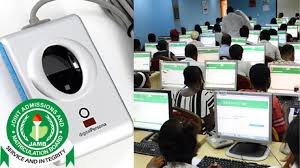
ABUJA, Nigeria – In Nigeria’s fiercely competitive race for university admission, success in the Unified Tertiary Matriculation Examination (UTME) has become a national obsession. Each year, more than 1.6 million candidates sit for the examination organised by the Joint Admissions and Matriculation Board (JAMB), hoping to secure a place in the country’s limited university slots.
But beneath the surface of ambition lies a troubling reality: a growing underground ecosystem of underage candidates, desperate parents, and organised exam-fraud syndicates increasingly exploiting technology — including artificial intelligence — to manipulate the system.
Recent disclosures by the JAMB Registrar have exposed the scale of the crisis. Nearly 38,000 underage candidates reportedly registered for this year’s UTME, with many linked to sophisticated networks promising “guaranteed success” through illicit means.
The scandal has sparked a national debate — not about whether bright young students should be allowed to excel — but about how parental pressure, loopholes in regulations and emerging AI-driven cheating schemes are threatening the credibility of Nigeria’s education system.
In this report, Oluwatobi Adu reports that for experts and stakeholders, the stakes are far higher than one examination season: the global credibility of Nigerian academic certificates may be on the line.
JAMB’s High-Tech War Against a New Generation of Exam Fraud
According to the JAMB Registrar, the board is confronting an evolving landscape of exam malpractice — one that increasingly relies on technology and organised networks rather than traditional cheating methods.
He revealed that investigators have uncovered syndicates deploying artificial intelligence tools to impersonate officials, forge candidate identities and manipulate examination processes.
Over 100 candidates across several states were recently identified as having paid for illegal assistance, prompting recommendations for the cancellation of their registrations.
Despite JAMB’s expanding arsenal of technological safeguards — including biometric verification, identity tracking and digital monitoring systems — enforcement remains difficult.
The Registrar warned that the real challenge lies beyond technology.
“Paying for examination fraud is a crime. It does not secure a child’s future; it destroys it,” he said.
He added that while the board possesses the tools to detect malpractice, the absence of stronger legal backing and public pressure sometimes weakens enforcement efforts.
More troubling, he noted, is the growing involvement of underage candidates, many allegedly encouraged by parents who believe early admission guarantees academic advantage.
When Parental Ambition Fuels Academic Shortcuts
For many education experts, the underage UTME phenomenon is not merely about talented children attempting university early. Instead, it reflects a wider culture of intense academic pressure and shortcuts encouraged at home.
Olatunji Adeyemi, an education expert from the Department of Library and Information Science at Kwara State University, Malete, believes policies alone cannot solve the problem.
“When measures are taken to stop people from doing certain things in Nigeria, people always find a criminal way around that policy,” he said.
He acknowledged that some young students possess genuine academic brilliance, but insisted that parental involvement in malpractice is becoming a dangerous trend.
“There should be very, very strict laws against malpractice,” Adeyemi stressed.
According to him, students admitted through dishonest means often struggle academically later, producing graduates who lack the competence their certificates claim.
“I am afraid for the future… our education system and certificate system is deteriorating,” he warned.
For Adeyemi, rebuilding integrity in Nigeria’s education sector will require collective responsibility — from parents, government institutions, lecturers and students alike.
The Culture of ‘Perfect Grades’ Driving the Crisis
Another expert, Yusuf Tunde Idris (CLN) of Osun State College of Technology, says the problem also stems from Nigeria’s escalating obsession with perfect examination scores.
“Before, if you had C4, you were considered a genius, but nowadays C4 is not even relevant. You must have an A before you can boost your post-UTME exam,” he said.
That pressure, Idris argues, pushes some parents to pursue unethical shortcuts, from result manipulation to forcing children into accelerated academic tracks.
He warned that the rise of AI-assisted cheating could have devastating consequences for Nigeria’s academic credibility if left unchecked.
“If the problem is not solved, you will see that certificates will be by forgery… the certificate is not for the student who actually passed the exam but for AI that helped them pass the exam,” he cautioned.
Idris suggested that universities should adopt additional independent assessments beyond UTME and O-level results to verify candidates’ abilities.
Parents Speak: Between Ambition and Concern
Among parents themselves, opinions remain divided.
During an interview with Africa Health Report in Abuja, Mr Emmanuel questioned the logic of allowing very young candidates to sit for the UTME when university admission policies generally require candidates to be at least 16 years old.
“What’s the point of writing JAMB if it won’t be used for its sole purpose, which is to gain admission to the university?” he asked.
He added that many students who entered university extremely young often struggled socially and academically.
“People that came in as 14 or 15 often struggled and most of the time graduated with poor results.”
Still, Emmanuel favoured clear rules rather than harsh punishment.
“People below 16 should not be granted admission, even if they pass the exam very well,” he said.
Another parent, Mr Elijah Jonathan, believes the broader admission system also contributes to the pressure.
“They’ve failed, for example, to create a solution to repeated writings, a situation where one must repeat this exam yearly to stand another chance,” he said.
Jonathan questioned the consistency of age-restriction policies.
“JAMB claims they don’t give any admission to those below 16, but it’s a hoax,” he stated.
Nevertheless, he also acknowledged the dangers of rushing children through the education system.
“Parents should learn to be patient as well… rushing kids through school wouldn’t do much,” he added.
Why Nigeria May Need Stronger Laws
Education stakeholders increasingly agree on one point: technology alone cannot protect the integrity of national examinations.
As artificial intelligence tools become more sophisticated, the possibility of AI-generated impersonation, digital identity manipulation and remote cheating networks is no longer theoretical.
Without strong legal consequences — not only for candidates but also for parents and facilitators who fund these schemes — experts warn that malpractice may continue to evolve faster than enforcement systems.
Such laws, analysts argue, would strengthen JAMB rather than weaken it, ensuring that one of Nigeria’s most technologically advanced examination bodies is not undermined by social tolerance for academic shortcuts.
At stake is something larger than the UTME itself.
If widespread fraud erodes trust in the examination process, the value of Nigerian academic certificates could gradually decline internationally, affecting graduates seeking opportunities abroad.
A Turning Point for Nigeria’s Education System
Nigeria’s UTME was designed to create a fair national gateway into higher education.
Yet the emerging battle against underage registrations, AI-enabled fraud and parental pressure reveals deeper tensions in the country’s education culture.
The issue is not about preventing gifted children from thriving.
It is about ensuring that ambition does not become a justification for dishonesty.
If decisive action is not taken — through legal reforms, stronger enforcement and societal accountability — the consequences may extend far beyond one generation of students.
The integrity of Nigeria’s education system, and the global respect for its certificates, may depend on what happens next.
About the Author


 Hussaini Ibrahim
 Koko Maxwella
 Otamere Gladness