 Mirian Gom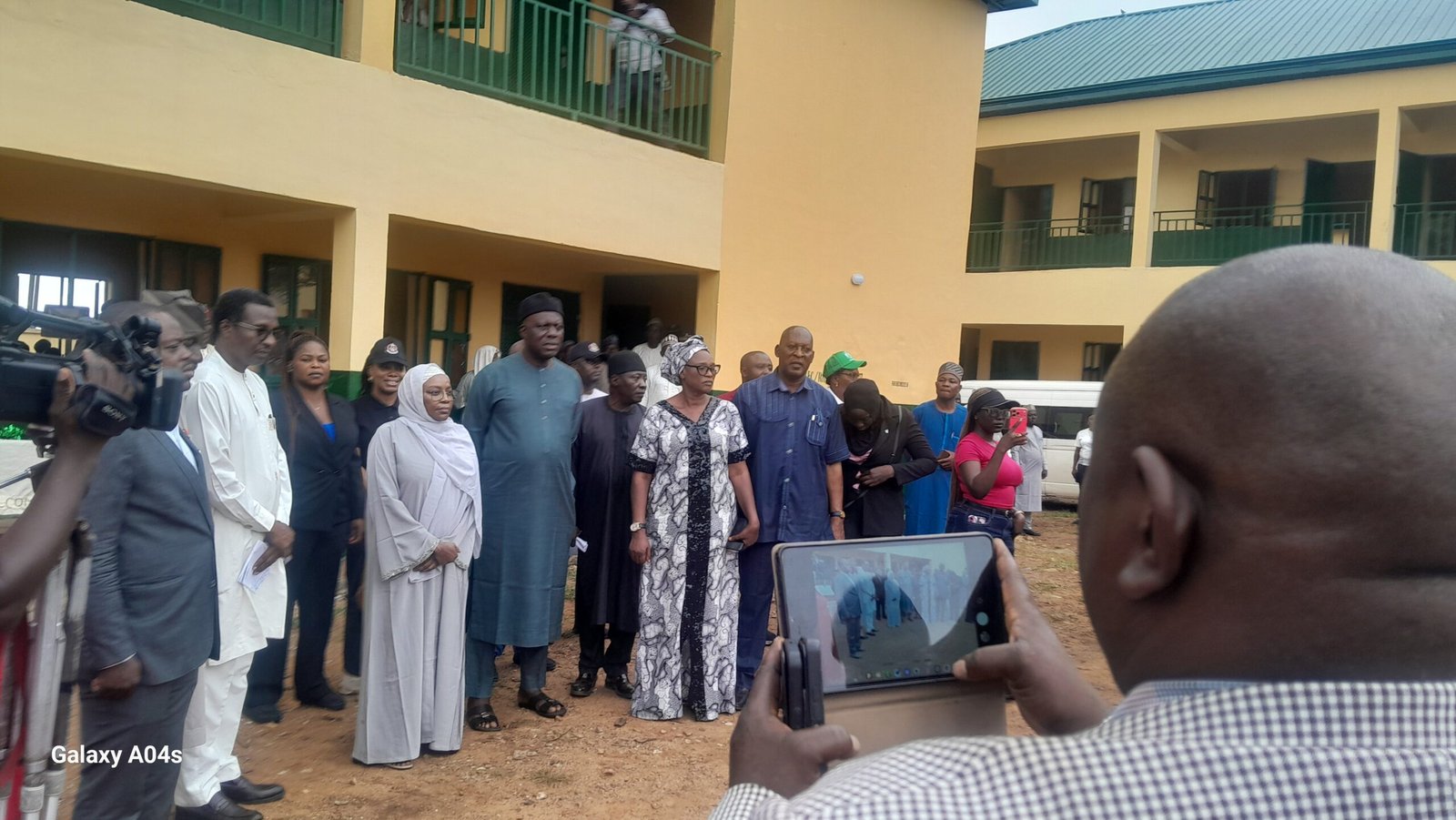
ABUJA, Nigeria – The Universal Basic Education Commission (UBEC) has renovated more than 4,000 classrooms across Nigeria.
The commission has also introduced a new standard for public schools. Under the standard, schools must provide essential facilities alongside classrooms. The facilities include toilets, water, electricity, security, fencing and digital learning infrastructure.
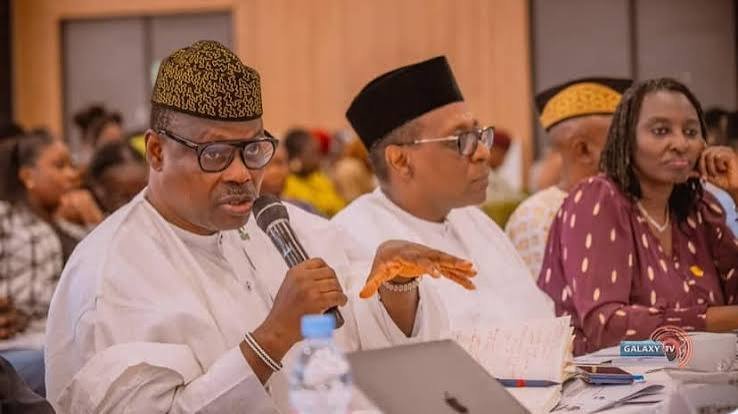
UBEC Executive Secretary, Dr Aisha Garba, disclosed this on Wednesday in Abuja during an inspection tour of schools in the Federal Capital Territory.
Garba said more than 200 schools had benefited from the approach under UBEC’s new minimum standards. “Our mandate is that all children, regardless of where they are, should be in school. We should also make sure that schools are in a conducive environment for learning,” she said. “This has been one of our key mandates, and since the coming of this administration, we have taken that directive seriously. We have undertaken different reforms within the education sector.”
Garba said the new standard would end the practice of building isolated classroom blocks without other basic facilities. “We are no longer going to renovate a window or put in one chair and leave hundreds of students sitting on the floor,” she said. “Today, our renovation based on the minimum standards is called the Whole School Approach.”
She said the approach would require authorities to identify and address gaps across each school.
These gaps may include classrooms, furniture, toilets, water supply, electricity and security. “All the schools that do not have fencing must now be fenced. All the schools that do not have water must now have a borehole. All the schools that do not have light must now come with solar,” Garba said.
She also said new school projects would have to meet the same standard. “If we are building a new school, it is no longer going to be two blocks of classrooms where you see some of them abandoned in the bush,” she said. “It has to be a whole school.”
According to Garba, such schools will have fencing, security, solar power, a borehole, toilets, classrooms, an administrative block and a playground.
Garba said schools would need basic technology such as computer laboratories, ICT laboratories or smartboards.
She said the facilities would help prepare pupils for 21st-century education and the global economy.
Garba said UBEC commissioned 74 Digital Learning Centres during the inspection exercise.
The UBEC team also inspected the Primary and Government Junior Secondary School, Nyanya Hausawa, in the Abuja Municipal Area Council. The school benefited from UBEC’s 2025 Direct Intervention Project.
The project covered the rehabilitation, furnishing and equipping of the LEA Nursery and Primary School and Government Junior Secondary School.
UBEC Director of Physical Planning, Arch Nura Ibrahim, said the Nyanya Hausawa school had suffered serious infrastructure problems, and said the school was located in a remote, forested area.
According to Ibrahim, UBEC carried out a condition assessment before starting the rehabilitation work. “The first thing we observed was that some of the buildings were completely defective and had lost their structural integrity,” he said. “Some of the classrooms were unsafe. The beams were cracked and some parts had already fallen apart.”
About the Author


 Korede Abdullah