
Cheaper Petrol, Costlier Living: Why Nigerians Are Still Paying More
 Oluwafunbi Bello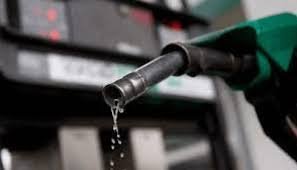
ABUJA, Nigeria – When petrol prices soared from about ₦800 per litre to as high as ₦1,450 following the Middle East conflict involving the United States, Israel, and Iran, Nigerians felt the shock almost overnight. Transport fares jumped, food prices surged, and the cost of virtually every essential service climbed in lockstep. Today, with pump prices falling again after a series of depot reductions by the Dangote Refinery triggered by easing global crude oil prices, many expected the reverse to happen. Instead, commuters are still paying the same fares, traders are charging the same prices, and households continue to grapple with a relentless cost-of-living crisis. In this report, Oluwafunbi Bello investigates why cheaper petrol has yet to translate into cheaper living—and why, in Nigeria, prices often race upwards but crawl downwards
From War-Driven Spike to Gradual Decline
Before February 28, 2026, petrol sold for between ₦800 and ₦840 per litre across many parts of the country.
However, the outbreak of conflict involving the United States, Israel and Iran disrupted global oil markets, pushing international crude prices higher amid fears over the possible closure of the Strait of Hormuz, one of the world’s most strategic oil shipping routes.
The impact was immediate in Nigeria.
Pump prices rose from about ₦800 to around ₦950 per litre before climbing sharply within days to as much as ₦1,450 per litre at some filling stations as marketers adjusted prices in response to soaring depot costs and uncertainty in international markets.
As diplomatic efforts gradually eased tensions and global crude prices declined, the Dangote Refinery began reducing its ex-depot price several times, prompting marketers to review retail prices downward.
Today, petrol sells for about ₦1,280 per litre at several outlets, while MRS stations, one of Dangote Refinery’s major partners, retail the product for about ₦1,175 per litre in many locations.
Despite these reductions, the broader economy has shown little sign of responding.
Petrol Prices Fall, But Uncertainty Remains
At Eternal Filling Station in Kubwa, Abuja, station manager Mr. Emmanuel Haruna described the recent reductions as encouraging but warned that the market remains highly unpredictable.
“The new price coming down should be nationwide. I don’t know the original cause, but since the Strait of Hormuz was reopened, the price has been coming down bit by bit, and that’s what I’ve been praying for. The prices of petroleum in Nigeria are unpredictable. As we are talking now, the price can start going up or start coming down.”
Haruna said the frequent fluctuations make planning difficult for both fuel marketers and consumers.
Inflation Continues to Blunt the Gains
Although petrol prices have declined from their recent peak, inflation continues to erode the purchasing power of Nigerians.
According to the latest figures released by the National Bureau of Statistics, Nigeria’s headline inflation rate stood at 15.93 per cent in May 2026, while food inflation remained higher at 16.96 per cent, underscoring the persistent pressure on household budgets.
The figures suggest that the modest reduction in petrol prices has yet to outweigh broader inflationary pressures affecting transportation, food distribution and consumer spending.
Transport Fares Refuse to Come Down
A survey conducted by AHR across major transport corridors in Abuja found that the recent decline in petrol prices has yet to translate into lower transport fares. In Kubwa, fares have remained largely unchanged despite reductions at the pump.
Commuters travelling from Kubwa to Berger, who once paid about ₦700, now pay around ₦1,000. The Kubwa-Central Area route has risen from ₦800 to ₦1,200, while commuters heading to Area 1 now pay between ₦1,300 and ₦1,500, depending on demand and the time of day.
Similar trends were observed in other satellite towns. Commuters travelling from Lugbe to Airport Junction now pay ₦700, up from ₦500 before the fuel price surge, while the fare from Lugbe to the Central Area has risen from ₦400 to ₦700. Likewise, passengers travelling from Galadima Bus Stop to the Central Area now pay ₦1,000, compared with ₦700 previously, while the fare from Galadima to Lugbe has increased from ₦1,000 to ₦1,500.
Commercial driver Mr. Abiodun Oginsiji said the reduction in petrol prices has not been significant enough to improve operators’ margins.
“The reduction in price is not so significant. I’m hoping for a more significant reduction so we can make more gains because the economy of Nigeria is getting worse these days. I’ve started considering converting my vehicle to CNG.”
Another commercial driver, Mr. Stephen Agbo, said operators cannot afford to reduce fares because fuel represents only one part of their operating costs.
“The current fuel price is still not low enough for us to reduce transport fares. At ₦1,365 per litre, our profit was very small. Now that fuel is around ₦1,260, the difference is just about ₦100. It still feels almost the same because vehicle maintenance, spare parts and other expenses have also increased. Transportation is our only source of income, so reducing fares now would be difficult.”
Their responses reflect a wider trend across Nigeria’s transport sector, where operators argue that although petrol prices have declined, the reduction has not been substantial enough to offset increases in maintenance costs, spare parts, tyres, engine oil and vehicle servicing.
Food Prices Remain Stubbornly High
The ripple effect expected from lower fuel prices has also failed to materialise in food markets.
Checks at Kubwa Market showed that staple foods remain significantly more expensive than before the fuel price surge.
A crate of eggs now sells for about ₦6,000, compared with around ₦5,000 previously.
A mudu of rice now costs between ₦2,200 and ₦2,500, up from ₦2,000, while beans have risen from about ₦1,500 to ₦1,800 per mudu.
Similarly, a tuber of yam that once sold for around ₦1,500 now costs about ₦2,500.
Food trader Mrs. Ruth Okeke said transport charges from suppliers remain almost unchanged.
“The vehicles bringing food to the market are still charging almost the same amount. Until transport becomes cheaper, we cannot reduce our prices.”
Another trader, Mr. Sani Bello, pointed to rising business costs beyond fuel.
“Apart from fuel, everything else is expensive. Packaging materials, rent and transportation have all increased, so customers are not seeing much difference.”
Households Still Waiting for Relief
For many residents, the reduction in petrol prices exists only at the filling station.
Mrs. Esther James, a Kubwa resident, said her household budget has remained virtually unchanged.
“We expected transport fares and food prices to come down, but nothing has really changed. Every visit to the market still costs more than before.”
Civil servant Mr. Musa Ibrahim expressed similar frustration.
“The fuel price may have reduced, but transport fares are still almost the same. At the end of the month, I don’t feel like I’m saving anything.”
The Same Story Across Nigeria
The experience is not unique to Abuja.
In Lagos, Mr. Edward Esang said petrol prices have fallen noticeably over the past two weeks, but transport fares have remained unchanged.
“Currently, some filling stations sell petrol at ₦1,200 per litre while some sell it for ₦1,250 per litre, but about two weeks ago it was between ₦1,350 and ₦1,400. This reduction has not been reflected in transport fares or food prices.”
In Ibadan, Miss Temi Agbeleye questioned why consumers have yet to enjoy the benefits of lower fuel prices.
“Petrol now sells for about ₦1,175 per litre, compared to around ₦1,370 before. I’m wondering why transport fares and food prices are not reducing.”
Why do prices rise faster than they fall?
One striking pattern has emerged repeatedly in Nigeria’s downstream petroleum market.
Whenever petrol prices increase, transport fares, food prices and the cost of services often rise almost immediately, with businesses quickly transferring higher operating costs to consumers.
However, when petrol prices decline, the reverse adjustment is usually slow, limited or sometimes absent altogether.
Many marketers and transport operators argue they are still selling products purchased at previous, higher prices or are trying to recover earlier losses. Others cite rising maintenance costs, inflation, exchange rate pressures and expensive logistics as reasons for maintaining existing prices.
Economists, however, say the phenomenon also reflects weak market competition, poor price transmission mechanisms and inadequate consumer protection, allowing businesses to retain higher prices even after production costs begin to decline.
Expert: Reduction Still Too Small
Economist Abdulnaseer Turawa Yola believes the recent reduction, although welcome, remains insufficient compared with the decline in global crude oil prices.
“Although there is a reduction in the price of petroleum, the reduction is insignificant when we compare it to the fall in crude oil prices globally.”
He argued that weak institutions, inflation and corruption continue to prevent Nigerians from fully benefiting from lower energy costs.
“Our institutions, which are supposed to serve as development agents, are very weak. Inflation, incompetence, corruption and many other factors have prevented prices from coming down the way they should.”
According to him, the current reduction is too modest to significantly lower transport costs, reduce poverty or stimulate wider economic activity.
“The reduction is insignificant to change transportation costs, reduce poverty, or make any meaningful economic impact.”
The evidence gathered for this report points to a troubling reality: in Nigeria, the economic impact of rising petrol prices is swift and far-reaching, but the benefits of falling prices are slow, uneven and often barely felt. Once transport fares, food prices and service charges rise, they appear to acquire a life of their own, sustained by inflation, weak market competition, high operating costs and a pricing culture that rarely rewards consumers when costs decline.
For millions of Nigerians, the figures displayed on filling station price boards have changed, but little else has. Until lower fuel prices are matched by meaningful reductions in transport fares, food costs and other essential goods—and until stronger market oversight ensures that savings are passed on to consumers—the promise of cheaper petrol will remain exactly that: a promise. For households struggling to make ends meet, relief will not be measured by the price per litre at the pump, but by the day a trip to the market, a bus ride to work and the monthly family budget finally begin to cost less.
About the Author


 Hope Ajayi
 Korede Abdullah
 Oluwatobi Adu