


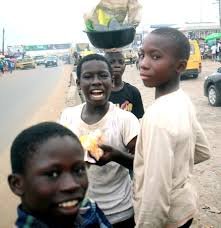
Under the scorching heat of Kano’s Kurna Asabe district, 13-year-old Bashir weaves through traffic selling sachet water instead of sitting in a classroom — one of millions of Northern Nigerian children forced out of school by poverty and hardship. His story reflects a growing national crisis that has left Nigeria with an estimated 18.3 million out-of-school children, the highest figure globally, according to UNICEF. Despite years of government interventions and donor support, the crisis continues to deepen across Northern states such as Kano, Jigawa and Katsina, where child labour, street begging and insecurity have become normalised realities. Education experts warn that beyond the alarming statistics lies a dangerous social emergency capable of fuelling poverty, unemployment, violent extremism and long-term instability across the country. Hussaini Ibrahim, writes.
A colonial legacy still shaping the North
Analysts trace the roots of Northern Nigeria’s educational crisis to colonial-era policies that created uneven educational development between the North and South.
A Kano-based education researcher, Dr, Musa Sani Garba, explained that Western education expanded rapidly in Southern Nigeria through missionary activities, while large parts of the North maintained traditional Qur’anic learning systems and resisted colonial educational structures.
“While missionary schools expanded rapidly in Southern Nigeria, formal Western education developed slowly across many Northern communities,” he said.
“The North relied largely on Islamic education systems, which were effective for religious learning but were not integrated into modern economic and administrative structures after independence.”
According to Garba, decades of weak public investment, poor planning and inconsistent education policies compounded the imbalance.
“What we are witnessing today is the accumulation of decades of neglect, policy inconsistency and leadership failures,” he added.
For many experts, the implications are no longer confined to education alone.
“When millions of children remain outside school, society becomes vulnerable to insecurity, unemployment, drug abuse and violent extremism,” Garba warned.
Poverty forcing children out of classrooms
For countless families across Kano, Jigawa and Katsina, education is increasingly becoming a luxury they can no longer afford.
In Jigawa State, widow Hajara Musa said economic survival had overtaken education as the primary concern for many struggling households.
“When there is no food in the house, education becomes secondary,” she said while frying local snacks beside a roadside.
“My son stopped attending school to learn mechanics because we needed money for feeding.”
The worsening cost-of-living crisis, inflation and rising unemployment have pushed vulnerable families into desperate decisions, often forcing children into labour, hawking or street begging.
Fatima Aliyu, Executive Director of Rahma Foundation, said poverty remains one of the strongest drivers of school dropouts across the region.
“Parents are struggling with hunger, unemployment and inflation,” she said.
“When families cannot survive, children become the first victims because many are forced into labour or street begging.”
For many children like Bashir, the choice is no longer between school and leisure, but between education and survival.
The Almajiri Dilemma
Few issues symbolise Northern Nigeria’s educational crisis more visibly than the Almajiri system.
Originally designed as a traditional Islamic learning structure, the system has increasingly come under scrutiny over the growing number of children roaming streets in search of food and alms.
At a crowded junction in Kano Municipal, 11-year-old Sadiq stretched out a plastic bowl toward motorists while quietly reciting Qur’anic verses.
“We beg for food every day,” he told AHR softly.
“Sometimes we eat only once.”
His Qur’anic teacher, Malam Ibrahim, defended the traditional system but admitted that worsening economic realities had severely weakened communal support structures that once sustained Almajiri pupils.
“In the past, communities supported Almajiri pupils,” he said.
“But today, poverty has changed everything. Parents themselves cannot feed their children.”
Rights groups and child protection advocates argue that the current structure leaves millions of children vulnerable to exploitation, abuse and chronic deprivation.
“No child should spend his childhood roaming the streets begging in the name of education,” Fatima Aliyu said.
“We must integrate Qur’anic education with formal learning and vocational training so these children can have better opportunities.”
Successive administrations have attempted Almajiri integration projects over the years, but many of the initiatives collapsed due to poor implementation, political discontinuity and lack of sustained funding.
Girls Trapped By Culture And Poverty
Girls remain among the most vulnerable victims of the crisis.
In many rural Northern communities, early marriage, gender discrimination and financial hardship continue to deny thousands of girls access to formal education.
Child development expert Hajiya Zainab Abdullahi said many girls are withdrawn from school at a young age because families prioritise marriage or domestic responsibilities over education.
“In many communities, parents still prioritise marriage over education for girls,” she said.
“Some are withdrawn from school at very young ages due to poverty and social pressure.”
She also warned about the long-term impact of poor early childhood education across the region.
“Many children enter primary school unable to recognise letters or numbers because they never attended nursery classes,” she explained.
“Some become discouraged and eventually drop out because they cannot cope with classroom learning.”
The lack of foundational learning opportunities, particularly in rural areas, continues to deepen educational inequality and reinforce cycles of poverty.
Insecurity emptying classrooms
Beyond poverty, insecurity has emerged as one of the most devastating drivers of school dropouts across Northern Nigeria.
Years of armed banditry, school abductions and attacks on rural communities have left many parents terrified of sending their children to school.
Communities across Katsina, Zamfara, Sokoto and parts of Kaduna continue to grapple with fears triggered by repeated kidnappings and violent attacks targeting schools.
Amina Lawal, a resident of Batsari in Katsina State, said many parents remain traumatised by previous incidents.
“Some parents are still afraid to send their children back to school,” she said.
“Whenever insecurity increases, attendance drops immediately.”
According to her, girls are often withdrawn first because families fear sexual violence or abduction.
The impact has been devastating schools abandoned, classrooms emptied and children forced back into domestic labour or street survival.
Government Efforts Facing Criticism
Federal and state governments have launched several interventions over the years, including school feeding schemes, conditional cash transfers, free education campaigns and classroom construction projects.
Yet critics argue that corruption, weak monitoring systems and inadequate funding have prevented meaningful progress.
A senior official at the Kano State Ministry of Education acknowledged the scale of the crisis but insisted efforts were ongoing.
“We are constructing classrooms, recruiting teachers and expanding enrolment campaigns across communities,” the official told AHR.
“But the population growth rate and economic hardship continue to create pressure on the system.”
The official also stressed that government interventions alone would not be enough.
“The government alone cannot solve this crisis. Parents and traditional institutions must also support education.”
Still, analysts argue that without stronger political will, transparent funding mechanisms and long-term policy continuity, existing programmes may continue to struggle against the scale of the emergency.
A Generation Hanging In The Balance
Economists and development experts warn that Nigeria risks paying a catastrophic price if millions of children remain outside formal education.
Professor Abdulwahab Tijjani, an economist at Bayero University Kano, described the crisis as a direct threat to national stability and economic development.
“No country can achieve sustainable growth while millions of children remain outside school,” he said.
“Education is directly connected to productivity, innovation and social stability.”
He warned that prolonged neglect could intensify insecurity, deepen unemployment and widen social instability across the country.
“When children are denied education, society eventually pays the price through rising poverty, crime and instability.”
As evening traffic thickened across Kano, Bashir continued weaving through vehicles clutching his tray of water.
Asked whether he still dreams of returning to school, the teenager paused briefly before replying.
“Yes,” he said quietly.
“I want to become a doctor.”
For millions of children across Northern Nigeria, however, such dreams are fading beneath the crushing weight of poverty, insecurity and decades of systemic neglect.





Join the conversation