
 Edino Chubiyo Cornelius
ABUJA, Nigeria – For decades, Nigerians waited for electricity to come from the national grid. Today, millions are installing solar panels, buying inverters and generating their own power. Now, as government policies encourage households and businesses to sell excess electricity back to the grid, Edino Cornelius finds that a system designed to supply electricity may increasingly depend on the very citizens it was created to serve.
A Nation That Learned to Live Without Power
For years, Nigeria’s electricity grid was designed to serve as the backbone of the country’s energy system, delivering power to homes, factories, businesses and public institutions.
Yet despite repeated reforms, privatisation efforts and substantial public investment, stable electricity remains beyond the reach of millions of Nigerians.
Grid collapses, inadequate generation capacity, weak transmission infrastructure and poor distribution networks have turned power outages into an accepted reality.
Across the country, darkness is no longer considered a disruption.
It has become routine.
As public confidence in the electricity sector declines, Nigerians increasingly rely on generators, inverters and solar systems to provide electricity independently.
Against this backdrop, the government’s solar buy-back policy has ignited a national conversation.
Under the policy, households and businesses with solar installations may sell excess electricity back into the national grid.
Supporters see opportunity.
Critics see an admission of failure.
The question many Nigerians now ask is simple: if citizens are expected to supply electricity to the grid, who is powering whom?
Nigerians Are Becoming Their Own Power Companies
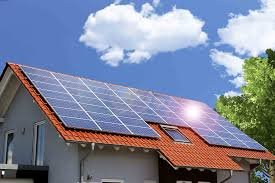
Across Abuja, solar panels now cover rooftops in residential estates, office complexes and commercial centres.
What was once considered a luxury has become a necessity.
For Amina Sule, who owns a supermarket in Wuse, unreliable electricity has become one of the biggest threats to her business.
“Electricity affects everything from refrigeration to customer comfort. Sometimes we pay huge electricity bills and still spend heavily on fuel. Solar is expensive, but it gives some level of certainty.”
Her experience reflects a growing reality.
Thousands of businesses now budget for electricity production alongside rent salaries and taxes.
Innovation or Adaptation to Failure?
The solar buy-back policy formally recognises a reality already unfolding across Nigeria.
Electricity consumers are increasingly becoming electricity producers.
Under the arrangement, excess solar energy generated by homes and businesses can be supplied to the national grid in exchange for compensation or energy credits.
Energy economist and renewable energy analyst Dr. Ibrahim Musa says similar policies exist elsewhere, but Nigeria’s circumstances differ significantly.
“Countries like India and Australia adopted solar buy-back policies largely from a position of strategic planning. Their governments intentionally created systems that encouraged households to contribute renewable energy to strengthen existing electricity networks.”
According to him, those countries introduced such programmes as part of broader transitions towards renewable energy.
Nigeria’s circumstances, however, are different.
“Nigeria’s case is closer to South Africa, where persistent electricity shortages pushed citizens and businesses toward self-generation because confidence in public supply had weakened.”
The distinction, he says, is important.
“In Nigeria, the policy can be seen as both progress and a warning sign. On one hand, allowing consumers to sell excess solar power back to the grid can improve energy availability, reduce dependence on fossil-fuel generators, and encourage more private investment in renewable energy. Over time, it could lower pressure on the national grid and support cleaner electricity production.”
Yet significant concerns remain.
“The danger is that the government may begin to rely too heavily on private generation without fixing the core weaknesses in generation, transmission, and distribution. If that happens, the burden of solving Nigeria’s electricity crisis shifts further to citizens.”
The Cost of Energy Independence
While interest in solar energy continues to rise, affordability remains one of the biggest obstacles.
Installing a reliable household solar system often costs several million naira, placing it beyond the reach of many middle- and low-income households.
Civil servant Chinedu Okafor says he has repeatedly considered solar power but cannot afford the investment.
“I have considered solar many times, but the installation cost is discouraging. For many salary earners, it is simply not affordable.”
The result is a growing divide between those who can purchase energy security and those who cannot.
The Risk of a Two-Tier Electricity System
The spread of solar power may improve resilience, but it also risks widening inequality.
Those with financial resources can escape unreliable public electricity.
Those without remain trapped within a struggling grid.
Sani Usman, a mechanic in Katampe, sees the issue through the lens of everyday survival.
“Solar is good, but money is the problem. Rich men can afford to install solar systems to enjoy steady light, but poor men will still struggle with blackouts.”
His concern reflects a wider debate over energy justice.
If solar adoption continues to depend primarily on personal wealth, access to reliable electricity could increasingly become a privilege rather than a public service.
An Industry on the Rise
Solar providers say demand has increased dramatically.
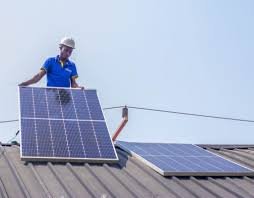
Engr. Fatima Bello, a solar systems contractor in Abuja, says customers increasingly view renewable energy as a necessity rather than a luxury.
“Demand for solar has increased sharply because people want predictable power. More customers now see it as a long-term investment.”
She believes clear regulations and supportive policies could further expand access.
The rapid growth of the industry also presents opportunities for employment, local manufacturing and renewable energy investment.
Who Carries the Burden?
Dr. Musa believes the future success of the solar buy-back policy depends largely on broader reforms.
“Solar systems remain expensive. Wealthy households and large businesses are better positioned to benefit from buy-back arrangements, while lower-income Nigerians who cannot afford installation may remain trapped in poor electricity supply. That could widen energy inequality.”
He argues that solar expansion should complement rather than replace government responsibilities.
“Solar buy-back should strengthen the grid, not replace government responsibility. If policymakers treat it as an excuse to avoid fixing the electricity sector, then what appears to be innovation may actually reflect institutional weakness.”
The Future of Electricity
Nigeria’s solar buy-back policy presents both opportunity and warning.
It offers cleaner energy, private sector participation and greater resilience.
At the same time, it exposes the weaknesses of a power sector that millions of citizens no longer trust.
The experiences of countries such as India, Australia and South Africa demonstrate that decentralised electricity can strengthen national systems when supported by strong infrastructure and effective regulation.
For Nigeria, however, the central question remains unresolved.
Will solar innovation strengthen the national grid?
Or will Nigerians continue carrying the burden of a power system that has struggled to serve them?
The future of electricity in Nigeria may increasingly come from rooftops.
But whether that future represents progress or surrender remains an open question.
About the Author

 Mirian Gom
 Oluwatobi Adu
 Korede Abdullah