Oluwafunbi Bello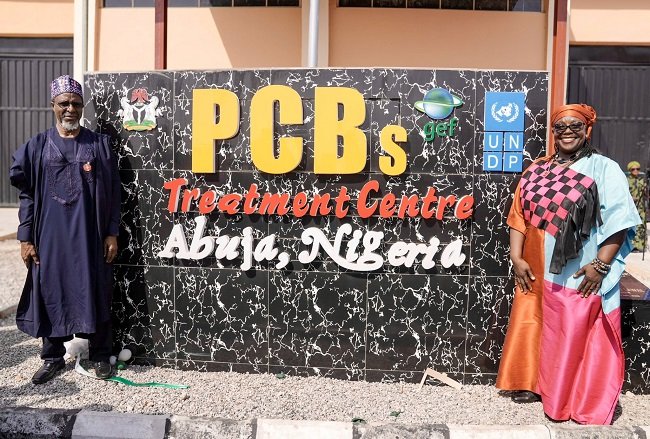
ABUJA, Nigeria – Nigeria commissions West Africa’s first dedicated Polychlorinated Biphenyls (PCB) treatment facility, marking a major step in combating toxic pollution and protecting public health.
The facility, located at the Sheda Science and Technology Complex (SHESTCO) in Abuja, was unveiled on Thursday under Nigeria’s obligations to the Stockholm Convention on Persistent Organic Pollutants.
Environment Minister Balarabe Lawal describes the development as a turning point in hazardous waste management, warning that PCBs contaminate soil, water and food chains.
“These highly hazardous pollutants cause cancer, reproductive disorders and long-term ecosystem damage,” Lawal says. “This facility demonstrates Nigeria’s commitment to eliminating these threats.”
PCBs, once widely used in transformers and capacitors, were banned in the 1970s, but legacy equipment continues to pose risks across Nigeria and West Africa.
UNDP Resident Representative Elsie Attafuah says the facility positions Nigeria as a regional hub for hazardous waste treatment while creating green jobs and advancing the circular economy.
Health Minister Muhammad Pate, represented by Adeola Olufowobi, highlights links between PCB exposure and endocrine disruption, neurodevelopmental disorders and increased risks for children and pregnant women.
About the Author

 Otamere Gladness
 Koko Maxwella
 Edino Chubiyo Cornelius