When the Roads Go Quiet: How Fear Hijacked Nigeria’s Christmas Homecoming
 Oluwafunbi Bello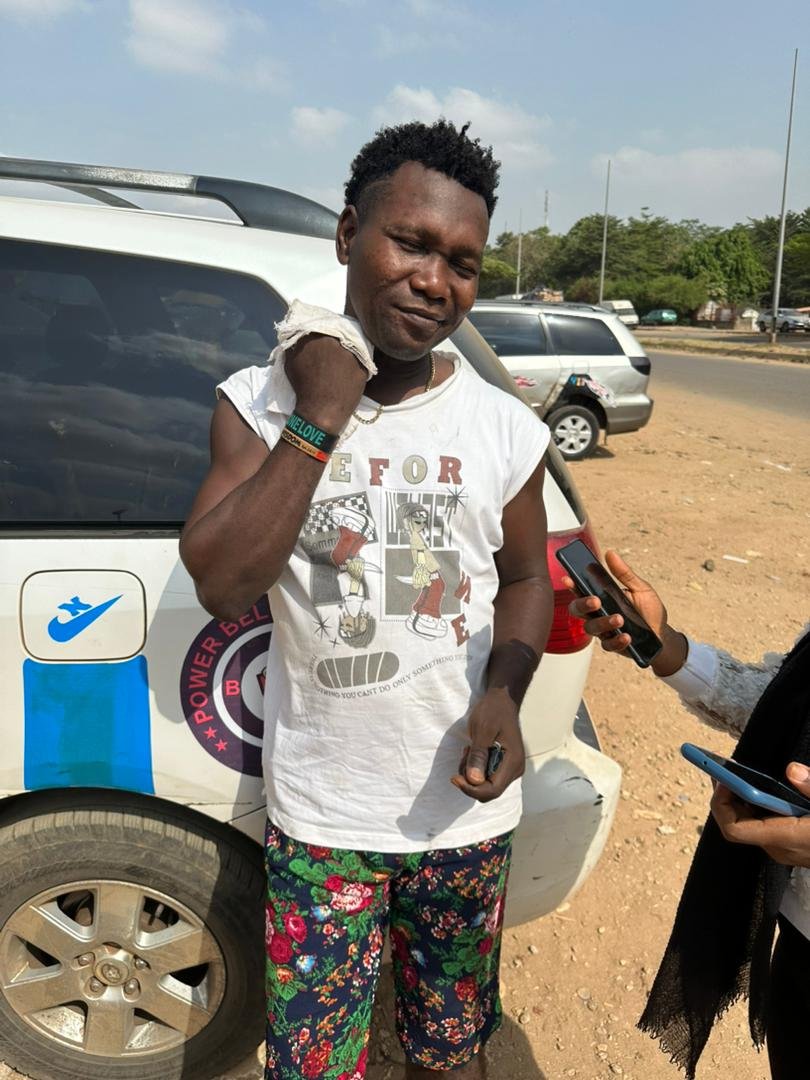
(By Oluwafunbi Bello and Edino Cornelius)
December is supposed to be loud in Nigeria. It is meant to roar with revving engines, raised voices at motor parks, the crackle of last-minute phone calls and the laughter of travellers squeezed between bags of rice and cartons of gifts. It is the month when distance collapses — when cities empty and villages swell, when the long road home becomes a ritual as sacred as Christmas itself.
This year, the roads are quiet. At dawn in Abuja, the capital’s major motor parks should already be bursting at the seams. Instead, rows of buses sit motionless, their tyres gathering dust. Drivers lean against steering wheels, scanning the gates for passengers who do not come. The silence is unsettling — not because travel has lost its appeal, but because fear has stolen its promise.
Across Nigeria, worsening insecurity is crippling what should be the busiest travel season of the year. From kidnappings and bandit ambushes to terror attacks along major highways, the risk of movement has become too high a price for many families to pay. Oluwafunbi Bello and Edino Chubiyo Cornelius, writes
Standing beside an almost deserted loading bay, Augustine Fortune, a driver with All Power Belongs to God Transport, shakes his head slowly, as though still struggling to accept what he is seeing.
“Last year, people were travelling in large numbers by this time,” he said. “But this period is different. Everyone is scared. With kidnappers everywhere, people are no longer willing to risk the road. This year is nothing like the last.”
His voice carries the weight of loss — not just of income, but of tradition. December travel in Nigeria is more than movement; it is memory, obligation and joy. For drivers like Fortune, it is also survival.
A season stalled by fear
Similar scenes play out far beyond Abuja. On the Warri–Asaba route in the south, Mr Friday Ngoji of Innuell Motors Nigeria Limited describes what he calls the poorest passenger turnout he has witnessed in years.
“Travellers are very few,” he said. “Kidnapping reports are everywhere, and people are afraid.”
Ngoji counts himself lucky. Despite the low patronage, his company has avoided attacks so far. “We thank God for that,” he added. “We just pray it continues.”
But prayers alone cannot fill empty buses.
For transport operators, December usually brings weeks of non-stop activity. Vehicles that struggle to fill seats for months suddenly make multiple trips daily. Profits from the festive rush often carry companies through leaner periods.
This year, that lifeline has snapped.
Francis Edure, another driver with All Power Belongs to God Transport, said the collapse has been both sudden and devastating.
“Christmas travel used to be a big thing,” he said. “Even last year, people still managed somehow. But this year? My boss has more than 30 vehicles, and we can’t even fill one.”
By early December in previous years, Edure said, the company would already be loading at least five vehicles a day. “This time, we haven’t loaded a single one,” he said.
Fear is not acting alone. It is reinforced by crushing economic hardship — soaring food prices, shrinking incomes and fuel costs that make even short journeys expensive. Together, insecurity and poverty have turned travel into a luxury many Nigerians can no longer afford. “People don’t even have money to eat,” Edure said quietly. “Talk less of travelling.”
Worship under threat
The impact of insecurity stretches beyond transport and commerce. It is reshaping religious life, long a central pillar of Nigeria’s Christmas season.
Across the country, churches are scaling down end-of-year programmes, including the once-ubiquitous cross-over night services that usher worshippers into the new year.
In Abuja, Godstime, a church member, said his congregation cancelled its annual all-night service after assessing the risks.
“Our pastor asked us to suspend it,” he said. “With insecurity, nobody wants to take chances. I personally won’t attend any night gatherings this season until things improve.”
For many Nigerians, night travel — once routine during festive periods — has become unthinkable. Roads that were merely inconvenient after dark are now perceived as deadly.
The loss is not only spiritual, but communal. Cross-over services are often moments of reunion, prayer and reflection, binding families and neighbours together. Their absence underscores how deeply insecurity has cut into daily life.
The soldier who cannot go home
Even those tasked with restoring security are not immune to its consequences.
Mr. Musa, a private in the Nigerian Army based in Abuja, said intensified operations nationwide have placed heavy restrictions on soldiers’ movements, even during the holidays.
“Insecurity keeps growing every day in Nigeria,” he said. “Our work as soldiers is to fight this insecurity and terrorist attacks. Honestly, it pains me when terrorists kill people because this is my country.”
This December, Musa will not see his wife.
“I can’t travel to go and see her,” he said. “The government has made things tight for us so we can secure the country. That is how it is now for all of us.”
His sacrifice mirrors a broader irony: as civilians stay home out of fear, many soldiers are also grounded — not by terror, but by duty.
A national pattern of restraint
From Abuja to Asaba, from Warri to Auchi and beyond, the same calculation is being made in households across Nigeria. Is the joy of reunion worth the risk of the road?
Increasingly, the answer is no.
In a country where Christmas travel is woven deeply into cultural identity, this collective pause is unprecedented. Families are opting for phone calls instead of embraces, video chats instead of shared meals. Villages that once overflowed with returnees now brace for quieter celebrations.
Motor parks — those informal theatres of Nigerian life — offer the clearest evidence of the shift. Where there should be chaos, there is order. Where there should be impatience, there is waiting.
And where there should be hope, there is uncertainty.
The cost of a silent season
The silence of Nigeria’s Christmas roads is not merely a seasonal anomaly; it is a warning.
It speaks to a deeper crisis — one in which insecurity and economic strain have combined to erode trust in public safety. When people no longer believe they can travel safely to see loved ones, the social fabric begins to fray.
For drivers like Augustine Fortune, the fear is practical and immediate. For worshippers like Godstime, it is spiritual. For soldiers like Musa, it is personal. Together, their stories form a single narrative of a nation forced to slow down, not by choice, but by threat.
December was once a month of movement, reunion and noise. This year, it is defined by stillness.
And in that stillness lies a troubling truth: when insecurity is allowed to spread unchecked, it does not just claim lives — it steals moments, traditions and the simple freedom to go home.
About the Author

 Korede Abdullah
 Chukwu Obinna