
Nigeria Targets Reliable Electricity for 30% of Health Facilities by 2027
 Oluwafunbi Bello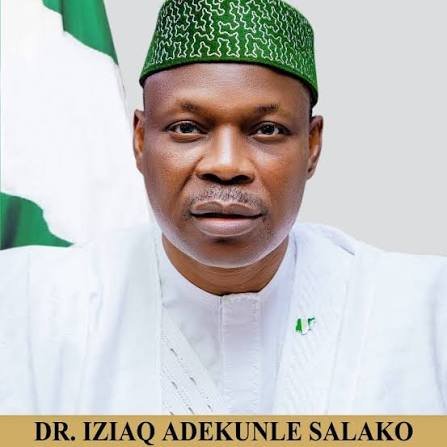
Minister of State for Health and Social Welfare, Dr. Iziaq Salako
ABUJA, Nigeria – The Federal Government has set a target of providing reliable electricity to at least 30 per cent of Nigeria’s health facilities by the end of 2027, as it seeks to improve healthcare delivery and reduce the impact of chronic power shortages across the sector.
The Minister of State for Health and Social Welfare, Dr. Iziaq Salako, disclosed the target on Wednesday during the launch of the Rural Electrification Agency (REA)–Renewable Asset Management Company (RAMCO) in Abuja.
The event was themed “Powering Sustainable Growth: Launching Nigeria’s Renewable Asset Management Company.”
Power Essential for Healthcare Delivery
Salako said electricity is fundamental to effective healthcare, describing it as a critical clinical requirement rather than a basic utility.
“In a hospital, electricity is not an amenity; it is a clinical input,” he said.
According to the minister, nearly 40 per cent of functional Primary Healthcare Centres (PHCs) currently lack electricity, while many of those connected to the grid receive only six to 10 hours of power daily.
He added that between 60 and 70 per cent of Nigeria’s primary and tertiary health facilities experience frequent outages or have no electricity at all.
Hospitals Spend Up to Half of Operating Costs on Energy
Salako explained that teaching hospitals require between three and eight megawatts of electricity for optimal operations but currently receive only about five hours of grid power each day.
As a result, many institutions spend 40 to 50 per cent of their operating budgets on energy, largely through diesel-powered generators.
Renewable Energy Expansion
The minister highlighted ongoing interventions, including the Energising Education Programme, which has delivered renewable power systems to federal tertiary institutions, including teaching hospitals in Maiduguri and Calabar.
He also noted that under the Nigeria Electrification Project, 100 health facilities have already received 50-kilowatt solar hybrid systems, while a second phase aims to electrify an additional 400 Primary Healthcare Centres.
Salako said the 2027 target forms part of the Nigeria Power-for-Health Initiative, approved by President Bola Tinubu following the first National Stakeholders’ Dialogue on Power in the Health Sector in September 2025.
The initiative seeks to improve energy access through coordinated action involving the Ministries of Health and Power, state governments, development partners, the private sector and civil society organisations.
About the Author


 Mirian Gom
 Oluwatobi Adu
 Korede Abdullah