Korede Abdullah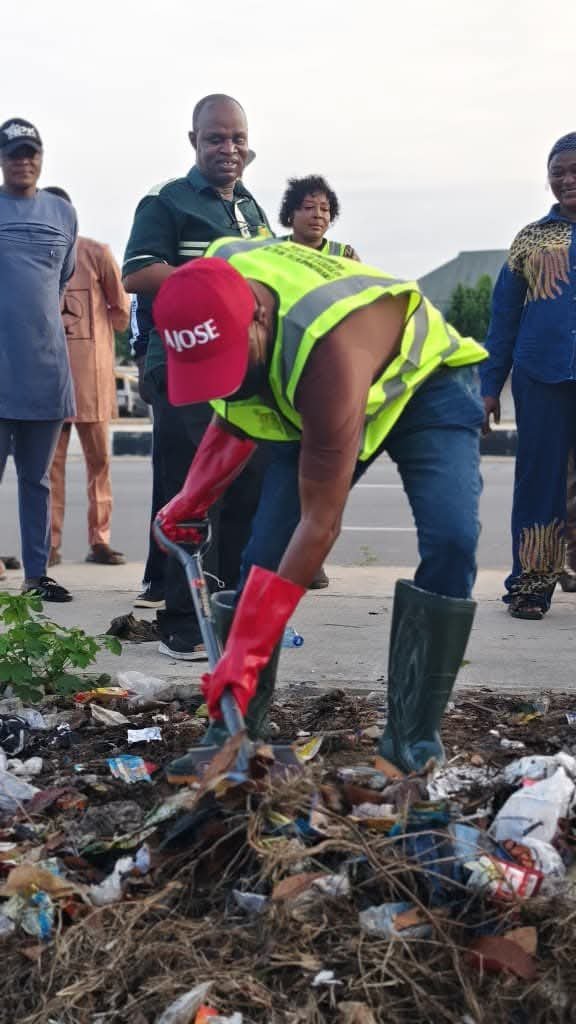
LAGOS, Nigeria – The Lagos State Government has intensified environmental advocacy efforts following growing public participation in the reintroduced monthly sanitation exercise aimed at improving cleanliness and public health across the state.
The commitment was reaffirmed during the May edition of the sanitation exercise on Saturday, with residents joining government officials in clean-up activities across various communities.
Commissioner for the Environment and Water Resources, Tokunbo Wahab, said assessments of the first two editions indicate increasing acceptance of the programme despite the recent Eid-el-Kabir celebrations.
“The growing acceptance of the exercise has encouraged the government to strengthen its sensitisation and advocacy efforts to further promote environmental responsibility among residents,” Wahab said after monitoring the exercise in Alimosho.
He noted that the sanitation programme has recorded encouraging progress since its reintroduction after nearly a decade of suspension.
Addressing concerns over irregular refuse collection by Private Sector Participant operators, the commissioner assured residents that the Lagos Waste Management Authority is working with service providers to improve waste evacuation, particularly in densely populated areas such as Alimosho.
Wahab also commended Alimosho Local Government Chairman, Johnson Akinpelumi, for deploying two compactor trucks to support waste management efforts.
On plans to reward the cleanest local government area, he said authorities are still assessing performance data and compiling ratings before announcing results.
Meanwhile, Lagos State Head of Service, Olabode Agoro, said participation in the exercise continues to rise across communities.
“We want residents to voluntarily participate because everyone benefits from a cleaner environment. No one wants to live in surroundings that encourage the spread of diseases,” Agoro said.
Officials maintained that sustained public enlightenment, enforcement and community participation remain critical to achieving long-term environmental sustainability and disease prevention.
About the Author


 Mirian Gom