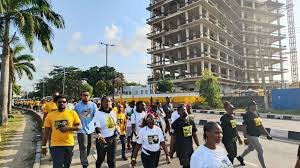
Silent Bells, Steady Feet: How Abuja Learned to Celebrate Without Excess
 Juliet Jacob
ABUJA, Nigeria – Abuja does not shout when it celebrates. It hums. During the 2025–2026 festive season, Nigeria’s Federal Capital Territory moved to a quieter rhythm—less flamboyant than the high-octane “Detty December” scenes of Lagos, yet no less revealing of how Nigerians are learning to adapt, endure and find meaning in constrained times. From Christmas Day through Boxing Day and into the New Year, the city unfolded in layers: crowded markets by day, prayer-filled churches by night, gridlocked roads giving way to intimate living rooms where families gathered over carefully planned meals. It was a season marked not by extravagance, but by intention.
In this report, Juliet Jacob draws on street-level observations, interviews with residents and families, and the everyday moments that define celebration in Abuja’s Federal Capital Territory (FCT). Together, they tell a story of resilience—of a city discovering that celebration does not always require abundance.
A Capital in Motion
By mid-December, Abuja had begun to swell. Flights arrived full, hotels in Maitama and Wuse edged toward full occupancy, and major roads carried a steady flow of returnees and visitors. The city’s growing reputation as a calmer alternative festive destination was evident.
Yet beneath the bustle lay restraint. Many long-term residents stayed put, avoiding costly travel and choosing neighbourhood-based celebrations instead. Church services, family meals and modest outings replaced destination parties and long road trips.
“Abuja felt busy, but not reckless,” said a civil servant in Gwarinpa. “People were present, but careful.”
That caution shaped almost every aspect of the season.
Homes Before High Life
For many households, the festive break altered routines without dismantling them. Parents adjusted work schedules, children stayed home from school, and families re-centred daily life around shared meals and visits.
As December 31 approached, markets and malls grew crowded, particularly in Kubwa, Dutse and Wuse. Transport fares rose with demand, pushing residents to improvise—travelling earlier, carpooling, or cancelling non-essential trips altogether.
“The traffic alone tells you to stay home,” joked one resident in Jabi. “So we brought the celebration home.”
That decision, repeated across the city, redefined what celebration looked like in 2025.
Food Prices Offer Rare Relief
One unexpected shift stood out: food prices, while still high, were noticeably less punishing than the previous year. Staples such as rice, poultry, cooking oil and soft drinks did not experience the dramatic festive spikes seen in 2024.
At Silver Mall in Dutse, Mrs. Rose, a mother of three preparing for New Year celebrations, explained the difference plainly.
“Last year, we struggled to buy chicken and rice together. This year, prices are still high, but they’re better than before. We can celebrate without borrowing.”
Her 10-year-old son, Chuka, chimed in with excitement. “We bought ice cream and popcorn. Last year, we couldn’t.”
At TK Mall in Kubwa, Emeka, shopping with his wife and two children, echoed the sentiment.
“We planned better this time. Food prices didn’t surge like last December, so we could buy small treats for the kids.”
The relief was modest, but meaningful. It allowed families to include symbolic indulgences—meat in the pot, treats for children—without tipping into debt.
Power, Traffic and the Art of Coping
Electricity supply remained uneven. Affluent neighbourhoods experienced relatively stable service, while others endured outages, particularly during evening hours when festive activities peaked. Generators hummed on cue, a familiar soundtrack to Nigerian celebration.
Traffic congestion was less forgiving. Routes through Wuse, Kubwa, Gwarinpa and the city centre routinely stalled, especially near malls and event venues. For many, the gridlock became a reason to opt out of city-wide movement altogether.
“We just timed everything earlier,” said a resident in Apo. “Church in the morning, lunch at home, no night movement.”
These adaptations were not new—but they were refined, almost instinctive.
Shared Spaces, Separate Energies
Public celebrations dotted the city. Eagles Square hosted large New Year events, while City Park in Wuse 2 offered family-friendly gatherings. Hotels such as Transcorp Hilton catered to ticketed festivities, and religious centres across the FCT overflowed with worshippers.
Families gravitated toward parks, malls and early church services. Young adults claimed concerts, lounges and late-night events. Churches remained central—particularly Christmas Eve and crossover services—with many worshippers choosing daytime or early evening programmes to avoid late travel.
Fireworks, once common, were noticeably limited following restrictions, shifting attention to organised public displays and symbolic countdowns.
The Festive Economy at Work
Visitors from abroad injected spending power into the city, creating short-term economic ripples. Ride-hailing drivers, street vendors, event staff and short-let operators reported brisk business.
Rather than resentment, many residents welcomed the opportunity.
“This season feeds people,” said a food vendor near Wuse Market. “If visitors come, we all benefit small-small.”
The festive economy, informal yet vital, once again demonstrated its role as a pressure valve during difficult times.
Security, Simplicity and Staying Put
Security concerns continued to shape behaviour. Some families avoided inter-state travel entirely, choosing the perceived safety of Abuja over long road journeys. Hospitality services, stretched by demand, delivered uneven experiences—but expectations were tempered.
Above all, families prioritised togetherness. Children found joy in simple pleasures, elders valued presence over presents, and communities leaned on faith and familiarity.
Redefining Celebration
The 2025–2026 festive season in Abuja was not defined by spectacle, but by recalibration. Economic pressures persisted, infrastructure gaps remained visible, yet modest improvements—particularly in food affordability—softened the edges of hardship.
From shopping trips in Dutse and Kubwa to quiet living rooms across the FCT, celebration took on a new meaning: deliberate, grounded and human.
Abuja did not escape Nigeria’s realities. It negotiated them. And in doing so, the city offered a lesson that resonated beyond the season—that joy, even restrained, remains a powerful act of resilience.
About the Author


 Mirian Gom