


Hope Ajayi
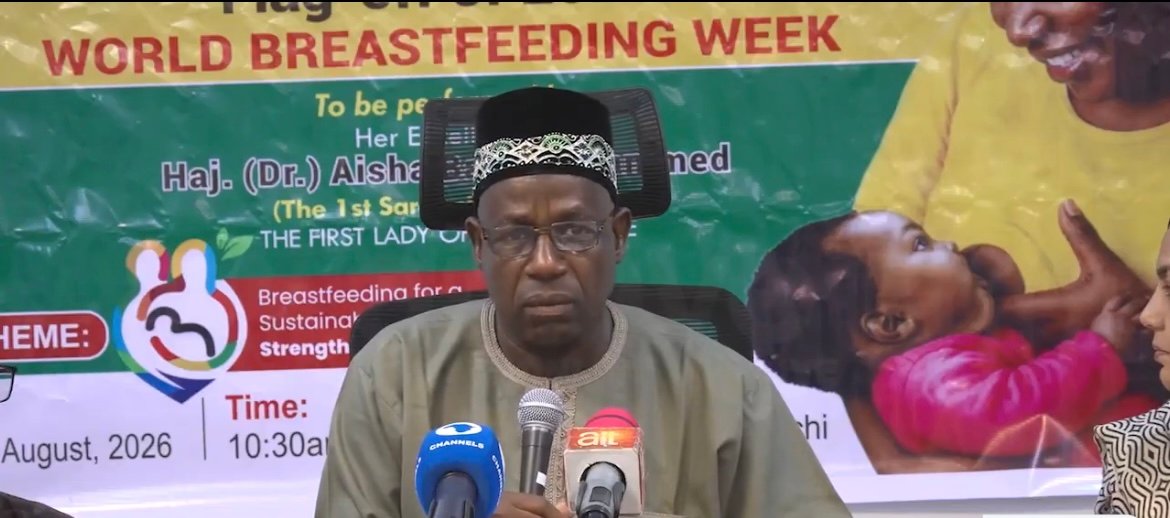
BAUCHI, Nigeria – The Executive Chairman of the Bauchi State Primary Health Care Board, Dr. Rilwanu Mohammed, has urged mothers to reject cultural misconceptions and myths discouraging exclusive breastfeeding, describing breast milk as a baby’s first line of defence against disease during the critical first six months of life.
Speaking on Tuesday during a press briefing to commemorate the 2026 World Breastfeeding Week, Mohammed said exclusive breastfeeding remains one of the most effective interventions for improving child survival and healthy development.
He explained that breast milk naturally provides essential nutrients and antibodies that protect infants before their immune systems fully develop.
“Breastfeeding is very important for the child. It is the first immunisation that protects the child for the first six months before it starts developing its own immunity,” he said.
Mohammed stressed that breast milk is readily available, hygienic and requires no heating or special preparation before feeding, making it the safest and most affordable source of nutrition for newborns.
He urged mothers to embrace exclusive breastfeeding despite persistent cultural beliefs and misinformation that discourage the practice.
The health official also addressed concerns among some women that breastfeeding may affect the appearance of their breasts, describing such fears as misplaced when weighed against the health benefits for children.
“I always emphasise that whether a woman likes it or she doesn’t like it, the breast must fall,” Mohammed said, urging mothers not to allow cosmetic concerns to deprive their babies of optimal nutrition.
He called on families and communities to support nursing mothers and prioritise children’s health over harmful myths and social pressures.
The appeal comes as Nigeria joins countries worldwide in marking World Breastfeeding Week 2026, with health authorities intensifying campaigns to improve exclusive breastfeeding rates and reduce childhood malnutrition.
According to the World Health Organization (WHO) and UNICEF, exclusive breastfeeding for the first six months of life provides ideal nutrition, strengthens immunity, lowers the risk of infections and contributes to improved child survival and long-term cognitive development.
Health experts continue to advocate stronger family, workplace and community support to help mothers initiate breastfeeding early and sustain exclusive breastfeeding during the first six months of life, followed by continued breastfeeding alongside complementary foods up to two years of age or beyond.





Join the conversation