The Night the Heat Never Leaves: How Nigeria’s Urban Poor Are Fighting to Survive Extreme Temperatures
 Oluwafunbi Bello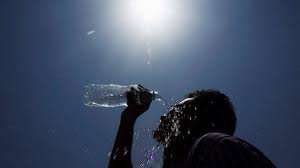
ABUJA, Nigeria – As temperatures soar across Abuja’s crowded settlements, families battle sleepless nights, collapsing livelihoods and rising health risks in a climate crisis worsened by chronic electricity failures. Oluwafubi Bello, writes.
The heat arrives long before noon in Kubwa, one of Abuja’s fastest-growing satellite towns. By afternoon, zinc rooftops glow like heated metal sheets, cramped rooms turn into furnaces, and exhausted families drift outdoors in search of air that feels barely breathable. Children cry through power cuts, traders abandon overheated shops, and restless residents lie awake through mosquito-filled nights waiting for electricity that may never come. For thousands living in Nigeria’s overcrowded urban settlements, extreme heat is no longer a seasonal inconvenience. It is an escalating public health emergency colliding with poverty, rapid urbanisation and a collapsing power supply — leaving vulnerable families to endure a dangerous climate reality with little protection.
A City Overheating
Across Abuja and several northern Nigerian cities, residents say temperatures have become increasingly unbearable in recent years. But in low-income communities like Kubwa, the impact of extreme heat is intensified by poor housing conditions, erratic electricity supply and overcrowding.
Concrete walls absorb heat throughout the day and release it slowly at night, trapping residents inside sweltering rooms with little ventilation. During prolonged blackouts, electric fans become useless ornaments.
For many families, survival now depends on improvisation.
At dusk, mats appear outside crowded compounds. Children sleep under the open sky while adults’ fan themselves through humid nights. Those who can afford fuel ration generator use carefully, balancing cooling needs against rising living costs.
Others simply endure.

“We just pray for light”
Inside a dimly lit one-room apartment, Maimuna Dangana watches helplessly as another blackout stretches into the night.
Her children lie outside on a worn mat, hoping sleep comes before mosquitoes descend.
“We just pray for light,” she says softly.
The electricity outage lasted hours. Inside the room, the heat is suffocating. The fan hangs motionless from the ceiling while sweat trickles endlessly down the walls and faces of exhausted residents.
For Maimuna, the crisis is no longer simply about discomfort.
It affects sleep, health, productivity and survival itself.
“Sometimes the children wake up crying because of the heat,” she explains. “You pour water on their bodies, but after some minutes everywhere becomes hot again.”
Across Kubwa, similar scenes unfold nightly.
Residents describe waking repeatedly from dehydration, headaches and exhaustion. Many say the intense heat has worsened in recent years, especially during dry seasons marked by prolonged blackouts.
Heat Becoming A Silent Health Threat
Medical experts warn that extreme heat can quickly become deadly, particularly for vulnerable populations already living under harsh socioeconomic conditions.
Dr Okafar, a public health physician, says rising temperatures combined with unreliable electricity are creating dangerous conditions across many urban communities.
“When environmental temperatures begin to rise above 40°C, it can become very dangerous, especially for vulnerable people,” he explains. “This can lead to dehydration, heat exhaustion and, in severe cases, heat stroke, which can be life-threatening.”
He adds that vulnerable groups such as children, the elderly and people with pre-existing medical conditions face significantly higher risks.
“Even common illnesses can worsen under extreme heat conditions,” he notes. “The physiological stress becomes much greater.”
Health workers say symptoms such as dizziness, confusion, fatigue and severe headaches are increasingly common during heatwaves.
Yet awareness about heat-related illnesses remains low in many communities.
Unlike floods or disease outbreaks, heat often kills quietly.
Its effects build slowly through dehydration, sleep deprivation, stress and worsening chronic illnesses.

The Inequality of Staying Cool
Extreme heat does not affect everyone equally.
In wealthier neighbourhoods across Abuja, homes equipped with solar inverters, generators and air conditioning systems offer some protection from rising temperatures.
But for low-income residents, cooling has become a luxury.
In Kubwa’s densely populated districts, overcrowded buildings and poorly ventilated shops trap heat intensely during the day.
For traders and artisans, productivity drops sharply as temperatures rise.
Aishat Muhammed, a tailor in the community, says working indoors has become nearly impossible during peak afternoon heat.
“Inside the shop, it becomes like an oven,” she says. “We have to bring the machines outside just to be able to breathe and work. Even outside is hot, but inside is worse.”
She points toward sewing machines lined outside her shop beneath a faded umbrella where apprentices continue stitching clothes under direct sunlight.
The power supply, she says, rarely lasts long enough to keep fans running.
“When there is no light, everybody becomes weak,” she explains. “You cannot concentrate. Customers also stop coming because the heat is too much.”

Climate Change Meets Infrastructure Collapse
Scientists globally have warned that heatwaves are becoming more frequent and intense as climate change accelerates.
African countries remain among the most vulnerable despite contributing minimally to global greenhouse gas emissions.
Nigeria’s rapidly expanding urban centres face particular danger due to population growth, limited planning and disappearing green spaces.
Trees that once provided shade are increasingly replaced by concrete structures that absorb and retain heat.
Urban planners warn that many Nigerian cities are developing faster than infrastructure can support.
Electricity systems already struggling under ordinary demand become even more unstable during periods of extreme heat, when residents desperately seek cooling.
The result is a dangerous cycle:
As temperatures rise, electricity demand increases.
As blackouts worsen, exposure to heat intensifies.
For residents, climate change is no longer an abstract scientific debate discussed at international conferences.
It is the reality of sleepless nights.
It is businesses losing income during power cuts.
It is families choosing between buying fuel, food or medicine.
And for many urban poor households, it is a daily negotiation with discomfort and danger.
Women and children carrying the heaviest burden
The impact of extreme heat often falls hardest on women and children.
Mothers spend long nights trying to cool restless children without electricity. Traders endure suffocating markets to sustain household income. Pregnant women and elderly caregivers face prolonged exposure in poorly ventilated homes.
Children are particularly vulnerable because their bodies struggle to regulate temperature efficiently.
Doctors say dehydration can escalate rapidly among infants during prolonged heat exposure.
For families already struggling with poverty, access to adequate healthcare becomes another challenge entirely.
Some residents say they avoid hospitals unless symptoms become severe because treatment costs are unaffordable.
As a result, many cases of heat exhaustion likely go undocumented.
Searching for relief in a warming nation
Residents and experts are now calling for urgent government intervention to address the worsening crisis.
Public health professionals stress the need for awareness campaigns on heat-related illnesses and emergency response systems during extreme weather periods.
Urban development experts argue that Nigerian cities must prioritise climate-resilient planning through improved housing design, expanded green spaces and better drainage and ventilation systems.
But for many residents, the most immediate solution remains electricity.
“If there is steady light, people can sleep and work normally,” says Agbo, another Kubwa resident. “The heat is bad, but without electricity, it becomes unbearable.”
Experts also advocate increased investment in renewable energy alternatives such as solar systems that could provide more reliable electricity for low-income communities.
Without major reforms, they warn, worsening heatwaves may deepen health inequalities, damage livelihoods and further strain fragile urban systems.
Enduring The Heat, Night After Night
As darkness settles once again over Kubwa, the familiar ritual begins.
Families drag mattresses outdoors. Shop owners close early. Generators cough briefly before falling silent to conserve fuel.
Above them, the heavy night air hangs unmoving.
Inside cramped rooms, heat clings stubbornly to walls and ceilings long after sunset.
And across the community, thousands wait anxiously for electricity — not for comfort, but for survival.
Because in Nigeria’s rapidly warming cities, the crisis is no longer merely about rising temperatures.
It is about who can escape them — and who cannot.
About the Author

 Mirian Gom

 Edino Chubiyo Cornelius