


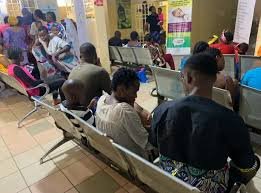
NASARAWA, Nigeria- Despite billions poured into rebuilding and expanding Primary Health Care facilities across Nigeria — echoing a wider trend across Africa — access to truly functional, life-saving care remains out of reach for millions, even in communities within minutes of the nation’s capital; in this report, Koko Maxwella tells the gripping story of 32-year-old Grace Ekanem in Mararaba, Nasarawa State, whose desperate midnight search for medical help exposes a troubling truth: that proximity to healthcare does not guarantee access, and for many Nigerians, survival still depends on distance, cost, and chance.
When Grace Ekanem woke with severe abdominal pain, instinct told her to seek immediate medical attention. But reality intervened. Lying helpless on the floor of her one-room apartment, she could only writhe in agony as her husband searched desperately for transport in the darkness.
“There was no bike around, and no car wanted to come that late because our area is far,” Grace recalled. “The pain was too much. I was crying and sweating. I thought I would die before help came.”
For nearly an hour, she waited — not for a doctor, but for a ride.
Eventually, a commercial tricycle agreed to take her to a private clinic several kilometres away. By the time she arrived, her condition had deteriorated significantly.
“The nurse said if I had delayed any longer, it could have been more serious,” she said.
Grace’s experience is not an isolated ordeal. It is a window into a broader, systemic crisis — one where access to healthcare is determined not only by availability, but by geography, cost, and the fragile logistics of movement.
The Long Road to Care
Across Nigeria, particularly in low-income and peri-urban communities, reaching a healthcare facility can be a daunting challenge. Poor road networks, rising transport costs, and limited availability of vehicles — especially at night — create barriers that delay or entirely prevent access to care.
A 2025 study on healthcare access barriers in Nigeria found that 30 per cent of respondents experienced delays in seeking healthcare due to transport-related challenges, while 72 per cent identified transport cost as a major obstacle.
For residents like Mfon Udoh, these statistics are lived realities.
“The nearest hospital to us is far, and transport fare has increased,” he said. “If someone falls sick, many people first go to chemists nearby because going to the hospital costs money and transport is not always available.”
He explained that decisions around healthcare are often financial calculations.
“Sometimes people say they will wait till morning because night transport is expensive,” he added. “But sickness does not wait.”
Delays That Turn Deadly
Healthcare workers on the frontlines witness the consequences of these delays daily. Patients often arrive only when their conditions have become critical — a pattern that significantly reduces survival chances and increases treatment complexity.
Nurse Helen Danguwari, who works at a primary healthcare centre in Mararaba, described the situation as routine.
“We see many cases where patients arrive in critical condition simply because they could not come earlier,” she said. “Some of them first tried self-medication or waited for money for transport before coming.”
She noted that vulnerable groups bear the brunt of these barriers.
“Pregnant women, children, and elderly patients are the most affected,” she explained. “When access is difficult, people postpone care until it becomes an emergency. This increases complications and makes treatment harder.”
The Cost of Distance
For many Nigerians, the decision to seek medical care is not solely based on need, but on affordability. Transport fares — often overlooked in healthcare planning — play a decisive role.
A 2025 study focusing on pregnant women revealed that 95 per cent identified lack of money as a major transport barrier, while 30 per cent reported that transport difficulties prevented timely access to care.
Public health specialist Dr Emmanuel Johnson argues that access to healthcare must be redefined beyond infrastructure.
“You may have a clinic in a local government area, but if residents cannot reach it quickly or afford transportation, then access remains limited,” he said.
He emphasised that for low-income households, healthcare decisions are often trade-offs.
“When families have to choose between spending money on food and paying transport fare to the hospital, many delay care,” Dr Johnson said. “That delay often leads to more severe illness and higher treatment costs later.”
A System Out of Reach
The uneven distribution of healthcare facilities further compounds the problem. While urban centres may have clusters of hospitals, outlying communities are left with limited options — often miles away.
“In some urban centres, hospitals are concentrated in one area, while residents in outlying communities travel long distances for basic care,” Dr Johnson noted.
This imbalance forces many residents to rely on informal healthcare providers, such as patent medicine vendors, even in situations requiring professional medical intervention.
According to the World Bank, out-of-pocket spending remains one of the biggest barriers to healthcare in Nigeria, with households covering the majority of medical expenses — including transport.
Grace herself admits to making such compromises.
“If it is not very serious, I just buy medicine nearby because transport is too much,” she said. “Going to the hospital means transport fare, hospital card, and drugs. Sometimes there is no money.”
Survival by Chance
As urban populations expand and infrastructure struggles to keep pace, the gap between healthcare facilities and the people who need them continues to widen.
For many residents in peri-urban and rural areas, a medical emergency is not just a health crisis — it is a logistical and financial gamble.
“Even when you want to go to the hospital, you may not have the money immediately,” Mfon said. “That is why many people stay at home and hope to get better.”
This reliance on hope — rather than access — reflects a deeper systemic failure.
Beyond Hospitals: Rethinking Access
Health advocates argue that addressing Nigeria’s healthcare challenges requires a more holistic approach — one that integrates transportation, infrastructure, and affordability into healthcare planning.
“The government needs to strengthen primary healthcare centres closer to communities,” Dr Johnson said. “Road access, ambulance systems, and affordable transportation support are part of healthcare delivery.”
Without these interventions, physical access barriers will continue to determine who receives care — and who does not.
A Night That Lingers
For Grace, the memory of that night remains vivid — a reminder of how close she came to becoming another statistic.
“I kept thinking, what if the vehicle did not come on time?” she said quietly. “Nobody should suffer like that because the hospital is too far.”
Her words echo far beyond her community — capturing a reality faced by millions across Nigeria, where the journey to healthcare is uncertain, unaffordable, and, at times, life-threatening.
In a country striving to improve its healthcare system, one truth remains unavoidable: until reaching care becomes as prioritised as providing it, distance will continue to decide survival.



Join the conversation