
Handshake Peace, Endless Bloodshed: Inside Nigeria’s Middle Belt Crisis
 Hussaini Ibrahim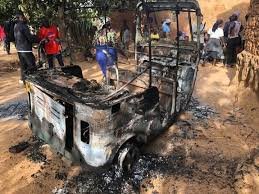
(By: Hussaini Ibrahim and Oluwafunbi Bello)
Despite years of high-level interfaith dialogue, public reconciliations, and repeated peace pledges by Muslim and Christian leaders, communities across Nigeria’s Middle Belt remain trapped in cycles of killings, displacement, and fear, exposing a deep disconnect between elite agreements and the harsh realities of weak security, unresolved land disputes, economic hardship, and growing mistrust at the grassroots.
For years, Nigeria’s Middle Belt has been a stage for symbolic unity. Religious leaders convene in cities, exchange embraces, and issue joint statements condemning violence. From Jos to Makurdi, Abuja to Kaduna, these gatherings project an image of cohesion in a region often defined by division.
But far from the conference halls, violence continues to define daily life.
In Plateau and Benue states, residents recount midnight attacks, burnt homes, and hurried escapes into the bush. Entire communities have been displaced, while survivors struggle with trauma and uncertainty. The central question persists: why do peace declarations fail to translate into safety on the ground?
Findings by Africa Health Report (AHR) indicate that while interfaith efforts have eased tensions in urban areas, rural communities remain entangled in deeper, unresolved conflicts. Land disputes, competition over resources, poverty, and politicisation of identity continue to fuel violence, often masked as religious clashes.
The spread of insecurity is no longer confined to traditional flashpoints. In Kwara State, suspected bandits recently attacked Idofin-Ayekale community in Oke-Ero Local Government Area, abducting several residents and forcing others to flee.
“Gunshots were heard around 7 pm in the evening yesterday, and people were kidnapped. The number of kidnapped people is still many, and people are leaving already,” a local source said.
She added, “Even I am on my way to Omu-Aran. Even in the neighbouring town, Idofin-Odoaga, the residents are leaving also for the meantime.”
As panic spread, some residents reportedly fled to safer areas, while unconfirmed accounts suggested that a few victims escaped. At the time of reporting, security agencies had yet to release an official statement.
Dialogue Without Deterrence
Religious leaders acknowledge the limits of their role. A senior cleric in Plateau said sermons alone cannot guarantee peace.
“Imams and pastors can preach peace every day, but sermons cannot substitute for security. If criminals know they can attack a village and disappear without consequences, then peace meetings alone will not stop them,” he said.
He added, “We have reduced hateful rhetoric in many places. That is progress. But the farmer whose crops were destroyed and the widow whose husband was killed need justice, not only speeches.”
Dalyop Solomon Mwantiri, Chairman of the Berom Youth Moulders Association of Nigeria, said cooperation among religious leaders has improved significantly—but remains largely symbolic at the grassroots.
“At the leadership level, relations between Christian and Muslim leaders are far better than what many people imagine. But peace at elite level does not automatically translate to peace in villages where people are competing over land, water, and survival,” he said.
According to him, many incidents labelled as religious are rooted in broader socio-economic realities.
“Everything is labelled religion in Nigeria. But when you investigate deeply, you often see criminality, retaliation, political manipulation, and economic desperation.”
A representative of Jama’atu Nasril Islam echoed this perspective.
“Muslims are victims. Christians are victims. Traditional communities are victims. What we are seeing is the collapse of trust and the rise of armed opportunists who exploit divisions,” he said.
Life Under Constant Threat
For residents, the consequences are immediate and personal.
“We hear that leaders met in Jos or Abuja and agreed on peace. But when gunmen come, nobody arrives on time,” said Heipang from Bokkos, Plateau State, who lost two relatives in a recent attack.
“If the government wants peace, let there be rapid response teams, arrests, and prosecutions. Let people see the consequences.”
In Riyom, fear has become routine.
“We sleep with one ear open. Children panic at the sound of motorcycles. We don’t need speeches anymore. We need to farm safely and sleep safely,” a widow said quietly.
In Benue State, insecurity has deepened economic hardship. Farmers say they are increasingly unable to access their land.
“Each planting season, we ask whether we can return to our land. Some fields are abandoned because people are afraid. Hunger grows when farmers can not farm,” a farmer in Guma said.
A cattle breeder in a neighbouring community warned against blanket accusations.
“Not every herder is a criminal. Some of us are also attacked, extorted, or robbed. Once violence starts, innocent people on every side suffer,” he said.
He called for structured solutions, including clear grazing routes, mediation, and enforcement of laws.
Security and Justice Deficit
Security officials admit the situation is complex. A military source involved in operations in Plateau said many attacks were foiled but never reported.
“People only hear when attacks succeed. They do not hear how many ambushes were foiled,” he said.
However, he acknowledged persistent challenges, including delayed intelligence and difficult terrain.
A police officer in Benue highlighted weaknesses in the justice system.
“Arrest is one phase. Investigation, witness protection, and successful prosecution are equally critical. If cases collapse, deterrence weakens,” he said.
Roots Beneath the Violence
Experts say the crisis is deeply rooted in historical and structural issues.
Dr Musa Tsenyil, a conflict researcher, explained that disputes over land ownership, identity, and political rights are central to the conflict.
“In many communities, the argument is over who is indigenous, who owns land, and who has rights. These questions are highly emotional and easily weaponised,” he said.
He warned that climate change is intensifying competition for land and resources, further escalating tensions.
Exclusion in Peacebuilding
Civil society groups argue that many peace initiatives exclude those most affected.
“Too many peace meetings involve politicians, clerics and donors alone. Women, youth, displaced persons, and farmers are often absent,” said a programme director at a Jos-based NGO.
“Peace cannot be outsourced from conference halls. It must be built where people live and work.”
Contested Narratives and Global Attention
The crisis has also drawn international commentary, including from Alex Barbir, whose interventions have sparked debate.
Some argue that global voices help draw attention to neglected crises.
“When outsiders speak, the world notices,” a Benue-based organiser said.
Others caution against oversimplification.
“The Middle Belt crisis is not solved by hashtags. It requires nuance and accountability,” a Plateau-based academic noted.
Beyond Symbolism
Religious leaders agree that dialogue remains necessary—but insufficient.
“If pastors and imams stop talking, matters will worsen. But dialogue must walk with justice,” a pastor in Jos said.
An imam involved in mediation added, “We can stop revenge attacks, but we cannot deploy troops or prosecute criminals.”
Analysts advocate a multi-layered response: improved security deployment, stronger prosecution systems, land reforms, compensation mechanisms, and grassroots peacebuilding.
For many affected residents, however, the need is immediate and urgent.
“We don’t care whether they call it a religious crisis, farmer-herder crisis or communal clash. We just want to go home alive,” a displaced father in Benue said.
His words capture the enduring reality: while leaders continue to preach unity, communities remain exposed to violence. Until justice, security, and livelihoods reach those most affected, peace in Nigeria’s Middle Belt may remain more symbolic than real.
About the Author


 Oluwatobi Adu
 Hope Ajayi

 Mirian Gom