
Pulse on the Brink: Nigeria’s Looming Doctors’ Strike Exposes a Healthcare System in Peril
 Edino Chubiyo Cornelius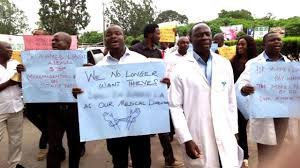
ABUJA, Nigeria – In the fluorescent-lit corridors of Nigeria’s public hospitals, a quiet tension is building. Patients wait, nurses whisper, and doctors weigh their options. Once again, the spectre of a nationwide strike by resident doctors’ looms — and with it, the possibility of a healthcare system grinding to a halt.
For many Nigerians, this is not a new story. It is a recurring crisis — one that resurfaces with unsettling regularity, each time exposing the fragile underbelly of a system already stretched to its limits. In this report, Edion Corelinus, writes that the mere threat of industrial action has become enough to trigger anxiety, not only among patients who depend on public hospitals, but also within a workforce battling exhaustion, uncertainty and dwindling morale.
A crisis year in the making
At the heart of the looming strike lies a catalogue of unresolved grievances. Resident doctors — the backbone of Nigeria’s hospital system — point to unpaid allowances, stalled promotions, and chronic underinvestment in facilities.
For Dr. Musa Abdullahi, a resident doctor at a federal teaching hospital, the frustration runs deep.
“We have engaged in dialogue repeatedly, but the same concerns keep resurfacing. Many doctors are still owed allowances, and career progression is often delayed. These are not new problems, and they continue to affect morale.”
His words echo a sentiment shared across wards and clinics nationwide: a growing sense that promises made are rarely promises kept.
Over the years, negotiations between government authorities and medical unions have produced agreements — but implementation has often faltered, leaving doctors caught in a loop of hope and disappointment.
The result is predictable: rising discontent, and a steady exodus of skilled professionals seeking better opportunities abroad.
Hospitals under strain
Inside hospitals, the uncertainty is already reshaping daily operations. Rotas are being adjusted. Emergency plans are quietly drafted. Administrators brace for disruption.
For frontline workers, the atmosphere is tense.
Mrs. Grace Eze, a senior nurse, describes a system on edge:
“There is a lot of uncertainty. Everyone is trying to prepare for what might happen, but it is difficult to fill the gap if doctors withdraw their services. The pressure on other staff would be significant.”
In critical units — emergency rooms, intensive care wards, and specialised clinics — even a slight reduction in medical personnel can have life-or-death consequences.
A strike would not merely disrupt services; it would stretch an already fragile system beyond its breaking point.
Patients caught in the middle
For millions of Nigerians who rely on public healthcare, the looming strike is more than a policy issue — it is a personal crisis.
Ngozi Okafor, a civil servant in Abuja, is already reconsidering her plans.
“I have a medical appointment coming up, and I’m not sure what to expect. It’s difficult to plan when you don’t know if services will be available. Private hospitals are expensive, so it’s not an easy option.”
Her dilemma reflects a broader reality: in a country where private healthcare remains out of reach for many, public hospitals are often the only lifeline.
The uncertainty forces patients into impossible choices — delay care, pay beyond their means, or risk going untreated.
A Cycle of Systemic Failure
Health policy experts say the crisis is symptomatic of deeper structural problems.
Dr. Amina Bello, a health policy analyst, points to a recurring pattern:
“What we are seeing is a cycle. The underlying issues—funding gaps, weak governance, and workforce challenges—are not being addressed in a sustainable way. As a result, tensions build up and lead to repeated disputes.”
Nigeria’s healthcare spending remains below global benchmarks, limiting the system’s capacity to deliver consistent, quality care.
Without sustained investment and reform, experts warn, the cycle of strikes and near-strikes will continue — each episode further eroding the system’s resilience.
Trust On the Line
Beyond the immediate disruption, the repeated threat of strikes is steadily undermining public confidence.
Mr. Tunde Bakare, a healthcare rights advocate, warns of long-term consequences:
“When people begin to expect disruptions, it changes their behaviour. Some delay seeking care, while others lose confidence in the system entirely. That has serious consequences for public health.”
Trust, once lost, is difficult to rebuild. And in healthcare, it can be as critical as medicine itself.
A system perceived as unreliable risks driving patients away — not just from hospitals, but from seeking care altogether.
Government Promises, Lingering Doubts
Government officials say they are engaging with representatives of resident doctors to avert industrial action. Assurances have been made regarding the settlement of outstanding financial obligations and administrative concerns.
Yet, history casts a long shadow.
Previous agreements have often been only partially implemented, fuelling scepticism among healthcare workers and the public alike.
The question is no longer whether promises will be made — but whether they will be kept.
A fragile system at a crossroads
The looming strike has once again brought Nigeria’s healthcare challenges into sharp focus: chronic underfunding, inadequate infrastructure, workforce shortages, and policy inconsistencies.
Taken together, these issues paint a picture of a system struggling to sustain itself.
Experts argue that meaningful change will require more than temporary fixes. It will demand long-term investment, stronger accountability mechanisms, and a renewed commitment to healthcare as a national priority.
Beyond another crisis
As negotiations continue, the stakes could not be higher.
For doctors, the strike represents a fight for fair treatment and professional dignity. For patients, it is a matter of access — and, in some cases, survival.
For Nigeria, it is a test: whether this moment will mark yet another turn in a familiar cycle, or the beginning of lasting reform.
For now, the corridors remain tense, the conversations ongoing, and the outcome uncertain.
But one thing is clear — a healthcare system on the brink cannot afford to keep stepping back from the edge.
About the Author

 Mirian Gom