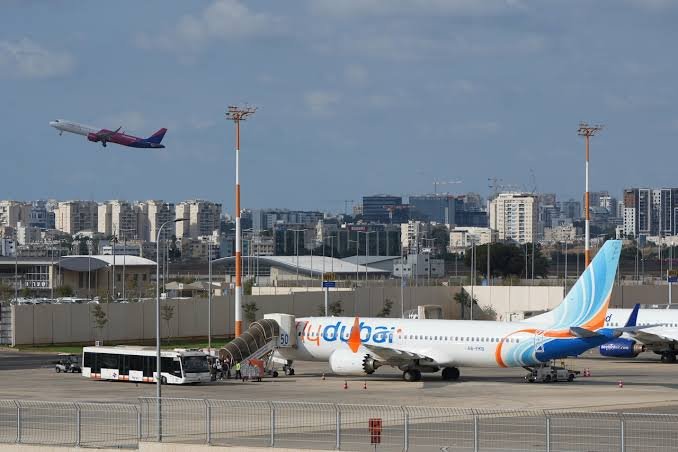
Palace of Light, Nation in Shadow: Inside Aso Rock’s Solar Turn and Nigeria’s Power Paradox
 Edino Chubiyo Cornelius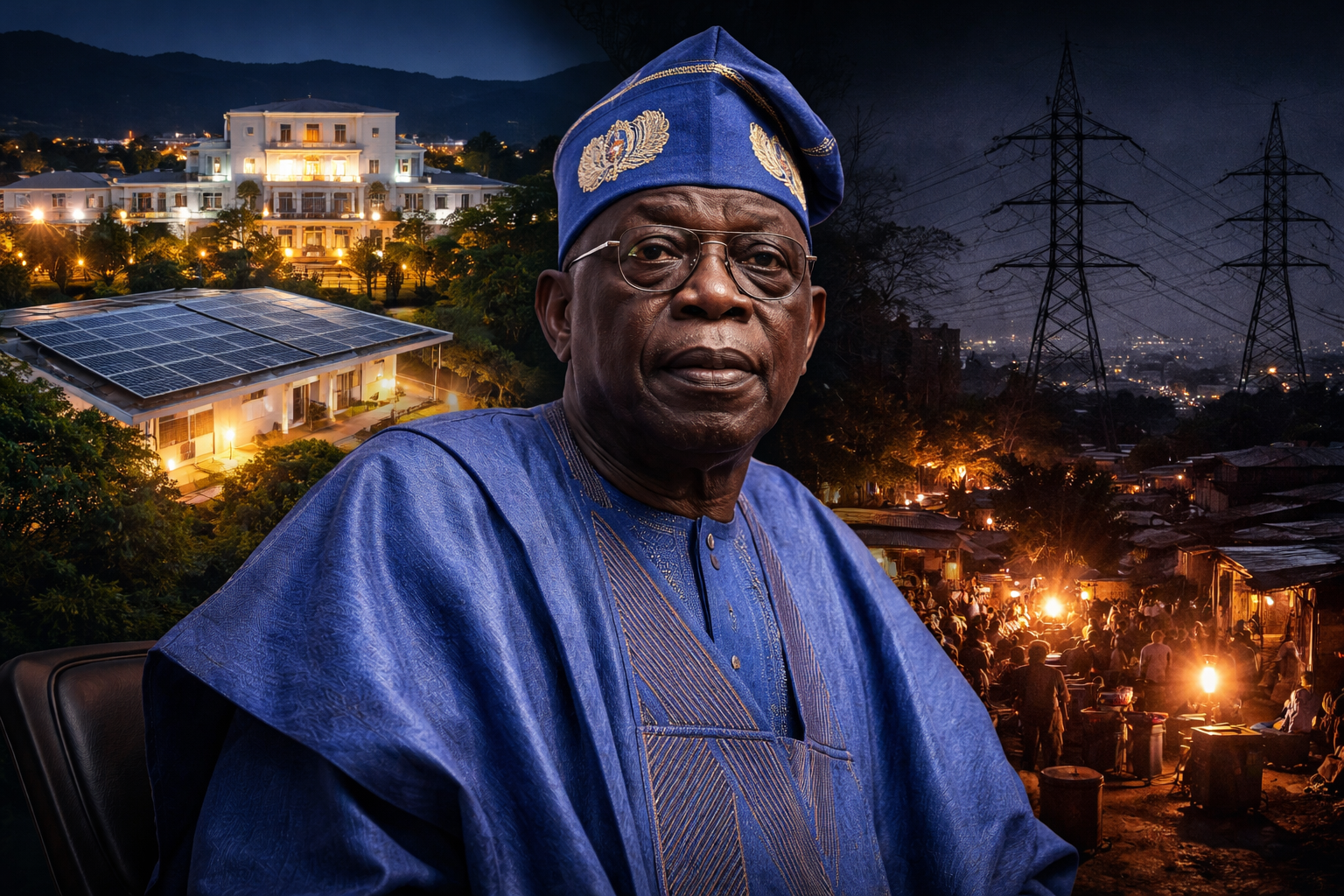
ABUJA, Nigeria – In a country where darkness often dictates the rhythm of daily life, a new light has flickered to life at the very heart of power.
Nigeria’s presidential residence, Aso Rock, is turning to solar energy — a move that has sparked a national conversation far beyond electricity. It has become a lens through which Nigerians are questioning leadership, inequality, and trust in the system meant to serve them.
For millions, electricity is uncertain — a daily gamble. Yet, within the seat of government, power is now assured.
This is not just a story about solar panels. It is about a nation still searching for power — in every sense of the word. Edino Cornelius, writes.
A Nation Wired for Darkness
Nigeria’s electricity crisis remains as persistent as it is disruptive. From major cities to rural communities, unreliable power defines how people live and work.
Across the country, the constant hum of petrol and diesel generators fills the gap left by a fragile national grid — an expensive and polluting substitute.
Despite decades of reforms and billions in investment, the system continues to falter. Power generation is inconsistent, transmission infrastructure is overstretched, and distribution networks struggle with inefficiency and losses.
In 2025, the government announced plans to invest ₦36 billion in transformer distribution and a separate $2.5 billion initiative to stabilise the grid. Yet, each grid collapse can cost between ₦25 billion and ₦45 billion in emergency repairs.
The instability has persisted into 2026.
Data reviewed by Africa Health Report shows that in the first quarter of the year alone, more than four outages were triggered by grid failures and gas shortages.
On January 23, 2026, power generation dropped dramatically from over 4,500 megawatts to just 24 megawatts. Four days later, another collapse plunged all 11 distribution companies into darkness. Two more incidents followed in March.
These failures mirror similar collapses in late 2025 and previous years — reinforcing a cycle of instability that continues to define Nigeria’s power sector.
Promises and Reality
During his campaign, Bola Ahmed Tinubu made a bold pledge:
“If I do not provide steady electricity within four years, do not vote for me for a second term.” Electricity reform was central to his vision.
Yet, years into that promise, many Nigerians say little has changed — except for one significant development.
In March 2025, the administration announced plans to transition Aso Rock to solar energy, reducing its reliance on generators and the national grid. By early 2026, the project was nearing completion, with parts of the villa — including the State House Medical Centre — already operating on solar since May 2025.
To some, the move is practical. To others, it is symbolic — and troubling.
A Solar Solution — or a Stark Signal?
Government officials describe the transition as forward-thinking. Solar power offers sustainability, cost savings, and independence from an unreliable grid.
But for many Nigerians, the message runs deeper.
If the most secure residence in the country cannot depend on the national grid, what does that say about the system itself?
Critics argue that the move reflects adaptation rather than transformation — a workaround instead of a solution.
“What About the Rest of Us?”
Within the power sector, reactions are mixed.
Jacob Ajayi, a Lagos-based power worker, sees the logic — but questions the fairness.
“If uninterrupted power is necessary for the villa, what about hospitals and ordinary Nigerians?”
Another industry insider in Abuja, who asked to be identified only as Paul, put it more bluntly:
“The real issue is not that the villa left the grid — it’s that it happened instead of fixing it.”
Their concerns highlight a deeper dilemma: should Nigeria bypass a failing system, or rebuild it?
Life on the Margins of Power
For everyday Nigerians, the debate is not theoretical.
In Katampe, Abuja, Chidimma Okafor runs a small cosmetics and hair business. Like many entrepreneurs, her livelihood depends on electricity — something she rarely has enough of.
Generators keep her business running, but at a high cost.
“Not everyone can afford solar,” she says. “We still depend on public electricity, even if it’s unreliable.”
Rising fuel prices have forced her to cut working hours, especially in the evenings.
Solar energy, while promising, remains out of reach for many due to high upfront costs — deepening an already existing divide.
The Emergence of an Energy Divide
Across Nigeria, a quiet shift is taking place.
Wealthier households, corporations, and institutions are increasingly turning to private energy solutions — solar systems, inverters, and mini-grids.
These alternatives provide stability. But they are not accessible to everyone.
Retired civil servant John Bright worries about what this means for the future:
“If the grid is not good enough for leaders, what about ordinary Nigerians?”
Economist Veronica Ibega sees broader implications:
“If leaders move away from the system instead of fixing it, it raises questions about long-term commitment.”
With only about half of Nigerians enjoying reliable electricity, the risk of deepening inequality is real.
Between Progress and Contradiction
The Aso Rock solar transition sits at a crossroads.
On one hand, it signals progress — an embrace of renewable energy aligned with global trends.
On the other, it exposes a lack of confidence in the national grid.
In countries with stable systems, renewable energy complements the grid. In Nigeria, it risks becoming an escape from it.
This contradiction raises a critical question: is Nigeria moving forward — or stepping away from its core problem?
The System Under Strain
At its core, Nigeria’s power crisis is structural.
Experts point to four major challenges: Insufficient generation capacity, Weak transmission infrastructure, Inefficient distribution networks, and Policy inconsistency and regulatory uncertainty
Solving these requires more than isolated projects. It demands coordinated reform, sustained investment, and strong political will.
Without that, progress at the top may leave millions behind.
A Defining Moment
Moments like this do more than address immediate challenges — they shape national narratives.
For some, Aso Rock’s solar shift represents innovation in the face of failure.
For others, it is an admission that the system itself cannot be trusted.
Either way, it has forced a national reckoning.
Power, Equity, and the Future
Electricity is more than infrastructure. It powers hospitals, schools, businesses, and homes.
In Nigeria, its absence is felt everywhere — in dim classrooms, stalled machines, and shuttered shops.
While Aso Rock’s solar panels guarantee light within its walls, millions outside remain in uncertainty.
The challenge is no longer just about generating power — but distributing it fairly and reliably.
Light for Some, Shadow for Many
The solar transition at Aso Rock is both a solution and a symbol.
It reflects the promise of renewable energy — and the failure of an existing system.
But it also poses a deeper question:
Can a nation truly progress when its leaders move ahead, powered by certainty, while its people remain in the dark?
Until Nigeria builds an electricity system that works for all, the contrast will remain — a palace of light in a nation still searching for power.
About the Author


 Oluwatobi Adu
 Hope Ajayi
 Mirian Gom