 Korede Abdullah
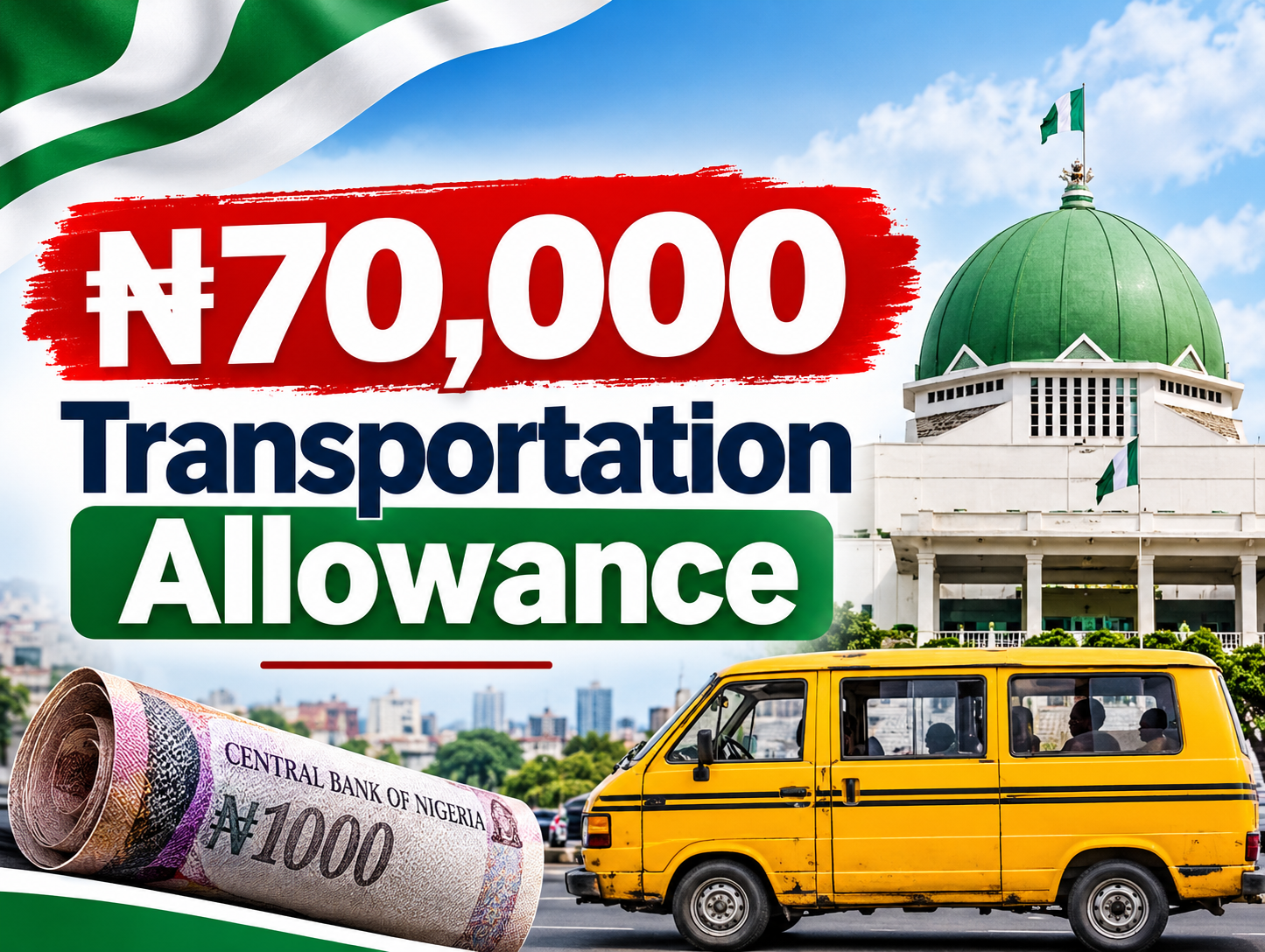
LAGOS, Nigeria – With an estimated 720,000 federal public servants representing just about 0.30 per cent of Nigeria’s estimated 242–244 million population, the Federal Government’s six-month ₦70,000 monthly transport allowance raises a fundamental question of economic fairness: what support is available to the millions of other Nigerians struggling with rising transport fares, food prices and household expenses? Since President Bola Tinubu removed the petrol subsidy on May 29, 2023, the consequences have extended far beyond government offices, yet the latest transport intervention targets only a small section of the population, leaving state civil servants, private-sector employees, traders, artisans, commercial drivers, farmers and unemployed Nigerians to navigate the same economic pressures without comparable federal support. Korede Abdullah writes.
A Nationwide Economic Shock, A Narrowly Targeted Intervention
For millions of Nigerians, petrol subsidy removal has significantly increased the cost of everyday living. Higher fuel prices have raised transportation expenses and contributed to the cost of moving food, goods and essential services across the country.
The burden cuts across employment categories. State civil servants, private-sector workers, traders and commercial drivers all contend with rising transport and operating costs. Unemployed Nigerians also spend more travelling to search for jobs and access essential services. However, the Federal Government’s latest intervention provides eligible federal public service workers with a monthly transport allowance of ₦70,000 for six months, beginning in November 2026.
Available figures put the federal public service workforce at approximately 720,000 employees under the Integrated Personnel and Payroll Information System (IPPIS). Against an estimated national population of 242–244 million, this represents roughly 0.30 per cent.
Although this comparison does not measure the proportion of employed Nigerians or households affected by subsidy removal, it illustrates the limited reach of the intervention relative to the country’s population. The central issue, therefore, goes beyond whether ₦70,000 adequately compensates federal workers. It is whether the government has a broader support framework for Nigerians facing the economic consequences of a nationwide policy change.
Same Petrol Stations, Same Market Prices, Unequal Relief
The economic pressures confronting Nigerians do not depend on who signs their monthly pay slips.
State and federal civil servants, private-sector employees and informal-sector operators purchase fuel and food at prevailing market prices. Small business owners also contend with higher transportation and operating expenses, while low-income households face increasing costs of essential goods and services. Yet the federal transport allowance does not directly cover these groups.
Even among public servants, the difference is significant. A federal employee and a state civil servant may earn comparable salaries, live in the same neighbourhood and use the same commercial transport system. However, only the eligible federal employee receives the additional ₦70,000. The exclusion is even more pronounced among traders, artisans, farmers and commercial drivers. Their incomes often fluctuate, and they generally lack the employment benefits available to some public servants.
For low-income households, the consequences extend beyond transportation. Higher fuel and distribution costs affect food prices and other necessities, leaving families with less money for healthcare, education, rent and household needs. Consequently, while the allowance offers temporary relief to its beneficiaries, it does little to address the wider cost-of-living pressures affecting millions of Nigerians.
The Agreement Behind the ₦70,000 Allowance
The six-month transport allowance followed negotiations between the Federal Government and organised labour on October 27, 2026.
Led by Nigeria Labour Congress (NLC) President Joe Ajaero, the negotiations produced a memorandum of understanding signed by Ajaero, Minister of Labour and Employment Muhammad Dingyadi, Director-General of the Budget Office Tanimu Yakubu and Permanent Secretary, Service Welfare Office, Garba Abdul. Besides the transport allowance, the government agreed to address outstanding allowances and establish a committee for minimum wage negotiations.
The Federal Government stated in the agreement that it “fully respects the right of the Congress to advocate for improved working conditions for Nigerian workers” and was “genuinely trying to address every aspect of it through a structured intervention.” Although the agreement represents a negotiated welfare measure for federal workers, it leaves unanswered how the government intends to support Nigerians outside the arrangement.
The agreement reportedly encourages state and local governments to participate. However, it does not automatically guarantee similar payments to their employees. Private-sector workers, informal-sector operators and unemployed Nigerians are also not directly covered.
Labour Disagreements Raise Questions About Adequacy
The negotiations also exposed disagreements between the NLC and the Trade Union Congress (TUC), led by Festus Osifo, over representation and the handling of the agreement. While Ajaero defended the NLC’s decision to negotiate, arguing that “TUC can negotiate along with NLC, but NLC can negotiate alone,” Osifo accused him of excluding the TUC. He maintained that one labour organisation could not negotiate on behalf of another.
The TUC also rejected the ₦70,000 allowance, describing temporary wage awards as neither “sustainable” nor “far-reaching”.
Instead, it proposed increasing the lowest salary from ₦70,000 to ₦300,000, with corresponding adjustments across other salary categories. The disagreement raises questions about the adequacy of temporary financial interventions, even for their intended beneficiaries. More importantly, it highlights a wider representation gap. Millions of Nigerians outside formal government employment have no direct place in negotiations that determine the distribution of federal workers’ welfare benefits.
State Workers Demand Equal Consideration
A former Ekiti State Chairman of the National Association of Nigerian Nurses and Midwives, Ademola Alabi, has urged the Tinubu administration to encourage state governments to extend similar support to their employees.
Speaking with Africa Health Report, Alabi argued that workers should not be treated differently because of the level of government responsible for their employment. “The government should not discriminate against state workers for any benefit. Workers are workers, irrespective of whether they are employed by the Federal Government or state governments. They all face the same economic realities and deserve equal consideration,” he said.
He added that rising transport fares, food prices and household expenses continue to erode workers’ earnings. “State workers are also Nigerians and deserve equal consideration in government interventions. The economic hardship confronting federal employees is also affecting their counterparts in state civil services,” he said. However, extending the allowance to state employees would still leave private-sector workers, informal-sector operators and unemployed Nigerians outside the arrangement.
Economist Calls for Sustainable Economic Measures
An Economics lecturer at Ekiti State University, Ado-Ekiti, Dr Mojeed Saliu, questioned whether the ₦70,000 allowance could meaningfully address the wider cost-of-living crisis. He noted that transportation represents only one component of household expenditure, alongside food, accommodation, healthcare and other essential services.
The intervention comes against the backdrop of economic disruptions associated with petrol subsidy removal and the floating of the naira in 2023, which increased financial pressures on households and businesses. “The N70,000 allowance may offer some relief to federal workers, but it cannot independently address the broader economic challenges confronting Nigerian households. Transportation is only one component of the rising cost of living,” he said.
Saliu also expressed concern about the exclusion of state employees, private-sector workers and unemployed Nigerians. “Government interventions should go beyond temporary allowances. There must be sustainable policies that address inflation, create employment opportunities, improve wages and reduce the cost of essential services,” he said.
He further questioned what would happen when the six-month payment period expires, particularly if transportation costs remain high. According to him, the government must pursue broader policies that protect vulnerable households and improve access to affordable transportation, nutritious food, decent accommodation and essential healthcare.
Federal Workers Welcome Relief but Question Its Duration
Although federal workers have welcomed the additional payment, some say it may not adequately reflect the financial pressures they face.
A federal worker, Mr Adebayo Oladipo, described the allowance as helpful but insufficient to meet rising commuting and household expenses. “Although N70,000 is better than receiving nothing, the amount does not reflect the financial pressure workers face daily. A significant part of our salaries goes into transportation before we even consider feeding, rent and other family responsibilities,” he said.
Another worker, Mrs Ajoke Kazeem, questioned the six-month duration, arguing that transport fares would not necessarily fall when the payment ends. “What happens after six months? Transportation fares are not likely to return to their previous levels simply because the allowance has ended. Government needs to introduce a more sustainable solution,” she said.
Both workers spoke with Africa Health Report on Sunday. Kazeem also drew attention to Nigerians outside the federal public service, saying the economic hardship affects workers across different employment categories.
“The economic hardship is not limited to federal workers. People working in state governments and private organisations are also struggling, while unemployed Nigerians face even greater difficulties. Government should consider broader interventions that will benefit more people,” she said. Their concerns highlight the difference between providing temporary financial support to a defined group and addressing a nationwide economic challenge.
Beyond the 0.30 Per Cent: Who Cushions the Rest?
The ₦70,000 transport allowance may be a legitimate outcome of negotiations between the Federal Government and organised labour. However, its limited coverage raises questions about the inclusiveness of the administration’s response to the economic consequences of subsidy removal.
A policy that increases transportation costs across the economy inevitably affects people beyond the federal workforce. Its impact reaches state and private-sector employees, informal-sector operators, business owners, farmers, unemployed Nigerians and households dependent on irregular incomes. The Federal Government must therefore explain what complementary support is available to these groups.
A more inclusive response would require collaboration with state and local governments, targeted assistance for low-income households, affordable public transportation and policies that reduce the cost of moving food and essential goods. It must also address the wider causes of declining purchasing power through measures that improve employment, support productive businesses, contain inflation and strengthen household incomes.
Ultimately, the effectiveness of the ₦70,000 intervention should not be measured only by the amount eligible federal workers receive. It should also prompt a broader assessment of who remains unprotected and what the administration intends to do for them. For millions of Nigerians who buy from the same markets, purchase fuel at the same petrol stations and pay rising transport fares without receiving the allowance, one question remains: if the economic reforms affect everyone, why does the relief reach so few?
About the Author

 Mirian Gom