
 Oluwatobi Adu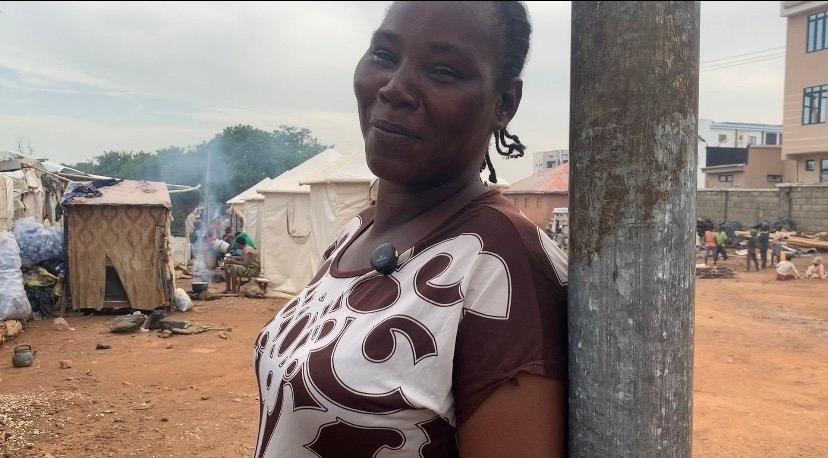
Abigail Andrew speaks about the healthcare and shelter challenges facing displaced families at Kuchingoro IDP Camp. (Photo credit: Oluwatobi Adu/AHR)
… Inside an Abuja displacement camp where leaking shelters, empty clinics and contaminated surroundings are pushing vulnerable families towards another humanitarian disaster.
As rainwater pours through leaking roofs and stagnant pools gather around overcrowded shelters, families displaced by conflict in northeastern Nigeria are confronting a new danger far from the violence they fled. In Kuchingoro IDP Camp on the outskirts of Abuja, Oluwatobi Adu finds that the absence of functioning healthcare, clean water and adequate sanitation is exposing thousands of vulnerable residents to disease outbreaks, raising fears that cholera may become the next emergency facing people who have already lost almost everything.
Safety Without Security
For more than a decade, internally displaced persons fleeing insurgency, violence and disasters have sought refuge in camps across Nigeria.
Many escaped attacks in Borno State and neighbouring communities, carrying little more than the hope of safety.
Yet in Kuchingoro IDP Camp in Abuja, safety itself has become uncertain.
Leaking shelters, stagnant water, poor sanitation and a collapsed healthcare system have created conditions that residents say threaten their survival.
The camp, which houses displaced families largely from Borno State, enters each rainy season with growing fears of disease outbreaks.
According to public health experts, overcrowding, poor sanitation and inadequate access to safe water significantly increase the risk of cholera transmission.
“Only God Dey Help Us”
Abigail Andrew fled Gwoza Local Government Area of Borno State in search of safety.
Years later, survival remains a daily struggle.
She says one of the greatest challenges facing residents is the absence of a functioning healthcare facility.
“No hospital, if you are not well you have to go to the old Kuchingoro primary health center.”
According to her, the rainy season makes already difficult conditions worse.
“The roof is leaking… only God can help us.”
Abigail also described the absence of government support and the struggles facing displaced children.
“No government they pay… only people dey help us teach our children.”
Many families, she says, cannot afford school fees or examination costs.
“We Sit in Water”
Another female resident from Borno State, who could not be identified because of language barriers, painted an equally troubling picture.
Although a health facility exists within the camp, she says it lacks medicines.
“We have a hospital but there’s no medicine in the hospital.”
She described how rainfall floods shelters.
“Our houses are leaking. We sit in water… no good rooms and the water is coming in.”
According to her, residents continue to feel abandoned.
“No hospital, no water, no homes… the government won’t do anything about it, they are just there.”
Her testimony reflects widespread concerns about the deteriorating living conditions inside the camp.
A Clinic Without Care
Hannatu, assistant head teacher at Sherry Prosperity School and secretary to the camp’s women leader, has lived in the camp for 14 years.
She says the health facility that exists in the camp offers little assistance.
“We have a container clinic, no nurse that used to come, talk less of doctor.”
Even when medication is available, she says access remains irregular.
“Before you reach the hospital, until the thing becomes an emergency… you will just go and buy paracetamol in the clinic and swallow it and be better.”
She appealed for government intervention.
“We are calling upon the government to assign us one general hospital.”
The rainy season, according to her, affects almost every aspect of life.
“You can see now three stones where we cook food… if there is rain, we will not cook food.”
Leaking roofs have become commonplace.
“Nobody bothers to come and buy even five-five yards of trampoline to come and give. They have never given us.”
Exposure to illness is constant.
“I always have fever, malaria, catarrh.”
A Health System That Barely Exists
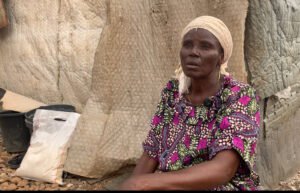
The camp coordinator, Abigaid Luka Yathuma, confirmed that healthcare services remain largely non-functional.
“Yes, we do but it is not functioning at the moment because there are no medications available.”
According to him, only a volunteer nurse currently serves the population.
“There are no health services available, and they don’t meet the needs available.”
Flooding further worsens living conditions.
“Some tents are leaking and some individuals do sleep on the floor… because of the cold.”
He says common illnesses include:
“Mostly malaria, typhoid and cold.”
Suspected cholera cases have already been reported within recent months.
The camp urgently requires: Medical supplies, additional healthcare workers, oral rehydration salts, cholera treatment kits, rapid diagnostic kits, and improved water and sanitation facilities.
Waiting for the Next Outbreak
Public health experts have repeatedly warned that overcrowding, poor sanitation and contaminated water create ideal conditions for cholera outbreaks.
The World Health Organization identifies access to safe water, sanitation and hygiene as critical measures for cholera prevention.
Yet many of these protections remain absent in Kuchingoro.
Open drainage, leaking shelters and inadequate sanitation continue to expose residents to preventable diseases.
As seasonal flooding intensifies, the risk grows.
Forgotten by the System
The testimonies emerging from Kuchingoro reveal a consistent pattern.
The clinic exists but lacks medicines.
Shelters exist but leak.
Schools exist but many children cannot afford examinations.
Water exists but remains unsafe.
Government support exists largely in promises.
The result is a population caught between displacement and neglect.
These are families who escaped insurgency, violence and conflict only to encounter another crisis inside the camps meant to protect them.
Before Cholera Arrives
Residents are not asking for luxury.
They are asking for doctors.
For medicines.
For clean water.
For dry roofs.
For functioning toilets.
For schools their children can attend.
Without urgent intervention, public health experts warn that another outbreak may not be a question of if, but when.
For the thousands of displaced Nigerians living in Kuchingoro, the next emergency may already be gathering with the rain clouds.
And many fear they are simply waiting for cholera.
About the Author


 Edino Chubiyo Cornelius
 Korede Abdullah
 Oluwafunbi Bello
May Nigeria not happen to the generations to come