
Charged for Change: Can Electric Keke Riders Power Abuja’s Transport Future?
 Otamere Gladness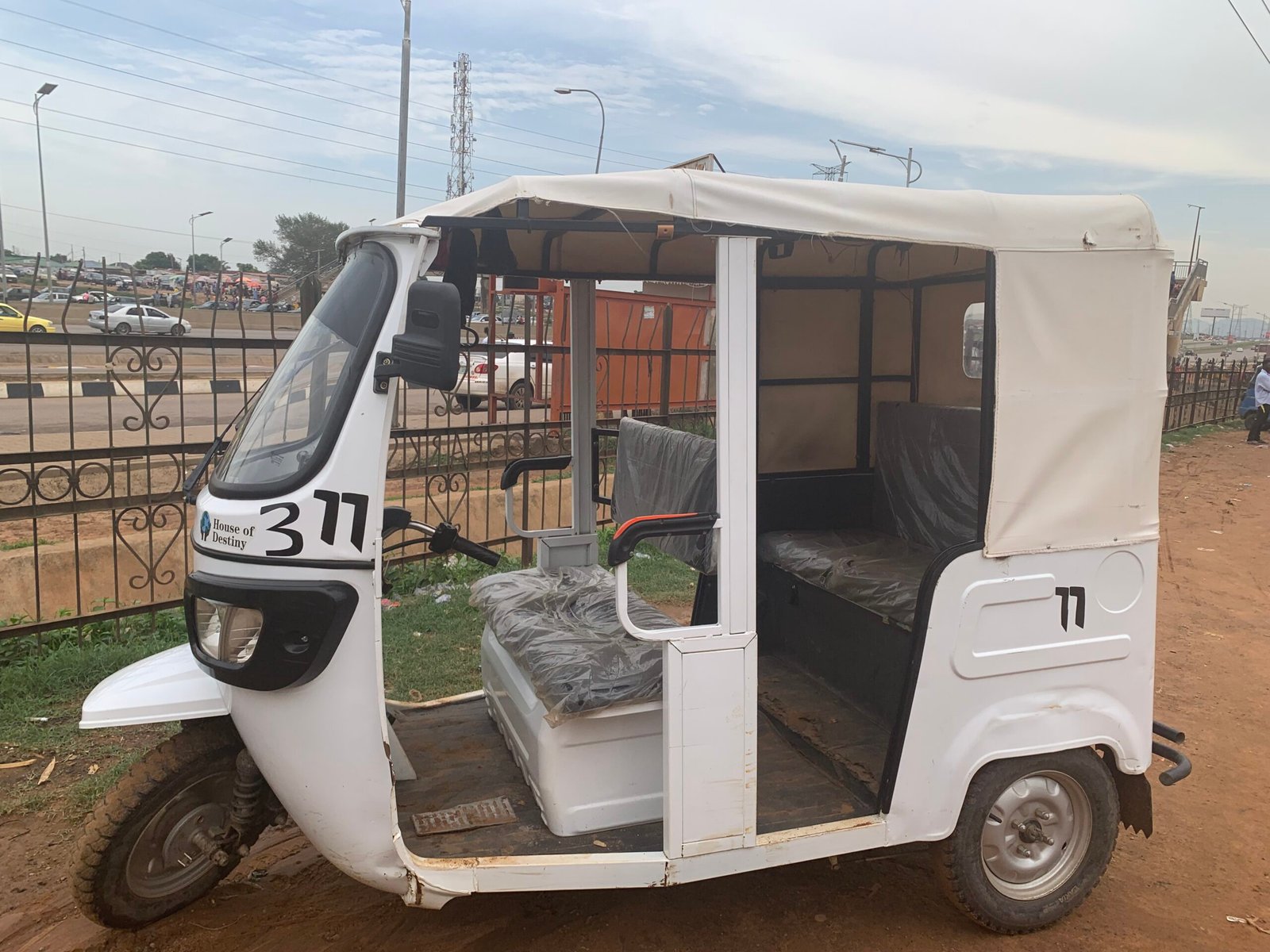
An electric tricycle operating on the streets of Abuja.
ABUJA, Nigeria – As fuel prices continue to squeeze household incomes and transport operators across Nigeria, a quiet revolution is unfolding on the streets of Abuja. Beneath the roar of traffic and the daily struggle to make ends meet, a growing number of tricycle riders are abandoning petrol engines for battery-powered alternatives. What began as a government-backed demonstration of Nigeria’s clean energy ambitions is gradually becoming a real-world test of whether electric mobility can survive the country’s infrastructure challenges, lower transport costs, and create a more sustainable future for millions who depend on informal transport for their livelihoods. Otamere Gladness, writes.
From Presidential Promise to Street-Level Reality
When President Bola Tinubu unveiled Nigeria’s first electric tricycles at Eagle Square in Abuja, the event was presented as more than a technological milestone. It symbolised a broader vision under the Renewed Hope Agenda — one that sought to reduce dependence on fossil fuels, cut transport costs, create jobs, and position Nigeria within the global energy transition.
Months later, away from the cameras and official speeches, that vision is being tested where it matters most: on Abuja’s roads.
Across transport hubs in Lugbe and other parts of the Federal Capital Territory, electric tricycles — popularly known as electric keke — are slowly becoming part of everyday life. Riders and passengers alike are beginning to experience the benefits and challenges of a technology that could reshape urban transport in Nigeria.
For many operators, the transition is not driven by environmental concerns alone. It is increasingly an economic decision.
The Economics Driving the Shift
Nigeria’s transport sector has faced unprecedented pressure since the removal of fuel subsidies. Petrol prices have surged, squeezing profit margins for commercial drivers and pushing many operators to seek cheaper alternatives.
Among those embracing change is Idris Abakar, a keke rider operating around the Car Wash bus stop on Airport Road in Lugbe, Abuja. Having driven petrol, compressed natural gas (CNG), and electric tricycles, he believes the electric option stands out.
“The fastest is electric… if passengers are available electric na be the best because you no buy fuel you nor buy CNG just plug your keke charge that is it.”
His assessment reflects a growing sentiment among operators who view electricity as a way to escape the volatility of fuel costs.
Daily charging expenses typically range between ₦2,000 and ₦3,000, significantly lower than what many riders spend on petrol.
According to Idris: “Per day we charge am one times like 2,000 some of them they collect 3,000 like from morning to past 8 or 9:00 sef some of them charge for house you know say lights no too dey some of them dey pay to charge for this service Mtn max and sometimes they go there they plug charge they pay small money.”
For operators accustomed to spending nearly half of their daily earnings on fuel, such savings can be substantial.

Counting the Cost of Conventional Transport
The financial contrast becomes clearer when compared with traditional petrol-powered operations.
Mister Samuel, a conventional keke rider working from a park along Airport Road in Lugbe, explained the realities many drivers face daily.
“When there is work, one can get like N15,000 to N18,000, maybe sometimes N20,000 in a day. My fuel consumption in a day goes for between N8,000 to N10,000.”
Beyond fuel costs, maintenance remains another burden.
Frequent engine repairs, particularly during the rainy season, can significantly reduce earnings. Waterlogged roads often affect engines and increase breakdowns, forcing riders to spend more time and money on repairs.
Although Samuel has only tested an electric tricycle outside commercial operations, he believes the technology offers promise.
“I will choose… I will go for the electric yes.”
His reason is straightforward: lower operating expenses.
However, his optimism comes with caution. Like many riders, he worries about charging infrastructure and the reliability of electric vehicles under Nigeria’s challenging weather conditions.

A Different Experience for Passengers
Passengers are also noticing the difference.
Unlike conventional tricycles, electric models produce less noise and offer smoother rides. The absence of engine vibration and reduced exhaust emissions create a noticeably different travel experience.
Joy, one of the passengers interviewed, described her first encounter with an electric tricycle.
“What I’ve experienced is that the keke is fast and it’s different from the regular one we see.”
For many commuters, speed and comfort are immediate selling points.
Susan shared a similar observation. “I see that it’s different from the regular one… I’m just finding out that this is electric. I don’t think it’s rampant yet.”
Her comment highlights an important reality. Despite growing awareness, electric tricycles remain relatively uncommon across Abuja, making them more of a curiosity than a mainstream transport option.
Yet their visibility is increasing.
Each additional electric keke on the road serves as a moving advertisement for a transport model that many Nigerians are only beginning to understand.
The Hidden Challenges Behind the Promise
Despite encouraging early experiences, the transition is far from seamless.
One of the biggest obstacles remains charging infrastructure.
Nigeria’s inconsistent electricity supply means many riders must rely on a mix of home charging, commercial charging centres, battery-swapping stations, or solar-powered solutions.
For operators working long hours, charging downtime can directly affect earnings.
Umar, an electric keke rider, says the system works for him because he charges overnight.
“Every day I get N10,000. I charge at night.”
Yet his experience also reveals some of the complexities surrounding maintenance.
“I prefer the other keke because this keke now (electric) dey chop my money to dey maintain am.”
His comments suggest that while fuel savings may be attractive, maintenance costs can sometimes offset those gains, particularly when spare parts, batteries, or technical expertise are not readily available.

Infrastructure Gaps Threaten Wider Adoption
The success of electric mobility will ultimately depend on more than individual enthusiasm.
Industry observers point to several barriers that must be addressed before widespread adoption can occur.
The first is affordability; Electric tricycles generally cost more upfront than used petrol-powered alternatives. For many riders operating within Nigeria’s informal economy, accessing financing remains difficult.
The second challenge is technical capacity; Most mechanics have decades of experience repairing petrol engines but limited training in battery systems, electric motors, and digital diagnostics. Without adequate technical support, riders may struggle to keep vehicles operational.
There are also concerns about battery durability, particularly during Abuja’s rainy season when flooding and poor road conditions can test the resilience of electrical systems.
These issues raise critical questions about long-term reliability and consumer confidence.
Beyond Transport: The Bigger Economic Opportunity
Supporters of electric mobility argue that the conversation should not be limited to transport alone.
A successful transition could create entirely new economic ecosystems.
Charging stations, battery-swapping facilities, assembly plants, maintenance centres, and renewable energy infrastructure all have the potential to generate employment opportunities.
For a country grappling with youth unemployment, the emergence of an electric transport value chain could create thousands of jobs while reducing dependence on imported fuel.
The environmental benefits are equally significant.
Reduced tailpipe emissions would improve urban air quality, while quieter streets could lessen noise pollution in densely populated areas.
For Abuja, a city experiencing rapid growth and rising vehicle ownership, these advantages could become increasingly important in the years ahead.
Can Abuja Become Nigeria’s Electric Mobility Blueprint?
The transformation remains in its early stages, but the signs are encouraging.
What makes Abuja’s experience particularly significant is that it offers a glimpse into how electric mobility might evolve across other Nigerian cities.
The riders interviewed are not environmental activists or technology enthusiasts. They are everyday workers making practical decisions about how to survive in a difficult economy.
Their willingness to experiment with electric alternatives suggests that the technology’s greatest selling point may not be sustainability but affordability.
If policymakers can address infrastructure gaps, improve access to financing, expand charging networks, and strengthen technical support systems, electric tricycles could become a viable solution for urban transport nationwide.
For now, the streets of Abuja are serving as a living laboratory.
The electric keke may not yet have replaced its petrol-powered counterpart, but it has started a conversation about what the future of transport in Nigeria could look like.
Whether that future arrives quickly or slowly will depend on the country’s ability to convert political ambition into practical reality.
For riders navigating the capital’s busy roads each day, the journey towards cleaner, cheaper transport has already begun.
About the Author

 Mirian Gom
 Korede Abdullah
 Oluwatobi Adu