Children of the Dry Taps: How Kano’s Water Crisis Is Stealing Classrooms, Health
 Hussaini Ibrahim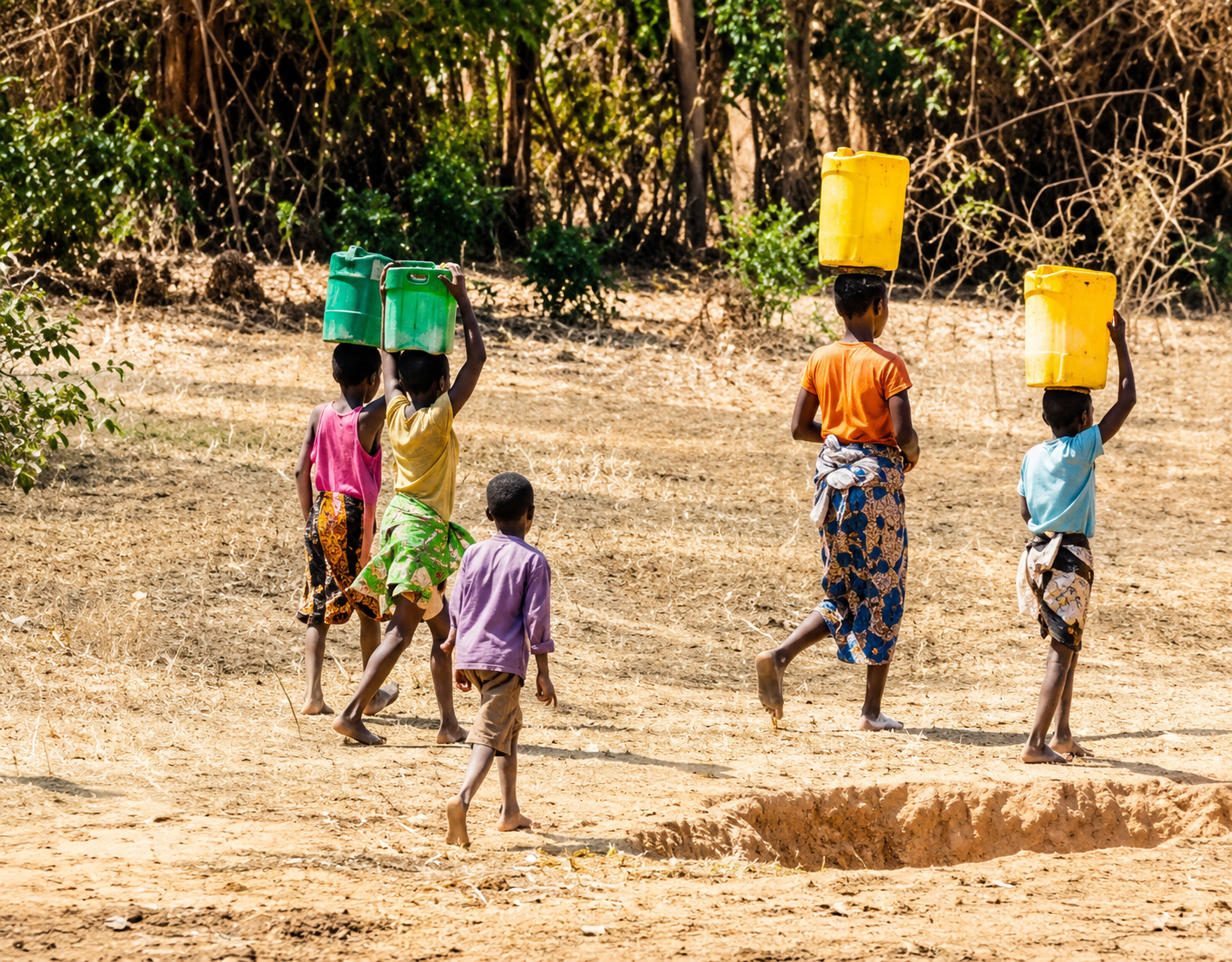
KANO, Nigeria — Before sunrise each day across Kano metropolis, thousands of children begin exhausting journeys not to classrooms, but to crowded boreholes and distant water points. In communities where public taps have remained dry for years and aging pipelines barely function, pupils now spend crucial school hours searching for water, while many schools operate with broken toilets, poor sanitation and little access to safe drinking water. As families battle rising costs and deteriorating living conditions, health experts warn that Kano’s worsening water shortage is no longer simply an infrastructure problem — it is becoming a growing education and public health emergency threatening the future of vulnerable children. Hussaini Ibrahim, writes.
Long before dawn, 15-year-old Abubakar Sani pushes two empty jerrycans through the dusty streets of Unguwa-Uku in Kano.
His mornings rarely begin with breakfast or school preparation anymore. Instead, they begin with queues.
By the time he returns from a commercial borehole, the first lessons at school are often over.
“I miss classes almost every week because of water,” he told The AHR quietly.
“Sometimes we leave home around 6am looking for water, but we don’t return until after 8am. When I arrive at school late, punishment is waiting for me even though it is not my fault.”
Across Nassarawa, Tarauni, Fagge, Dala, Gwale, Kano Municipal, Ungogo and Kumbotso, residents say unreliable public water supply has persisted for more than six years.
Kano, one of Nigeria’s fastest-growing urban centres, is estimated to have a population of more than 15 million people, placing enormous pressure on ageing public infrastructure. According to data from UNICEF, millions of Nigerians still lack access to basic water and sanitation services, while children remain among the worst affected by poor hygiene and unsafe water conditions.
Public health experts warn that the consequences extend far beyond inconvenience.
According to the World Health Organization, unsafe water, sanitation and hygiene contribute significantly to diseases such as cholera, diarrhoea and typhoid — illnesses that continue to affect children across Nigeria.
In Kano, teachers and parents say those risks are increasingly visible inside schools.
“Children Arrive Already Exhausted”
At a public primary school in Gwale, a headteacher who requested anonymity described how the crisis is disrupting learning daily.
“Every day, dozens of pupils arrive after assembly because they were searching for water at home,” he said.
“You will see some children sweating, exhausted and unable to concentrate in class. Some even sleep during lessons because they have already done heavy labour before coming to school.”
Across several schools visited by the AHR, pupils were seen carrying water containers alongside their books, while some toilets remained locked because there was no water to clean them.
The headteacher said the school has struggled for years to maintain basic sanitation.
“Our toilets are in terrible condition because there is no steady water. Teachers and pupils sometimes contribute money to buy water from vendors just to keep the environment manageable,” he explained.
“When there is no water, sanitation becomes impossible. Female pupils suffer more because they need privacy and proper hygiene facilities.”
Nigeria already faces severe learning challenges among schoolchildren. According to UNICEF, millions of Nigerian children remain out of school, while poor learning conditions continue to worsen educational outcomes in many public schools.
Teachers say the water shortage is quietly deepening that crisis.
“Sometimes I Stay at Home”
For female students, the situation has become especially difficult.
At a junior secondary school in Tarauni, 17-year-old Maryam Musa said poor sanitation facilities often force girls to stay away from school during menstruation.
“Sometimes I stay at home during my menstrual period because there is no water in school,” she said.
“The toilets smell badly and there is nowhere to wash properly. Many girls feel uncomfortable.”
She explained that some girls avoid drinking water during school hours because they fear using dirty toilets.
“We get thirsty because of the heat, but some girls avoid drinking water in school because they fear using the toilets,” she said.
Health advocates warn that inadequate menstrual hygiene support contributes significantly to absenteeism among adolescent girls in public schools across Nigeria.
Damaged sanitation facilities inside a Kano public school reflect deteriorating hygiene conditions linked to prolonged water shortages.
Families Forced to Choose Between Water and Food
For many low-income households, buying water daily has become financially draining.
In Dorayi quarters, Malam Ibrahim Rabi’u, a father of five, said his family now spends between ₦1,500 and ₦2,500 every day on water.
“Water has become one of the biggest expenses in this house,” he lamented.
“Before, public taps were functional in many areas. Now we depend almost completely on vendors.”
According to him, rising water costs have affected feeding and school expenses for his children.
“When you spend so much money on water every day, other responsibilities suffer,” he explained.
“Sometimes my children go to school without proper breakfast because we already spent money buying water.”
The economic burden has worsened as inflation and fuel costs continue rising across Nigeria.
Commercial water vendors, however, insist that they too are struggling with increasing operational expenses.
Around the Hotoro area, water vendor Bashir Lawan said poor electricity supply and fuel prices have pushed up costs.
“People blame us, but they don’t understand our own challenges,” he said.
“We buy fuel at high prices and spend hours waiting to fetch water from functioning boreholes. Sometimes there is a power outage throughout the day.”
He added that some vendors travel long distances to obtain water before reselling it to households and schools.
“The demand is too high because government water hardly flows regularly anymore,” he said.
Experts Warn of Growing Health Risks
Public health specialists say prolonged shortages in schools and homes could worsen disease outbreaks among children.
A public health expert at Bayero University Kano, Dr Sani Lawal, warned that inadequate access to clean water threatens hygiene, nutrition and learning capacity.
“Water scarcity directly affects hygiene, sanitation, nutrition and learning capacity,” he said.
“When schools operate without adequate water supply, the risk of infectious diseases such as diarrhoea, cholera and typhoid increases significantly.”
Nigeria has repeatedly battled cholera outbreaks in recent years, with children among the most vulnerable groups affected by poor sanitation and contaminated water sources.
Dr Lawal said dehydration and physical exhaustion also reduce concentration levels among pupils.
“A dehydrated child cannot learn effectively,” he explained.
“Once children spend hours fetching water before school, they arrive physically exhausted and mentally distracted.”
He added that female students face greater challenges because poor sanitation affects menstrual hygiene management and school attendance.
“This issue goes beyond infrastructure failure. It is becoming a child welfare and education crisis,” he warned.
Government Promises Improvement
Officials of the Kano State Government say rehabilitation efforts are ongoing across the metropolis.
The Commissioner for Water Resources, Haruna Makoda, said the administration inherited severely damaged facilities and outdated infrastructure.
“When this administration came in, many water facilities were either abandoned or operating far below capacity,” he said.
“We are rehabilitating treatment plants, pipelines and pumping stations across the Kano metropolis.”
According to him, the government has increased investment in the sector under Governor Abba Kabir Yusuf.
“We understand the suffering of residents, and we are not denying the challenges,” he stated.
“But significant investments are being made to restore sustainable water distribution.”
The Managing Director of the Kano State Water Board also blamed ageing pipelines, vandalism, electricity costs and rapid population growth for the persistent shortages.
“Some pipelines are over 40 years old and require complete replacement,” he explained.
He maintained that rehabilitation projects are gradually improving supply in some communities.
“Promises Have Lasted Longer Than Solutions”
Despite repeated assurances, frustration remains widespread.
In the Kurna area, residents gathered around a crowded borehole said little had changed despite years of promises.
“We hear announcements every year that water supply will improve, but nothing changes,” one resident said.
“People still wake up at night searching for water.”
Another resident added: “Children are the ones suffering most because they combine water searching with school.”
For many families, the crisis is no longer simply about water.
It now shapes whether children arrive in classrooms healthy, focused and ready to learn.
And for pupils like Abubakar, whose mornings begin in long queues rather than school corridors, hope has become painfully modest.
“What I want most,” he said softly, “is to wake up one day and see water flowing from our tap again.”
About the Author

 Mirian Gom