“My Tummy Looked Like I Was Pregnant”: Why Fibroids Keep Returning for Many Nigerian Women
 Oluwatobi Adu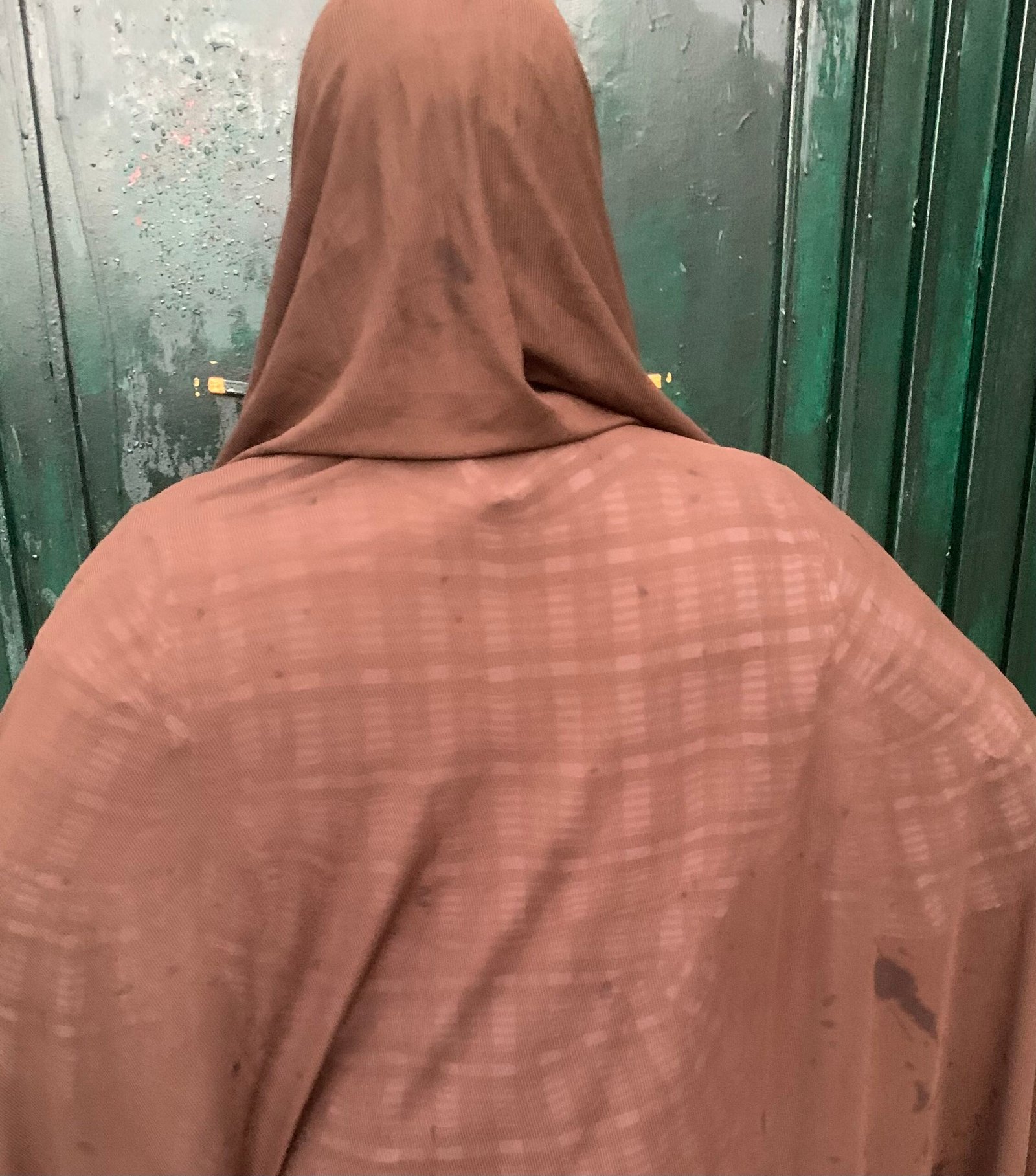
Mrs. Hassan at her resident in Lugbe (Photo credit: Mrs. Hassan/AHR)
ABUJA, Nigeria – When 35-year-old Mrs. Hassan noticed that her stomach remained unusually swollen after giving birth to her third child, she feared the worst. Neighbours asked if she was pregnant again, while she quietly battled confusion and anxiety.
“I looked like I was pregnant,” she recalled. “I tried different local remedies because I didn’t understand what was happening.”
A hospital visits eventually revealed the cause: uterine fibroids.
Her experience is far from unique.
According to Youterus Health and the White Ribbon Alliance Nigeria, approximately 45.1 per cent of Nigerian women are living with uterine fibroids, while studies estimate that up to 80 per cent of Black and African women may develop fibroids before the age of 50, making them one of the most common reproductive health conditions affecting women of African descent.
Despite advances in diagnosis and treatment, many women undergo surgery only to discover that the fibroids have returned months or years later.
Why do fibroids keep coming back? Can surgery permanently cure them? And what does recurrence mean for Nigerian women already struggling with rising healthcare costs? Africa Health Report’s Oluwatobi Adu spoke with patients and a gynecologist to understand why fibroids continue to disrupt the lives of thousands of Nigerian women.
A Battle That Refused to End
Mrs. Hassan’s first diagnosis came after doctors conducted a pelvic examination followed by an ultrasound scan.
The result showed a fibroid about the size of an orange.
Doctors recommended a myomectomy—the surgical removal of fibroids while preserving the uterus.
She believed the operation had solved the problem.
Instead, it marked the beginning of a much longer journey.
After recovering from surgery, she became pregnant with her fourth child. During a routine antenatal ultrasound, doctors discovered another fibroid growing alongside the baby.
“My doctor warned me there could be risks to both me and the baby. I was terrified.”
Fortunately, both mother and child survived.
During delivery, surgeons removed another fibroid—this time about the size of a watermelon.
“I thanked God because we both survived.”
Months later, familiar symptoms returned.
Another scan confirmed her worst fear.
The fibroids had returned again.
Her gynecologist explained that recurrence after myomectomy is possible, particularly among younger women and those with a genetic predisposition.
Having completed her family, she eventually underwent a hysterectomy to permanently eliminate the risk of recurrence.
“My journey taught me never to rely on assumptions or traditional remedies. Women should seek proper medical care early.”
Different Women, Different Experiences
Fibroids do not affect every woman in the same way.
For 33-year-old Sherifatt, the diagnosis came during a routine medical check-up.
Doctors detected a very small fibroid but advised against surgery.
“They said it might grow—or disappear.”
During another medical examination in 2024, doctors found no evidence of the fibroid.
“I was surprised they said it had disappeared.”
Thirty-seven-year-old Mrs. Adegoke had a much more difficult experience.
She developed a large fibroid during pregnancy.
“I couldn’t walk properly because of the pain.”
Doctors delayed surgery to avoid endangering the pregnancy.
Only after delivery was the fibroid successfully removed.
For 36-year-old Hawa, the biggest burden was the emotional toll.
“People kept asking when I was due because my stomach looked like I was five months pregnant.”
She later underwent surgery to remove a watermelon-sized fibroid.
“Since then, I’ve been fine.”
Why Fibroids Return
Consultant gynecologist Dr. Ayodele Dada explained that recurrence is one of the biggest misconceptions surrounding fibroid treatment.
“Fibroids are benign growths of the uterus influenced by hormones and genetics.”
According to him, several genetic mutations have been linked to fibroid development, while the female hormones oestrogen and progesterone stimulate their growth.
“Removing fibroids does not remove the underlying risk factors.”
He explained that as long as a woman remains within her reproductive years, new fibroids can develop.
“Yes, fibroids can return after surgery because the hormonal environment that supports their growth is still present.”
He added that recurrence is particularly common after myomectomy because only the existing fibroids are removed while the uterus is preserved.
Who Is Most at Risk?
According to Dr. Dada, fibroids occur most commonly among women of reproductive age, particularly Black women.
Other risk factors include:
Family history
Obesity
Sedentary lifestyle
Having few or no children
Diets high in fat
He dismissed the widespread belief that fibroids automatically cause infertility.
“Fibroids do not directly cause infertility in every woman, although some large fibroids or surgical complications may affect fertility.”
The Symptoms Women Should Never Ignore
Medical experts advise women to seek medical attention if they experience:
Heavy menstrual bleeding
Persistent pelvic pain
Frequent urination
Lower abdominal swelling
Difficulty becoming pregnant
Pain during intercourse
Recurrent miscarriages in some cases
Early diagnosis, experts say, often leads to better treatment outcomes.
A Growing Public Health Concern
Beyond individual stories lies a much bigger public health challenge.
Recent findings by Youterus Health and the White Ribbon Alliance Nigeria show that 45.1 per cent of Nigerian women are living with uterine fibroids, making the condition one of the country’s most common reproductive health disorders.
The organisations also note that many Nigerian women receive their diagnosis between the ages of 30 and 39, although symptoms often begin much earlier.
Research further suggests that women of African ancestry develop fibroids at younger ages, experience larger and more numerous tumours, and are more likely to require surgery than women from other racial groups.
Medical studies also indicate that fibroids may recur in 15 to 60 per cent of women after myomectomy, depending on age, treatment approach and the number of fibroids removed.
These figures explain why many women undergo repeated surgeries during their reproductive years.
Treatment Depends on the Patient
Dr. Dada said treatment varies according to symptoms, age, fertility plans and the size and location of the fibroids.
Some women benefit from medications that relieve symptoms, while others require surgery.
“If surgery is indicated, women should seek treatment at competent healthcare facilities.”
He also encouraged women to reduce modifiable risk factors where possible by maintaining a healthy weight, exercising regularly and attending routine medical check-ups.
Beyond Surgery
Although surgery remains an effective treatment for many women, doctors say it should not be viewed as a guaranteed permanent cure.
For younger women who wish to preserve fertility, myomectomy offers hope but carries the possibility of recurrence.
For women who have completed childbearing and suffer repeated recurrences, hysterectomy may provide a definitive solution.
Ultimately, the choice depends on individual medical circumstances and should always be guided by a qualified gynecologist.
Hope Through Early Care
For thousands of Nigerian women, fibroids remain a silent burden affecting health, fertility, family life and emotional wellbeing.
Yet the experiences shared in this report also offer hope.
Early diagnosis, accurate information and timely medical care can significantly improve outcomes.
Mrs. Hassan, whose painful journey stretched across multiple surgeries and pregnancies, believes one lesson stands above all others.
“I want women to stop assuming. Go to the hospital. Early treatment can save you from years of pain.”
As Nigeria continues to record one of the highest burdens of uterine fibroids among Black women globally, experts say greater public awareness, improved access to specialist care and early screening will be critical to reducing the physical and emotional toll of a condition that too often returns when women believe the battle is over.
About the Author



 Hope Ajayi
 Mirian Gom