
Scalpel Of Death: The Surgery That Promised Healing — And the Questions That Followed a Young Woman’s Final Days
 Oluwafunbi Bello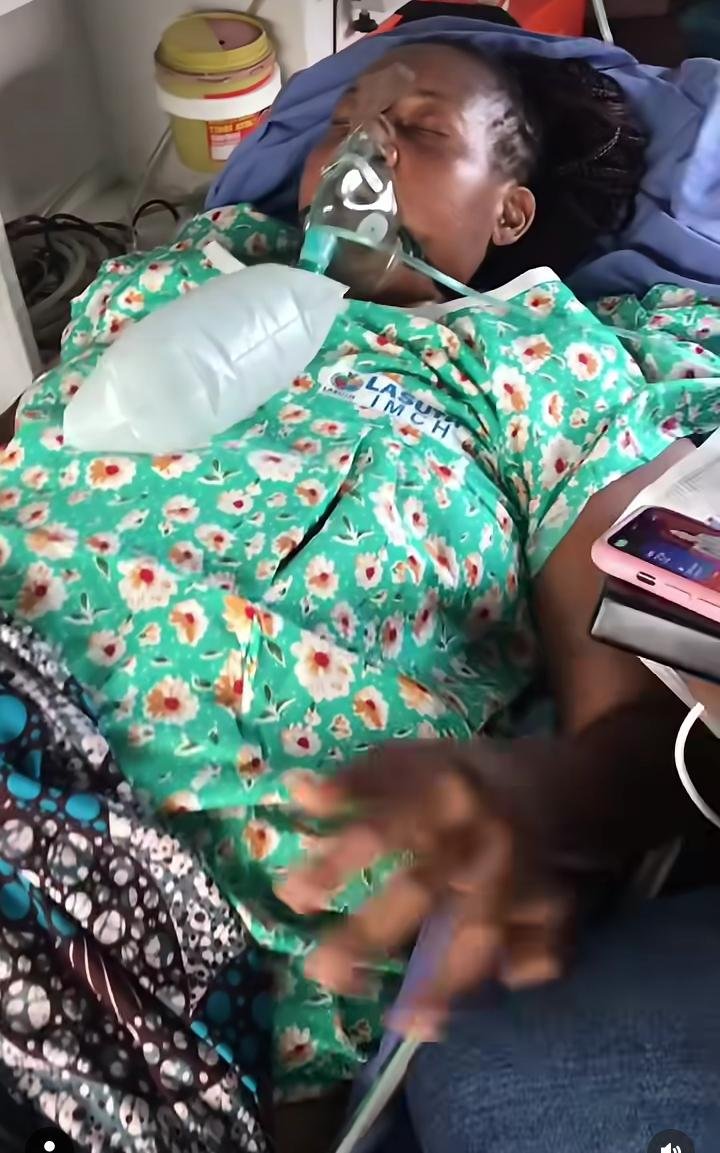
Blessing Okolie receiving oxygen support during her prolonged hospitalisation before her death.
LAGOS, Nigeria – When Blessing Okolie walked into a Lagos hospital for surgery to remove fibroids, her family believed they were taking a step towards a healthier future. Instead, they found themselves trapped in a weeks-long medical ordeal marked by allegations of surgical error, worsening illness, repeated pleas for help and, ultimately, a devastating loss that continues to raise troubling questions about patient safety in Nigeria. Oluwafunbi Bello, writes.
According to her family, Blessing underwent surgery on March 28, 2026, at OAR Medical Centre in Ilepo, Abule Egba, Lagos.
The operation was reportedly performed under the care of Dr Abiodun Ojifinni and was initially declared successful.
For a brief moment, there was relief.
Then came the pain.
According to an account shared by Blessing’s brother through the Instagram platform Street coded, she was given milk and Milo four hours after surgery. Three days later, the family said she began complaining of severe abdominal pain while her stomach became noticeably swollen.
As her condition deteriorated, relatives said they repeatedly requested medical investigations to determine the source of the problem.
According to the family, their concerns were dismissed. “Even if we do a scan, we can’t see anything that will cause an Alarm,” the family quoted hospital personnel as saying.
Days passed.
The pain intensified.
The swelling reportedly worsened.
The family said it was not until April 7 that Blessing was referred for a scan.
Even then, they alleged, the first facility to which she was directed lacked scanning equipment.
Concerned about her worsening condition, relatives said they sought another clinic despite resistance from a nurse accompanying them.
The results, they claim, were alarming.
According to the family, scans revealed what appeared to be an artery forceps inside Blessing’s abdomen.
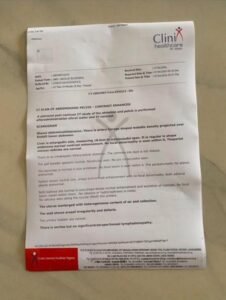
The family believes the object had been left behind during the initial surgery.
The allegation has not been independently verified, and OAR Medical Centre had not publicly responded to the claims at the time this report was prepared.
Still, for Blessing’s relatives, the scan marked a turning point.
The operation they had hoped would improve her quality of life had allegedly become the source of her suffering.
According to her brother, the family pleaded for a transfer to a higher-level facility.
Instead, they allege another operation was performed.
“We begged them to refer us to a better hospital, they refused and went ahead with the operation,” he alleged.
The second procedure reportedly failed to improve her condition.
Her abdomen remained swollen.
Her strength continued to fade.
Then another crisis allegedly emerged.
According to the family, the hospital’s fuel supply ran out while Blessing was receiving oxygen support.
“On April 11, around 3 a.m., their fuel ran out while she was on oxygen, and they said they don’t have fuel again,” the brother stated.
The allegation touches on a challenge that extends far beyond a single hospital.
Across Nigeria, healthcare facilities routinely battle unstable electricity supplies, forcing many hospitals to depend heavily on generators. When fuel becomes unavailable, lifesaving equipment can be affected, placing vulnerable patients at risk.
Faced with growing fears, the family transferred Blessing to the Lagos State University Teaching Hospital (LASUTH), where she was admitted into the Intensive Care Unit.
But the effort to save her life proved unsuccessful
“Just one day in the ICU, they told us her heart had stopped. My sister Blessing Okolie could no longer breathe,” her brother recounted.
A Preventable Threat
Medical experts describe retained surgical instruments as among the most serious and preventable medical errors worldwide.
Dr. Ekaette Uko Edem explained that breakdowns in operating theatre procedures can allow such incidents to occur.
“Inadequate support from experienced assistants during surgery can lead to medical tools being left inside a patient after an operation,” she said.
“There is a procedure known as instrument counting, which must be carried out before and after every surgery. This responsibility typically falls on a surgical assistant. If the instruments are not properly counted, a pair of scissors or any other tool could be left inside the patient without the surgeon being aware.”
She noted that emergency situations can sometimes increase the risk of mistakes.
“In some cases, surgeries can become chaotic, especially when there are significant bleeding and the surgeon is focused on stopping it quickly. During such situations, gauze or cotton wool may be used and, due to the urgency, could be inadvertently left inside the patient.”
“However, if all instruments are properly counted both before and after the procedure, any missing item can be detected early and removed, preventing it from causing infection that can lead to death.”
According to the World Health Organisation (WHO), around one in every 10 patients globally suffers harm while receiving healthcare, and more than half of those incidents are considered preventable. Unsafe care is responsible for millions of deaths each year, particularly in low- and middle-income countries. Surgical errors remain among the leading causes of avoidable patient harm.
The WHO further estimates that more than one million people die annually from surgical complications worldwide, while millions more suffer long-term disabilities arising from unsafe surgical care.
Health professionals warn that retained surgical objects can trigger severe infections, organ damage and sepsis — a life-threatening condition in which the body’s immune response begins attacking its own tissues and organs. WHO data indicates that nearly one-quarter of hospital-associated sepsis patients do not survive.
The Accountability Question
For legal practitioners, such cases raise questions that go beyond medical mistakes.
Barr. Annie Ebiet explained that Nigerian law recognises such incidents under the doctrine of medical negligence.
“In medical law, there is a concept called negligence. Every doctor owes their patient a duty of care,” she said.
“You owe that patient a duty of care to ensure that whatever you are doing is done in the utmost good faith, ensuring that nothing goes wrong.”
According to her, leaving a surgical instrument inside a patient’s body would constitute a serious professional breach if proven.
“A mistake where a doctor forgets a tool inside a patient’s body is considered a very grave and serious case,” she stated.
“As for the actions to be taken against the doctor, yes, you can sue them. If you have the evidence to prove that this specific doctor conducted the surgery and left the tool inside the patient’s body, you can pursue legal action.”
While medical negligence cases periodically make headlines in Nigeria, experts say formal complaints remain relatively rare compared with the number of incidents alleged by patients and families. Legal practitioners attribute this partly to difficulties in obtaining medical records, high litigation costs and challenges in securing expert testimony.
Beyond One Family’s Tragedy
Blessing’s story unfolds against the backdrop of a healthcare system facing enormous strain.
Nigeria continues to grapple with shortages of healthcare workers, ageing infrastructure, inconsistent power supply and the migration of trained medical professionals abroad in search of better opportunities. Health sector advocates warn that such pressures can increase fatigue, reduce supervision and create conditions where preventable errors become more likely.
Patient safety specialists argue that the issue is not simply about individual mistakes but also about culture.
A strong patient-safety culture requires hospitals to maintain rigorous surgical checklists, transparent reporting systems, continuous staff training and mechanisms that allow healthcare workers to identify risks before they become tragedies.
The WHO has repeatedly emphasised that safer healthcare depends not only on skilled professionals but also on systems designed to prevent human error.
For many Nigerian families, however, confidence in those systems remains fragile.
The Life Behind the Headlines
Today, Blessing Okolie’s name has become part of a broader conversation about medical accountability and patient safety.
But before the social media posts, the allegations and the calls for investigation, she was simply a woman seeking treatment and hoping to feel better.
Her family remembers someone who expected to return home after surgery and resume her life.
Instead, they were left planning a burial.
The questions surrounding her final weeks may ultimately be answered by investigators, regulators or the courts.
But for those she left behind, the loss cannot be measured in medical reports or legal filings.
What remains is an empty seat at family gatherings, memories of conversations that will never happen again and the painful uncertainty of whether the outcome could have been different had the system worked exactly as it was meant to.
About the Author


 Mirian Gom
 Korede Abdullah

 Oluwatobi Adu